


Samsung Display’s new foldable OLED prototype is attracting oversized attention on the CES floor, and not just among Android fans. The display giant’s almost wrinkle-free panel is now generating speculation that it could be the component breakthrough Apple has been seeking to sign off on a foldable iPhone.
A Prototype That Looks Ready For Prime Time
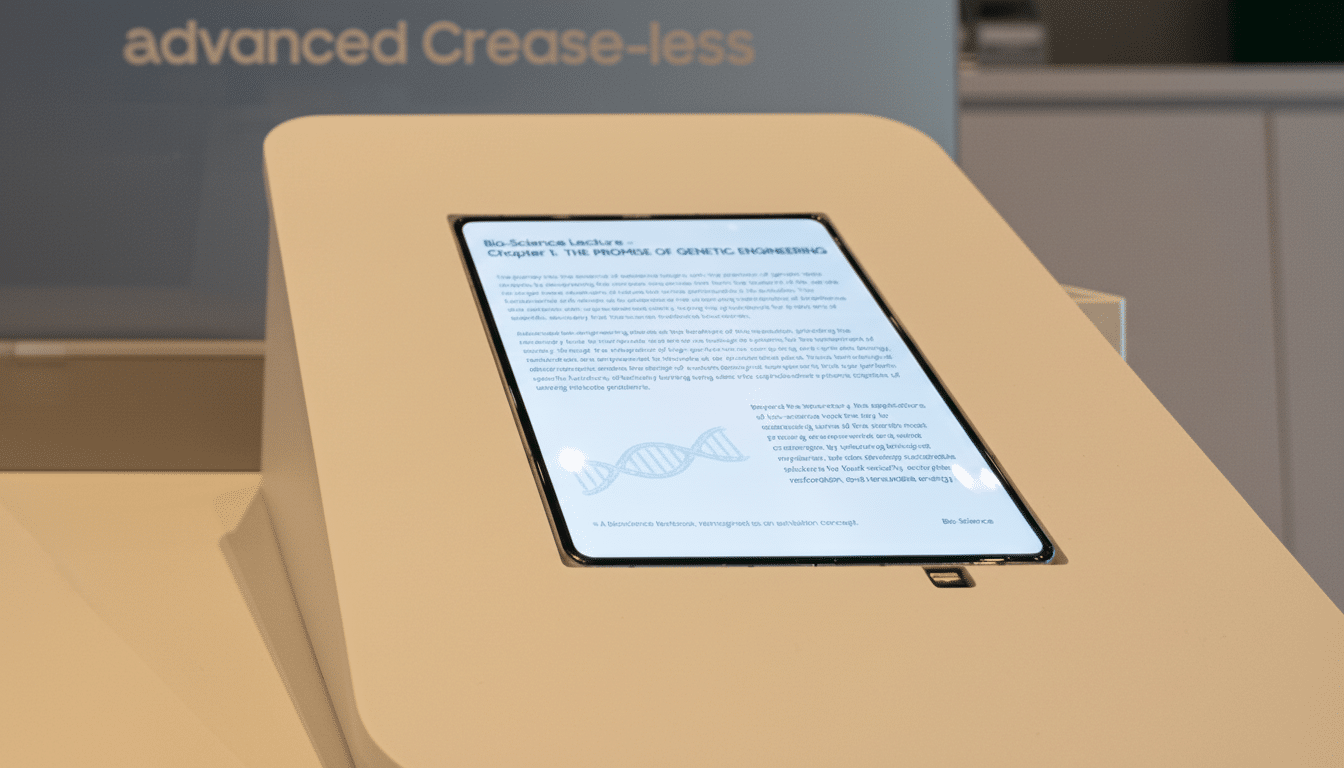
Attendees who viewed the “Advanced Crease-less OLED” reported that when opened, the panel seems to lay nearly flat with most of the defining fold line erased from view under show lighting. There are reports from those on the ground such as The Verge of a noticeable leap in visual symmetry compared to current shipping foldables.
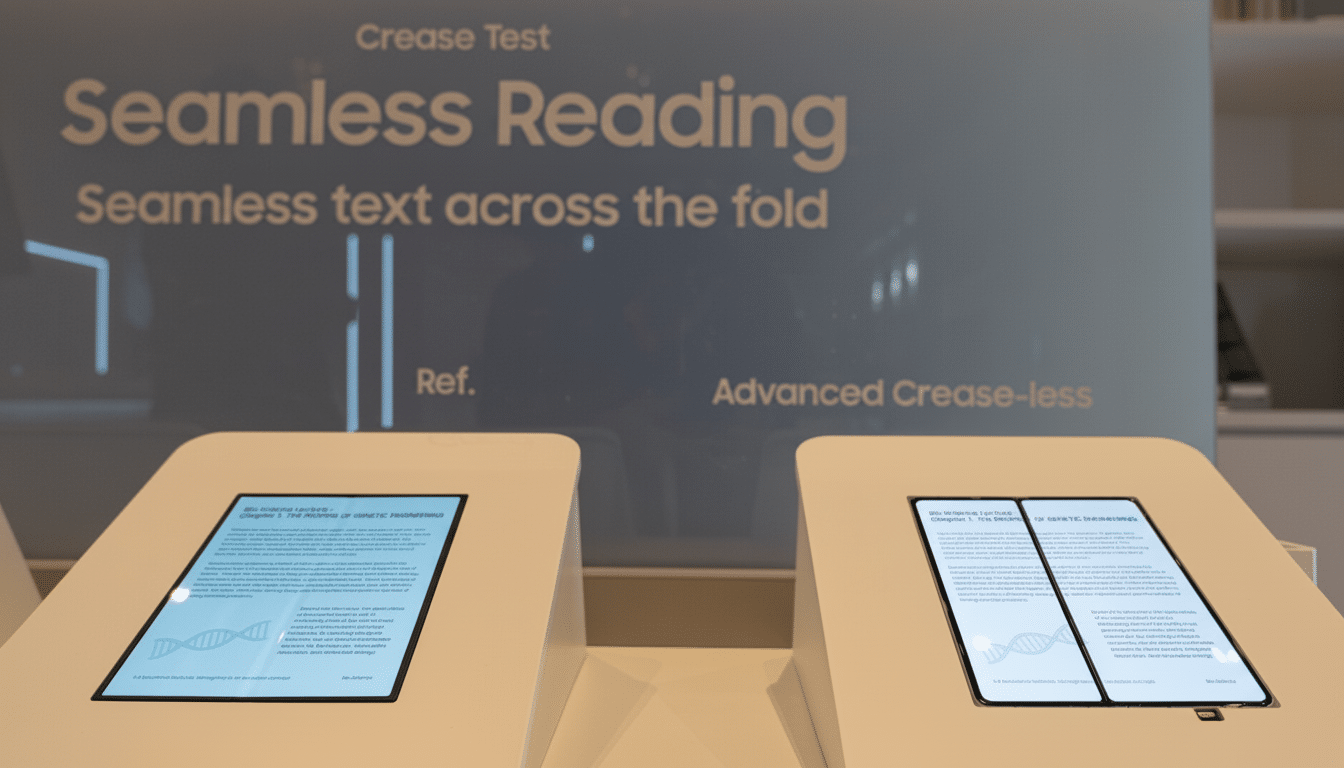
But under the hood of that visual upgrade are ideas we know, but which now have their respective boots properly laced: a wider, water-drop hinge geometry to dissipate bending stress more effectively; a re-engineered glass stack — as in, layers thinner than individual sheets of paper — to distribute strain across a broader radius; and refinement in encapsulation to control micro-cracking better over time.
These technologies have long existed, but their implementation here hints at a step change in how OLED and hinge systems are mutually optimized.
There’s a caveat. Samsung reps at the booth described the panel as an R&D concept with no fixed commercialization date, and the sample was subsequently taken down from its stand, The Verge reported. Still, the demo suggests that a “no-crease” form factor is closer to mass production than ever before.
Why the crease is the final boss for foldables
Ask foldable holdouts, and the crease is usually at the top of their complaint list — followed by durability and price. We repeatedly found the fold line to be a major repellent when we surveyed users, affecting the perception of quality and resale value. It’s also a photography issue: A visible ridge can catch reflections and cause banding in images or while you’re watching HDR video.
Engineering teams have approached from many angles. New hinges increase the panel’s bend radius and tuck the display into a teardrop-shaped cavity, reducing peak stress at folds. Materials scientists, meanwhile, have dialed up ultra-thin glass and polymer cushion layers to distribute strain across microscopic distances. The most polished designs now mate these hardware improvements with software-initialized touch and color compensation to hide any remaining defect.
Durability is climbing as well. Most mainstream foldables advertise 200,000 folds — and devices like the OnePlus Open tout TÜV Rheinland testing up to 1,000,000 cycles. A genuinely creaseless panel that could match or even surpass such targets — without sacrificing brightness or efficiency — would shift the conversation for high-end customers.
What Apple would need to see to say yes to a foldable iPhone
Apple is famous for its standards of display uniformity. The analysts at Display Supply Chain Consultants have long pointed out that Apple has been investigating foldable sizes from around 7 inches to about 8 inches, and also considering whether a foldable iPad should come before a foldable iPhone. Every panel candidate would have to figure out how to produce minimal crease visibility from any viewing angle, maintain steady light across the fold line, and ensure that touch doesn’t wander too far beyond it — all while keeping battery life high and reliability over time solid.
On power efficiency, Samsung Display has been touting polarizer-free OLED architecture and high-end optics (to achieve superior light transmittance), which helps reduce power consumption by double-digit percentages compared with the stacks in more mature process technologies. If a creaseless design can accompany those gains, Apple’s own trade-offs around size, weight and battery could fall such that an iPhone-worthy product is created.
Supply is the other piece. Samsung Display already supplies OLEDs for iPhone flagships along with LG Display, and both have an active foldable roadmap. Realizing an effectively crease-free module at Apple-grade yields would demand strict adherence to ultra-thin glass processing, hinge tolerances and lamination, with repeatable results across millions of units — not a trivial manufacturing leap.
The market is ready for a nudge on foldable adoption
Foldables are now a mainstream experiment in market turnaround. Counterpoint Research estimated that, because of falling prices and improved durability, global shipments of foldables recently topped the mid-teens in millions of units, with robust growth ahead. Category leaders have raised consumer expectations through lighter designs, larger cover screens, and improved camera stacks; what’s lacking is the crease-free canvas that would make the format feel fully mature.
An Apple offering could double the category’s momentum, just as the company’s entry has supercharged growth in wearables and earbuds. But only if the panel clears Apple’s severe requirements of cosmetic perfection and longevity — and only if the ecosystem story (apps that are well-optimized for adaptive layouts, split-screen workflows that stand up to professional use, continuity features) lands on day one.
Reality check and what to watch in the months ahead
The Samsung prototype holds promise, not an actual product. A company spokesperson quoted by The Verge underlined that there was no schedule and the quick vanishing of the demo underlines how uncertain R&D demonstrations can be. Still, the takeaway from CES is clear: The industry is on the verge of solving the crease to a point where picky buyers — and maybe even Apple — will be happy.
“Look for three indicators: analyst buzz about pilot lines at Samsung Display and LG Display, third-party durability certifications related to new hinge designs, and developer guidelines suggesting Apple foldable UX moves,” Tyagi says. If those pieces start to click in place, the long-discussed foldable iPhone may finally have a display it can use.
