


Samsung has confirmed that its next-generation AR glasses will debut this year, elevating years of speculation into a concrete launch plan. The company disclosed the move on its latest earnings call, signaling that the glasses will be a showcase for immersive, multimodal AI experiences across new device form factors.
It’s the first time Samsung has publicly attached a launch window to its AR wearables, and the language around multimodal AI suggests a device that blends on-device processing with cloud intelligence, plus inputs like voice, gestures, and camera context. For an industry that has cycled through hype and setbacks, a formal commitment from one of the world’s largest mobile makers is a meaningful milestone.
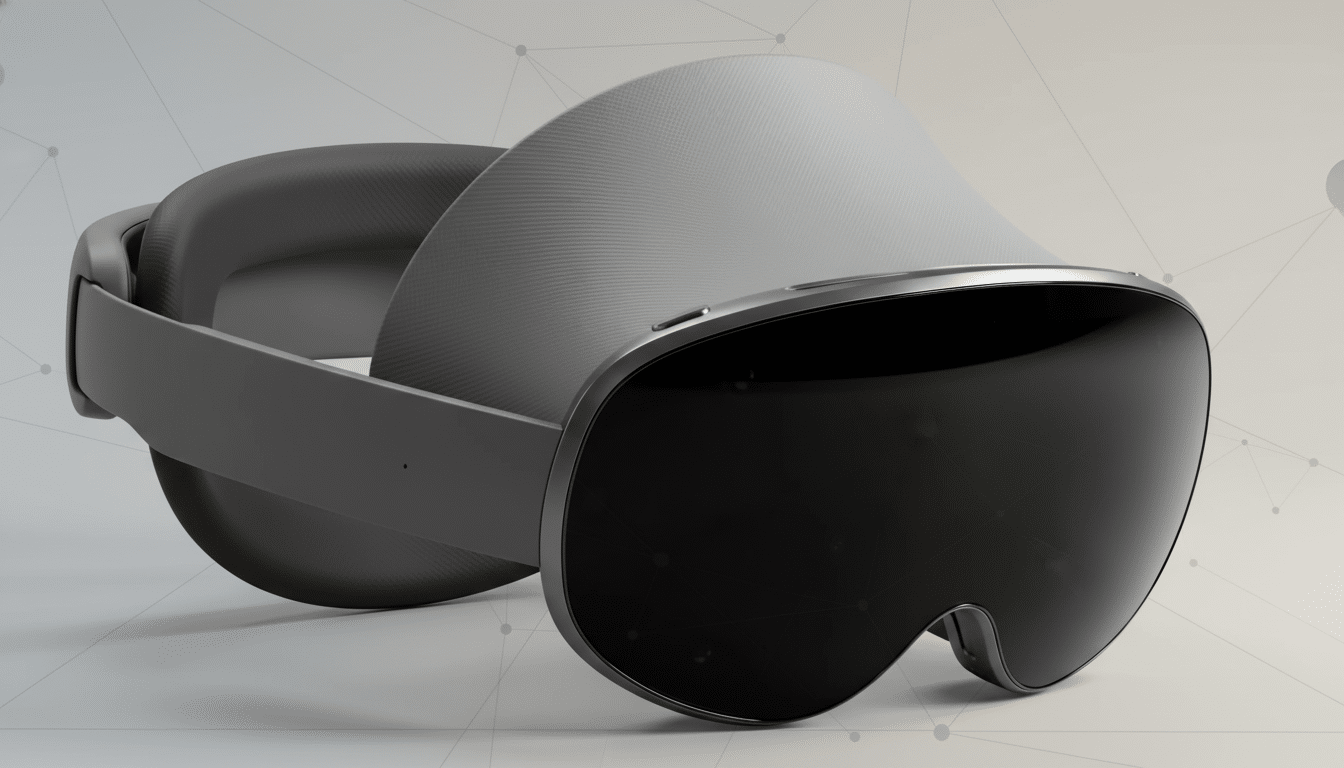
What We Know and What’s Rumored About Samsung’s AR Glasses
Beyond the confirmation, Samsung kept details under wraps. However, supply chain reporting has painted a partial picture. Dutch outlet Galaxy Club has tracked two model identifiers believed to be tied to the project — SM-O200P and SM-O200J — which may indicate regional variants or differing configurations rather than entirely separate products.
Early leaks suggest a built-in 12 MP camera with autofocus, a Qualcomm AR1-class chipset, and a 155 mAh battery. If accurate, that capacity points to a lightweight design that offloads heavier compute to a phone, a neckband, or the cloud. All of this remains unconfirmed, but the direction aligns with the industry’s pivot toward all-day wearability and power-efficient silicon for smart glasses.
Samsung’s display ecosystem could prove pivotal. Samsung Display acquired microdisplay specialist eMagin for approximately $218 million, underscoring its intent to lead in near-eye display tech. Whether the first-gen glasses use microOLED, waveguides, or a hybrid approach, owning more of the optics stack should help with brightness, color, and power efficiency — the hardest problems in AR.
AI at the Center of the AR Glasses Experience
Samsung’s emphasis on multimodal AI hints at an interface that fuses voice, vision, and environmental awareness. Expect features that can recognize objects, translate text in view, surface contextual notifications, and route tasks between phone and glasses seamlessly. Recent Galaxy AI work shows Samsung’s appetite for on-device models augmented by cloud services, and AR is a natural canvas for that strategy.
The company has also collaborated with Google and Qualcomm on XR platforms, a partnership that could influence the software foundation. If Samsung leans on Android-based XR frameworks and Qualcomm’s wearable-class chips, developers could tap familiar tools to build glanceable apps, hands-free controls, and camera-enabled experiences that feel instantly useful rather than gimmicky.
How Samsung’s AR Glasses Could Fit Into the XR Market
Samsung’s timing lands in a crowded but unsettled field. Apple’s Vision Pro sits at the ultra-premium end with a $3,499 price tag and a focus on spatial computing. Meta spans both ends with Quest 3 for mixed reality and Ray-Ban Meta smart glasses starting at $299 for camera-first, assistant-driven use. Lenovo, Xreal, and others are experimenting with display-centric viewers and enterprise tools.
Analysts at IDC and Counterpoint Research have noted that while annual AR/VR shipments remain in the single-digit millions, momentum is building as hardware gets lighter and AI unlocks new use cases. Samsung’s scale in components, mobile devices, and developer ecosystems could help convert that momentum into mainstream adoption — especially if the glasses integrate tightly with Galaxy phones and services.
What to Watch Next as Samsung Preps Its AR Glasses Launch
Certification filings and developer documentation are the next breadcrumbs to watch. If Samsung plans a late-year debut, expect SDK updates, camera and voice API guidance, and carrier or retail partnerships to surface ahead of launch. Hardware teasers could also accompany upcoming Galaxy product events.
The biggest open questions are price, power, and positioning. A tethered design could keep weight down and battery life reasonable, but a standalone model would simplify use. Either way, Samsung’s confirmation resets the AR narrative for the year: smart glasses are no longer a “someday” product for the company — they’re incoming.
