


Aviation security and risk assessment operate in an environment where uncertainty is constant and tolerance for error is zero. Airports, airlines, and air traffic systems manage millions of passengers, assets, and digital interactions every day. Traditional security models, which depend heavily on manual oversight and rule-based systems, struggle to scale at this level.
Artificial Intelligence introduces a data-driven approach to identifying threats, predicting risks, and supporting faster decision-making. Instead of reacting after incidents occur, AI enables aviation organizations to anticipate vulnerabilities and respond before they escalate. This shift is reshaping how security and risk are managed across the aviation ecosystem.
- How AI Enhances Aviation Security Operations?
- What is the Role of AI in Aviation Security and Risk Management?
- AI’s Role in Threat Detection and Prevention
- AI in Aviation Cybersecurity Risk Assessment
- AI-Driven Risk Assessment and Prediction
- AI in Airport and Passenger Risk Management
- AI Supporting Aircraft and Crew Risk Assessment
- AI for Continuous Security Monitoring
- AI and Regulatory Risk Management
- The Evolving Role of AI in Aviation Risk Strategy
- Conclusion
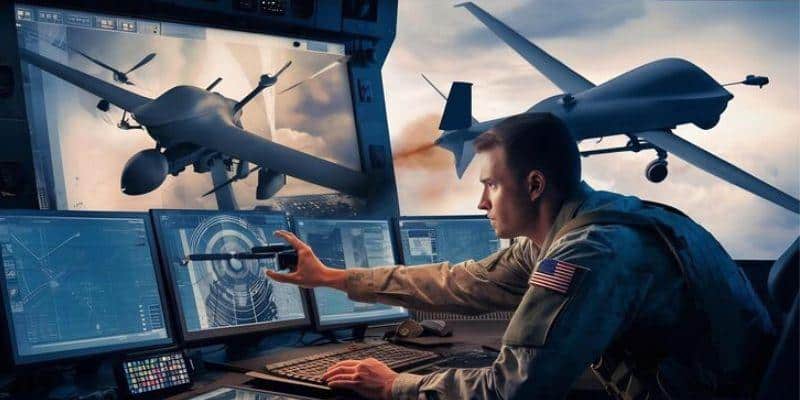
How AI Enhances Aviation Security Operations?
AI strengthens aviation security by continuously analyzing large volumes of data from multiple sources. It identifies patterns, flags anomalies, and reduces dependence on static rules.
This approach allows security teams to focus on real threats rather than false positives. AI systems operate continuously, providing consistent monitoring without fatigue, which is essential in high-traffic aviation environments.
By augmenting human expertise, AI improves accuracy and response speed while maintaining operational efficiency.
What is the Role of AI in Aviation Security and Risk Management?
One of the crucial roles of artificial intelligence in the security of aviation is employing machine learning for real-time surveillance, as well as in biometric identity verification.
Let’s discuss more in the following section.
AI’s Role in Threat Detection and Prevention
Threat detection is one of the most critical areas where AI delivers measurable value in aviation security.
- Intelligent Surveillance Systems
AI-powered surveillance analyzes live video feeds from terminals, runways, and restricted zones. These systems detect unusual movements, unauthorized access, or abnormal crowd behavior in real time.
Unlike traditional cameras, AI systems interpret context. They distinguish between routine activity and potential security threats, enabling faster and more accurate intervention.
- Behavioral Pattern Recognition
AI examines historical and real-time behavioral data to identify deviations from normal activity. This helps uncover insider threats, suspicious passenger behavior, or coordinated security attempts.
Behavior-based detection strengthens security without increasing friction for travelers or staff.
AI in Aviation Cybersecurity Risk Assessment
Digital systems are now deeply embedded in aviation operations, making cybersecurity a core component of overall risk management.
- Predictive Cyber Risk Identification
AI analyzes network traffic, system logs, and access patterns to identify early signs of cyber threats. Instead of responding after a breach, aviation organizations can intervene during the initial stages of an attack.
This proactive approach reduces system downtime and protects sensitive operational and passenger data.
- Monitoring Interconnected Systems
Modern aviation relies on tightly integrated systems across operations, navigation, and passenger services. AI monitors these connections continuously, identifying vulnerabilities that could trigger cascading failures.
Organizations working with an Aviation Software Development Company such as JPLoft often integrate AI-driven security analytics to strengthen visibility across complex digital ecosystems.
AI-Driven Risk Assessment and Prediction
Risk assessment in aviation goes beyond immediate security threats. It includes operational, environmental, and systemic risks.
- Predictive Risk Modeling
AI evaluates historical incidents, weather data, maintenance records, and operational metrics to forecast potential risks. These models help aviation leaders anticipate disruptions and implement mitigation strategies early.
Predictive risk assessment improves planning accuracy and supports safer operational decisions.
- Scenario Simulation and Stress Testing
AI simulates risk scenarios such as system outages, traffic surges, or security incidents. These simulations help organizations test response strategies before real-world events occur.
This capability strengthens preparedness and reduces uncertainty during high-impact situations.
AI in Airport and Passenger Risk Management
Airports are complex environments where security and efficiency must coexist.
- Passenger Flow Risk Analysis
AI analyzes passenger movement patterns to identify congestion risks, evacuation challenges, or security bottlenecks. This helps airports redesign layouts and optimize security checkpoints.
Improved flow management reduces stress, improves safety, and supports faster response during emergencies.
- Identity and Access Risk Evaluation
AI supports biometric verification and access monitoring, reducing identity fraud and unauthorized entry. These systems continuously assess risk levels without slowing passenger processing.
This balance between security and experience is essential for modern aviation hubs.
AI Supporting Aircraft and Crew Risk Assessment
Risk assessment extends into aircraft operations and crew management.
- Monitoring Operational Risk Signals
AI analyzes aircraft system data to detect irregular behavior that may indicate security or safety risks. Early alerts allow corrective action before issues escalate.
This enhances situational awareness and strengthens layered risk controls.
- Crew Risk and Fatigue Analysis
AI evaluates schedules, duty hours, and operational patterns to identify fatigue-related risks. By detecting early warning signs, airlines can reduce human error and improve overall safety.
These insights support compliance while protecting crew well-being.
AI for Continuous Security Monitoring
Aviation security is not static. Threats evolve constantly, requiring adaptive monitoring.
- Real-Time Risk Scoring
AI assigns dynamic risk scores based on live data inputs. These scores help security teams prioritize attention and resources where risk is highest.
This continuous evaluation improves responsiveness and reduces decision latency.
- Learning From Past Incidents
AI systems learn from historical incidents and near-misses. Over time, this improves detection accuracy and strengthens predictive capabilities.
Ongoing system refinement ensures security strategies remain effective as conditions change.
Maintaining these learning systems through reliable App Maintenance Services ensures accuracy, resilience, and long-term effectiveness.
AI and Regulatory Risk Management
Regulatory compliance is a critical dimension of aviation risk.
- Supporting Audit and Compliance Readiness
AI helps track access logs, system changes, and incident data automatically. This simplifies audits and reduces compliance gaps.
Automated compliance monitoring lowers administrative burden while improving transparency.
- Risk Documentation and Reporting
AI generates structured risk reports based on real-time data. These reports support regulatory submissions and internal governance without manual consolidation.
Clear documentation strengthens accountability and regulatory confidence.
The Evolving Role of AI in Aviation Risk Strategy
AI is moving from a support function to a strategic component of aviation security planning.
Future systems will integrate broader data sources, improve explainability, and enable faster autonomous responses under human supervision. Collaboration between AI systems and aviation professionals will define the next phase of risk management maturity.
As aviation operations grow more complex, AI will remain essential for maintaining safety, resilience, and trust.
Conclusion
Artificial Intelligence plays a central role in strengthening aviation security and risk assessment by enabling proactive threat detection, predictive risk modeling, and continuous monitoring. From physical security and cybersecurity to passenger flow and operational risk, AI enhances visibility and decision-making across the aviation ecosystem.
By supporting earlier intervention and smarter responses, AI helps aviation organizations manage uncertainty, reduce incidents, and maintain safe operations in an increasingly complex environment.
