


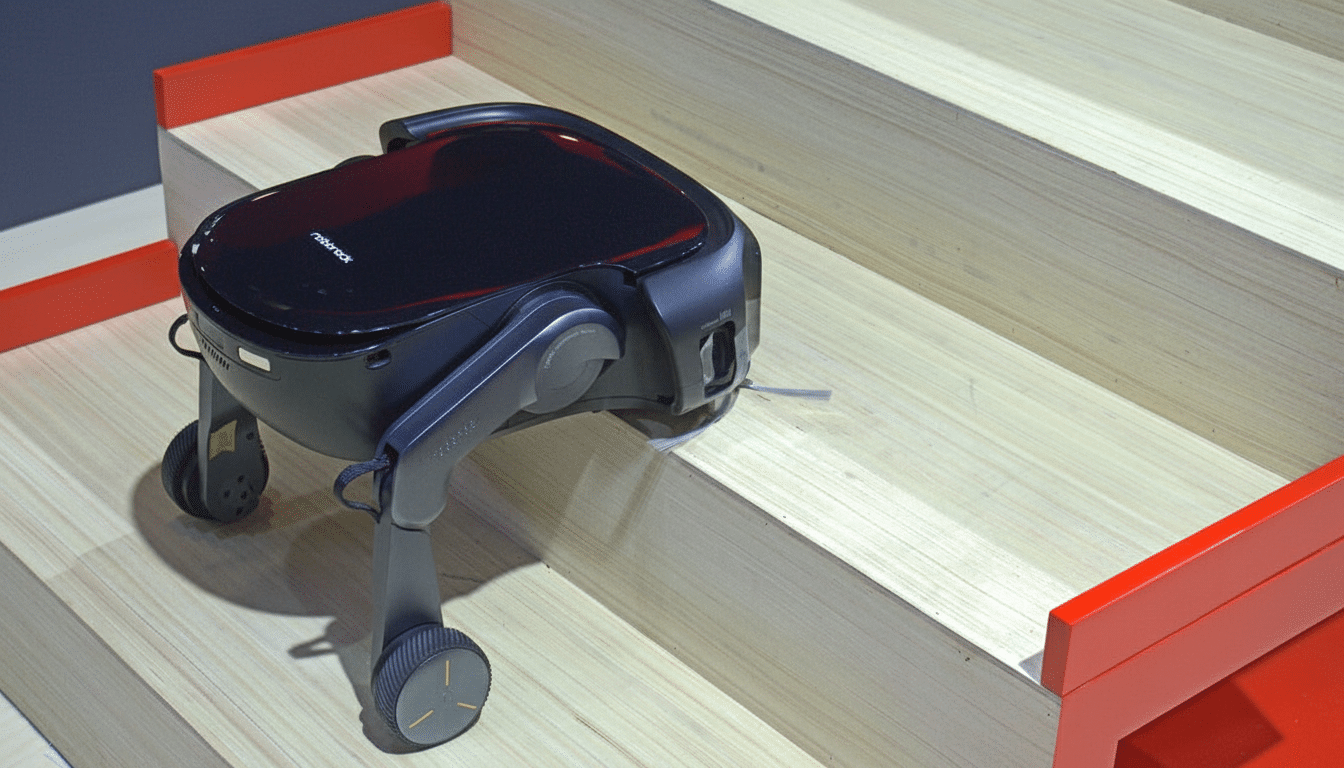
Roborock’s Saros Rover commanded one of the largest crowds on the show floor, and with good reason: It’s the first robot vacuum I’ve seen at CES that can ascend stairs under its own power.
The company’s wheel-leg design — strong wheels attached to articulating legs — allows the Rover to raise its body almost a foot into the air to climb steps, clean each step, and travel between floors without requiring human assistance. In a category that’s been stuck on flat floors for a long time, it was groundbreaking.
- Why a two-legged rover could finally solve the stair gap
- How the wheel-leg system works to climb stairs safely
- AI and perception under the hood enable safe mobility
- What I saw on the CES floor during live stair demos
- Market impact and competition for stair-savvy robovacs
- Beyond the Rover: Roborock’s 2026 lineup and new models
- What to watch next as the stair-climbing Rover matures
Why a two-legged rover could finally solve the stair gap
Stairs are a dead-end for every typical robot vacuum. That gap would have forced owners to purchase multiple units or go from room to room hoisting a robot up and down the stairs — essentially negating the whole point of automation. Smart home adoption barriers (including setup complexity and incomplete coverage) were identified by the Consumer Technology Association, with multi-level homes proving a big gap. A robot that can actually do stairs, though, changes the equation for busy families and for aging-in-place settings in which lifting a machine is not an option.
It also solves a service-robot problem that industry groups like the International Federation of Robotics have for years said is vexing: real homes are messy — and three-dimensional. Room to room isn’t just about mapping — it’s about mobility.
How the wheel-leg system works to climb stairs safely
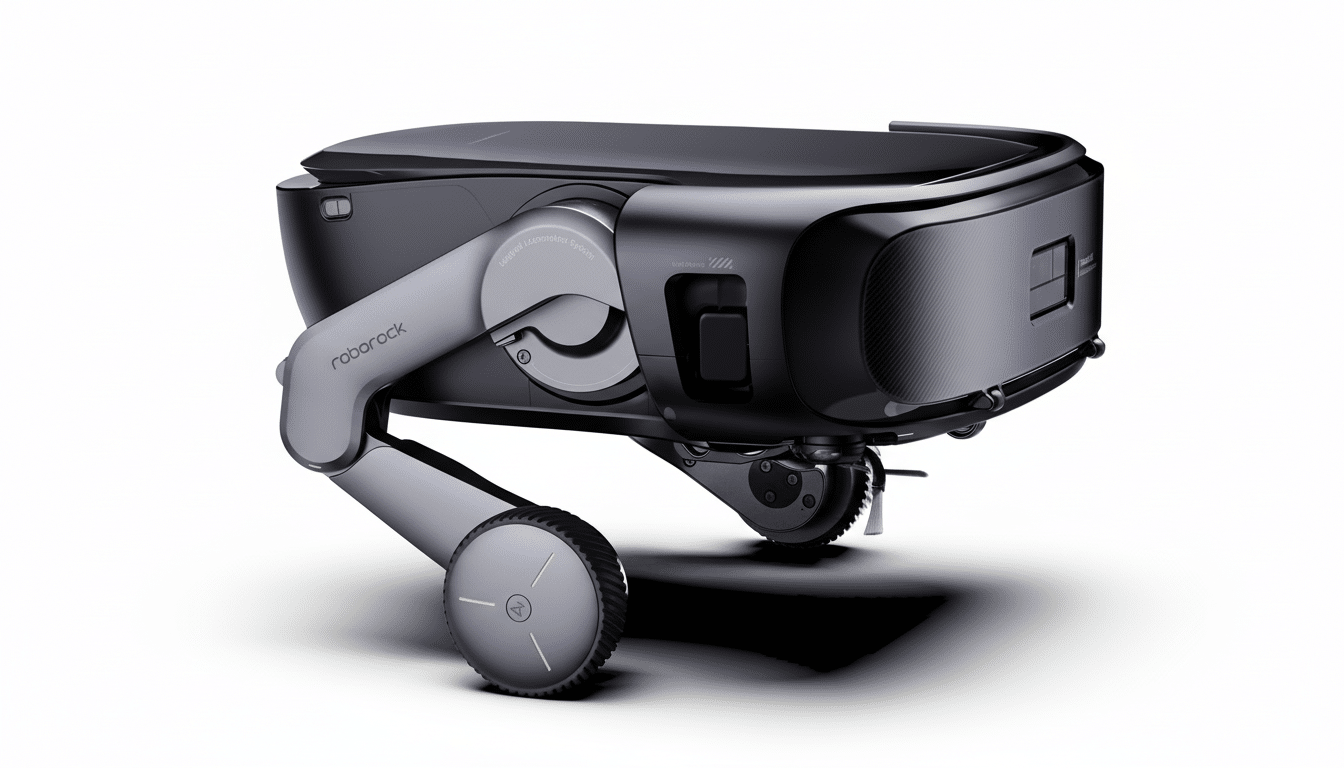
Roborock’s “wheel-leg” system combines the speed and efficiency of wheels with the versatility of legs. A driving wheel is mounted on the forward end of each powered, foldable leg. In flat-floor mode, it even functions like a regular vacuum cleaner. When the Rover recognizes an upward slope, like the nose of a stair, it can extend its legs to lift its chassis so that the main body stays level while wheels remain on the ground for traction.
On demos, the legs worked independently to move precisely, shifting stance and executing tight pivots, and even controlled micro-hops over low thresholds. The robot stops on every step to vacuum and then stands up, moving to the next one in line until it reaches a landing. It looked deliberate, not showy, which is what you want in a machine taking care around a fall hazard.
AI and perception under the hood enable safe mobility
Roborock says the Rover combines motion sensors and 3D spatial algorithms to plan footfalls and balance. That means a combination of LiDAR or structured-light depth sensing, inertial measurement, and visual odometry — all tools that will be familiar to any practitioner in modern mobile robotics — driven by AI algorithms for gait planning and obstacle avoidance. The trick is to keep the center of mass inside a supporting polygon while wheels switch surfaces, an old strategy from the legged robot side of the table but repackaged for household safety.
The practical upside: fewer rescue missions to retrieve miscommunicated cues, more juices and vino.
And where robovacs of the ordinary sort get confused by dark rugs, charging cables, and door saddles, a system that can lift and tilt its body can step past trouble rather than plowing into it. That ought to cut down on error codes and expand coverage in messy homes.
What I saw on the CES floor during live stair demos
The preproduction unit ascended and descended a short staircase without assistance, pausing to wipe clean each tread and then successfully pivoting on the landing mid-step. It went from hard floor to carpet, avoided cord tangles, and made a quick stop without wobble. No histrionics — no sprinting, no dramatic leaps — just measured moves and strong purchase. Roborock confirmed the Rover is a legit product in the works but refused to provide any word on price or a ship date.
That caution is understandable. Stair-capable models are subject to more rigorous tests and certifications than flat-floor robots. Every gallop has to be good when the dust bin is half full, the brushes are spinning, and load distribution is changing. Battery demand skyrockets during climbs, too, so clever energy management will be just as vital as smart mechanics.
Market impact and competition for stair-savvy robovacs
Roborock, which has been on a steady and methodical march toward fixing everything in this category with obstacle detection and self-washing docks, is back for what amounts to the last big mobility hurdle. Competing models from iRobot’s Roomba line, Ecovacs and Dreame, as well as the Dyson 360 Eye, all perform at least as well inside but treat stairs like a no-go area. If Roborock can deliver this consistently, it might change the standard for what we should expect from a high-end robo-vac and help nudge the entire market toward mobility-first design.
Analyst firms following home robotics observe continued double-digit growth of service robots and a strong replacement cycle for floor care. Sell the ability to manage stairs and you can expand the potential customer base as well as eliminate duplicate devices. The wild cards are price, complexity of maintenance for the leg modules, and long-term durability.
Beyond the Rover: Roborock’s 2026 lineup and new models
Roborock is also updating its classic lineup of vacuuming-and-mopping models in the US, so you have a new stable of vacuums for your house: Saros 20, Saros 20 Sonic, and Qrevo Curv 2 Flow as well as a RockNeo Q1, RockMow X1 LiDAR, and RockMow X1 for trimming the grass. For hard floors, the new F25 Ace Pro wet/dry vacuum incorporates in-unit foam generation to best sticky stains, available for an introductory $550 with a regular price of $699 post-promotion.
What to watch next as the stair-climbing Rover matures
Pricing and availability for the Saros Rover are a mystery, but this engineering isn’t being built out just as some kind of concept-stage theater. Key upcoming milestones:
- Longer run-time demonstrations on entire staircases
- Recovery behavior in the presence of irregular steps
- Dock design for a multi-floor setup
- Field tests inside real homes
If the company is able to get past those and address those other issues too, then the stair problem — which has been the longest-standing limitation of this category — finally might have a credible solution.
