


Rivian is getting ready to show its autonomy roadmap, and industry watchers anticipate an inside look at how the electric truck-and-SUV maker aims to introduce hands-free driving and smarter driver assistance throughout its range. The company has been hinting at a next phase that relies on better sensors, onboard AI and a more concrete rollout plan for customers.
What Rivian Is Expected To Announce About Autonomy
Central to the reveal will be a feature long-awaited by both owners and analysts: a robust highway-capable, hands-free system that Rivian hinted at during recent demos. Anticipate that the pitch will be for supervised automation of everyday driving, not a leap to robotaxis, emphasizing long-distance comfort, lane changes, and traffic management in a defined operational design domain.
- What Rivian Is Expected To Announce About Autonomy
- Sensors and Compute in the Spotlight for Rivian’s Autonomy
- Safety and Regulation Form the Basis of the Pitch
- What Pricing and Rollout Owners Can Expect
- How AI and Fleet Learning Fit Into Rivian’s Driver Assist Plans
- Competitive Stakes and Differentiators in Driver Assist
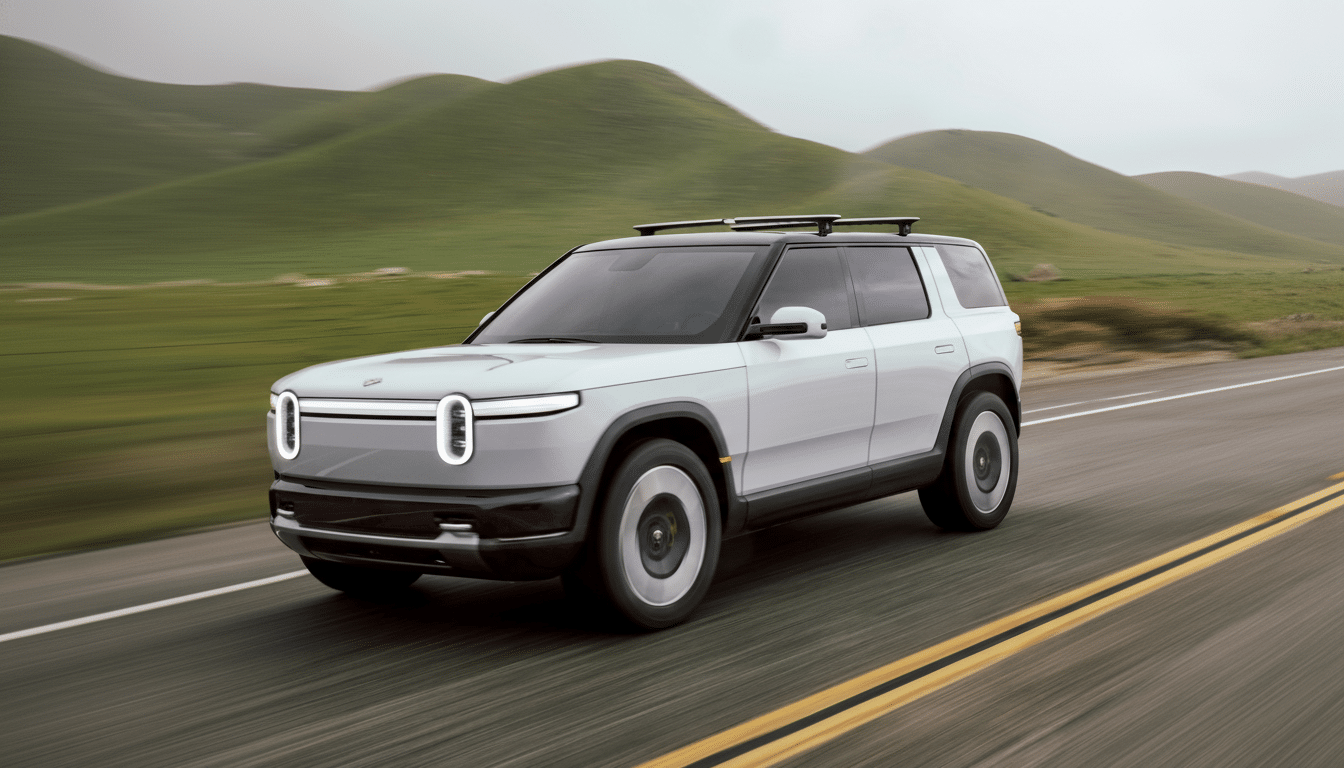
Rivian is also expected to detail a phased release plan that will begin with mapped highways and expand via over-the-air updates as more confidence and coverage are achieved. Considering the brand’s customer base—adventure-hungry buyers who tow, off-road, and take cross-country trips—search for messaging on how autonomy features can adjust to heavy loads, bad weather, and badly painted road lines.
Sensors and Compute in the Spotlight for Rivian’s Autonomy
Unlike a camera-only strategy, Rivian has been a proponent of using multimodal sensors that use cameras as well as radar and ultrasonics. That choice is relevant in highway automation applications, where radar’s ability to measure object velocity can bolster performance in rain, spray, or glare. The company could talk about what’s in store on the roadmap, like higher-resolution imaging radar or even LiDAR on future platforms, and more capable processing to fuse these signals in real time.
Rivian’s existing Driver+ system already functions as a hands-on, eyes-on assist system, and the jump to hands-free comes down to two upgrades: a better perception stack and improved driver monitoring.
Look for information on interior camera monitoring aimed at making sure the driver stays active, which imitates best practices touted by safety groups and regulators.
Safety and Regulation Form the Basis of the Pitch
The National Highway Traffic Safety Administration has stepped up scrutiny of partial automation, and the Insurance Institute for Highway Safety recently unveiled ratings that focus on safeguards such as driver monitoring and clear handoff provisions. Rivian will have to show that its system creates conservative boundaries and has graceful degradation—slowing, signaling, and giving back control of a car when conditions exceed the limits of the system.
The European system, which is known as the Assisted Driving evaluations of Euro NCAP, rewards systems that strike a good balance between driver engagement and capability. If Rivian is pointing to third-party testing targets or internal validation metrics—miles between disengagements by scenario, for example—that would go a long way in establishing that the tech facilitates safety and doesn’t cultivate overreliance.

What Pricing and Rollout Owners Can Expect
Pricing is a pivotal question. Throughout the industry, more sophisticated systems for use on highways are marketed as one-time options or subscriptions. Ford’s BlueCruise and GM’s Super Cruise play on subscription models attached to connected services; Tesla gives you the option for both an upfront price and monthly access for its offering. Rivian could offer a middle way: a standard set of features that come with the vehicle, with a premium tier unlocking hands-free operation and more.
Work may be best done in a staged deployment—by region, mapped road class, and feature set. OEMs should tune in for details about eligibility by hardware generation, retrofits, and how towing or off-road modes work with hands-free operation. To minimize misunderstandings, transparent communication on what the features can and cannot do, and in which conditions they will work, is vital.
How AI and Fleet Learning Fit Into Rivian’s Driver Assist Plans
Rivian is planning to extol an AI-informed feedback loop: capturing customer-vehicle data, cloud-based training, and iterative improvement through over-the-air updates. This “fleet learning” technique—regularly employed by the industry now—can hone lane-keeping in confusing construction zones, sweeten cut-in handling at freeway speeds, and increase system confidence in inclement weather without waiting for a full hardware refresh.
With data comes responsibility. The importance of privacy and clear consent will be on a par with performance. Robust policies on what is recorded, how it is anonymized, and how long it’s retained would also place Rivian in line with a set of nascent best practices proposed by safety and privacy groups.
Competitive Stakes and Differentiators in Driver Assist
Rivian joins a crowded field, one in which GM’s Super Cruise has received strong reviews for hands-free highway driving and Ford’s BlueCruise continues to broaden road coverage, while Mercedes-Benz offers limited Level 3 autonomy in certain markets and Tesla pushes for rapid software iteration under a supervised model. Where Rivian may have an edge is in pairing rugged electric vehicles with a driver-assist system designed with road trips, towing stability, and weather resilience in mind—attributes that appeal to its core buyers.
The proof will be transparency. Hard performance numbers, a sane operational design domain, and a strengthening body of measurable improvements can turn curiosity into confidence. If Rivian offers that clarity, then its autonomy update could turn into a significant cornerstone of the brand’s EV plan—something more than just another thing they sell you and something less like a game-changer in terms of why choose the R1 platform over an AV rival.
