


Rivian is preparing to let owners control key vehicle functions from an Apple Watch, extending the EV maker’s software-first strategy from the dashboard to the wrist. The forthcoming companion app integrates core tasks like locking and unlocking, window venting, and triggering the alarm, while layering in thoughtful touches designed to make quick adjustments feel natural on a tiny screen.
What Rivian Owners Can Do From Their Apple Watch
Beyond the basics, Rivian says watch wearers will be able to rotate the Digital Crown to set a charging target—say 80% for a daily commute—or nudge cabin temperature without digging into multiple menus on a phone. The app will also support four customizable “quick controls,” letting drivers pin their most-used actions for one-tap access, whether that’s preconditioning on a cold morning or popping the frunk at a trailhead.
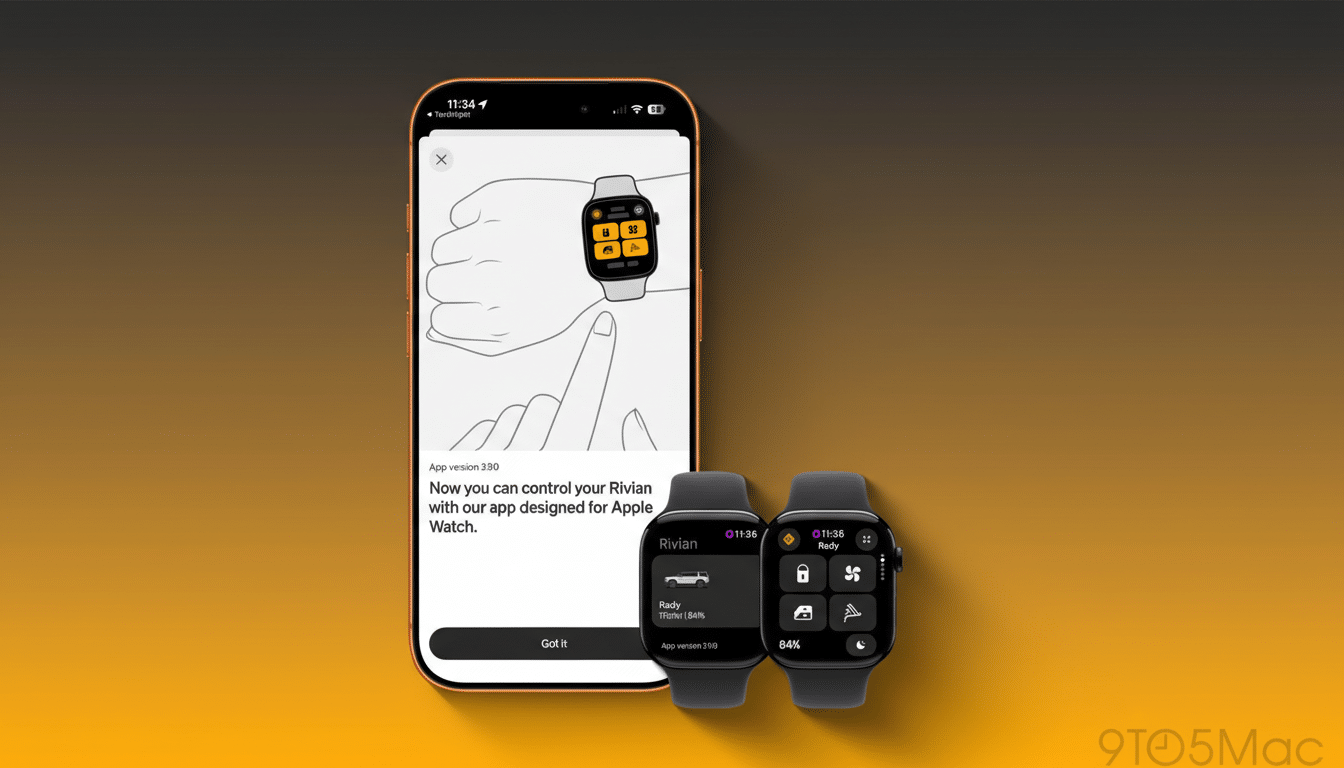
This kind of control is especially useful in the scenarios Rivian markets heavily: adventure days when a phone stays buried in a pack or left behind entirely. The watch becomes a lightweight command center for the essentials, trimming small points of friction that add up in daily use.
Generational Differences and Apple Watch Security
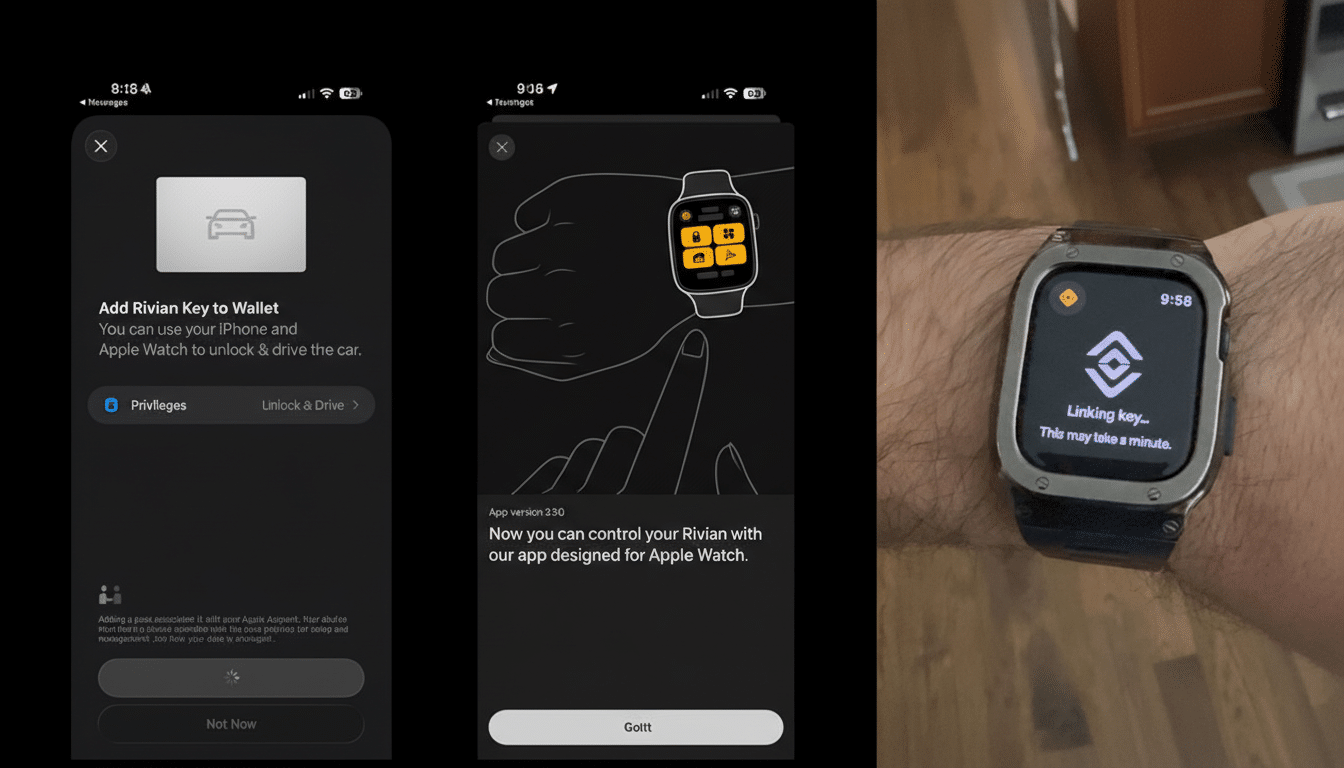
Capabilities will vary by vehicle generation. On first-generation R1T and R1S models, owners can lock and unlock from the Watch app by tapping the on-screen control. Second-generation R1 vehicles will support passive entry as the driver approaches, provided a digital key is configured—an experience that mirrors today’s best phone-as-key systems and leans on improved proximity detection.
While Rivian hasn’t disclosed all the under-the-hood mechanics, the approach aligns with industry security norms: watch access tied to a verified owner account and gated by the Watch’s own protections like wrist detection and passcode. Expect the usual server-side permissioning and revocation controls in the main mobile app to carry over here.
Part of a Larger Software Push at Rivian
The Apple Watch integration arrives alongside a broader over-the-air update aimed at comfort and usability. A new “kneel mode” drops the ride height an extra inch below the previous low setting to ease entry, loading, and hitching. Drivers can also now switch among drive modes without disengaging the advanced driver-assistance system, smoothing transitions between, say, highway cruising and a twisty backroad.
Cold-weather users get a smart visual cue: a blue tint on the battery graphic to indicate when energy is being diverted to warm the pack. It’s a small addition that demystifies range behavior in freezing conditions, where preheating can materially affect consumption.
How It Compares to Rivals in Smartwatch Controls
Automakers have flirted with watch apps for years, but depth and polish vary widely. BMW, Genesis, and others support Apple’s CarKey, which turns an Apple Watch into a digital key. Tesla, notably, lacks an official Apple Watch app, leaving owners to rely on popular third-party options. Rivian’s move stands out not just for offering factory support, but for going beyond door locks to include granular tweaks like charge targets mapped to the Digital Crown—an intuitive interaction many competitors miss.
The timing also makes sense. Apple Watch remains the category leader, with firms like Counterpoint Research repeatedly ranking it at the top of global smartwatch share. Building for the dominant wearable gives Rivian an immediate audience without asking owners to buy extra hardware or carry a key fob on a run.
Why This Apple Watch Integration Matters for Rivian
Rivian’s brand promise blends rugged utility with software refinement, and the watch app is a tidy expression of that ethos. It trims seconds from common tasks and unlocks phone-free moments that resonate with an outdoors-minded community. At scale, those conveniences are sticky: in 2024, Rivian produced roughly 57,000 vehicles, and each incremental software win compounds across a growing fleet.
It also reinforces Rivian’s positioning as a software platform company. The carmaker formed a $5.8 billion technology joint venture with Volkswagen in 2024, with the goal of seeding Rivian-developed software into future VW Group vehicles. Delivering polished, high-frequency touchpoints—like seamless wrist controls—signals maturity in the kind of user experience automakers increasingly want to license, not rebuild.
The Bottom Line on Rivian’s Apple Watch Controls
Rivian’s Apple Watch app is a small screen with outsized impact. It brings frequently used controls closer, respects the context of life outside the vehicle, and complements a broader slate of OTA improvements. For owners, it’s another reason to leave the phone behind. For Rivian, it’s proof that in the EV era, convenience—and the software that delivers it—can be as differentiating as horsepower or range.
