


Rivian is letting its autonomy ambitions out for a test drive, in the form of ride-alongs meant to demonstrate a new end-to-end AI driving system it’s developing that it calls the Large Driving Model. The demo wasn’t perfect — there were a couple of harsh brakes and at least one takeover — but it represented a significant shift in strategy: from rule-based automation to transformer-driven learning that resembles how humans actually drive.
The company says its redesigned stack would start unlocking “Universal Hands-Free” driving in early 2026 on about three and a half million miles of U.S. and Canadian roads with visible lane markings. More capable point-to-point mode is on tap for the back half of 2026, with eyes-off capability planned on next-gen hardware further down the road.
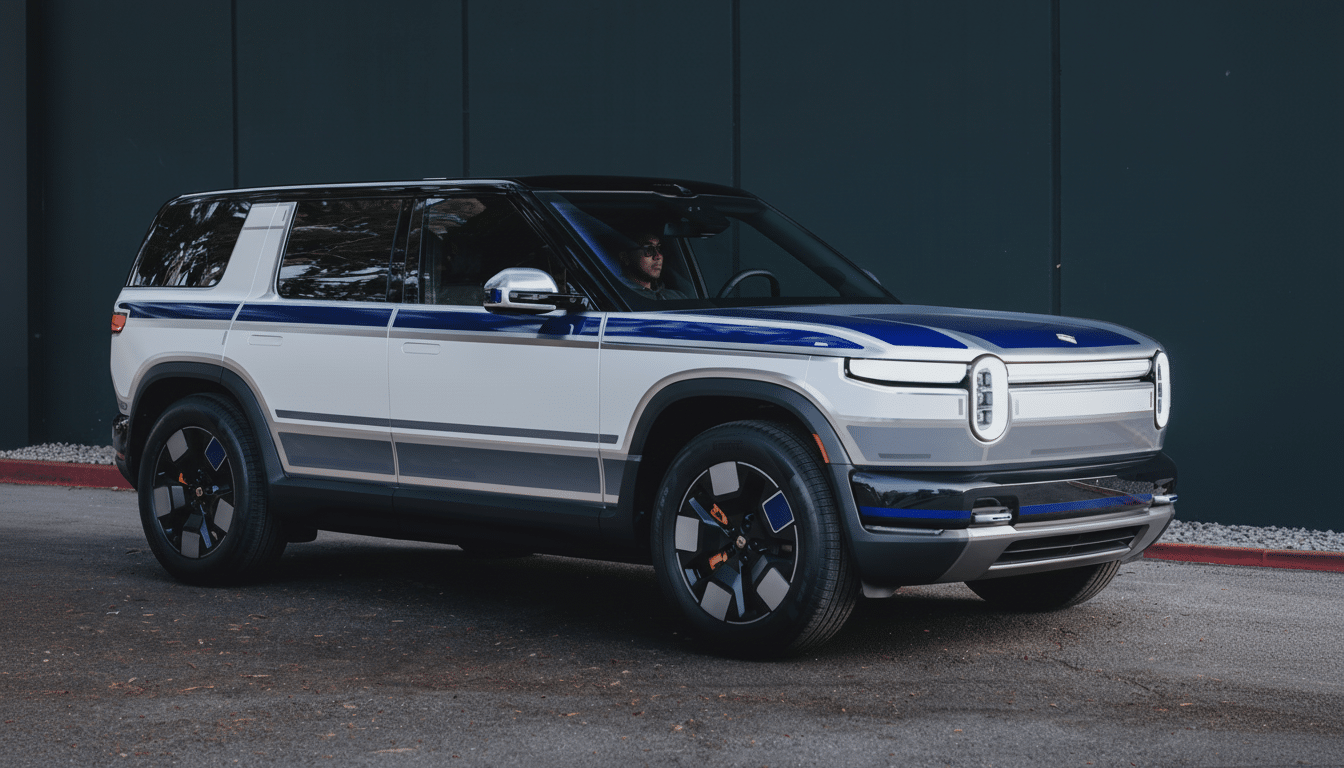
Inside the Large Driving Model Powering Rivian’s AI
Rivian rethinks its autonomy roadmap as transformer-based AI speeds up. The transformation of automotive software was the story this year. The pivot, in the words of CEO RJ Scaringe, is a clean-sheet rebuild for an AI-first future where behavior wouldn’t come from hand-coded rules but from data. The resulting system, LDM, is an end-to-end model trained from vehicle fleet-scale driving video and telemetry to plan, predict, and control jointly in a single learned loop.
The LDM now runs on Nvidia Orin in second-gen R1 vehicles out since 2024. That’s plenty of on-vehicle compute for perception and planning while Rivian trains models in the cloud. The company’s methodology mirrors that of industry leaders such as Tesla and Wayve: condense experience into a generalizable policy using self-supervised learning, then iterate on data ingestion from the real world; offline simulation to learn faster and not destroy cars in the process; and over-the-air updates.
Rivian will graduate to a bespoke autonomy computer — and add lidar — in its next-gen R2 platform. That hardware is designed to enable eyes-off use cases, with redundancy and richer geometry as the key ingredients that regulators will demand for higher automation levels.
What the Bay Area Demo Revealed About LDM Performance
Out on a mixed urban-suburban loop near the company’s Bay Area campus, the LDM handled stoplights, turns, and speed bumps under those conditions without rule scripts.
It was similarly clear where the frontier remains: one last late hard brake behind a vehicle making a turn, and a required manual takeover in a temporary roadwork area that’s a single lane. Other ride-alongs are said to have seen comparable disengagements — not at all surprising for pre-release systems, and a reminder that it’s the final gaps that are the hardest work.
It just felt so obviously learned rather than programmed. That’s the point. End-to-end models can replicate the nuance of human driving — and its resulting behavior, micro-negotiations at merges, subtle speed adjustment — without an explosion of hand-tuned rules. The flip side, in a world where performance scales with data (and training thereof), is that breadth, balance, and the quality of labeling become existential.
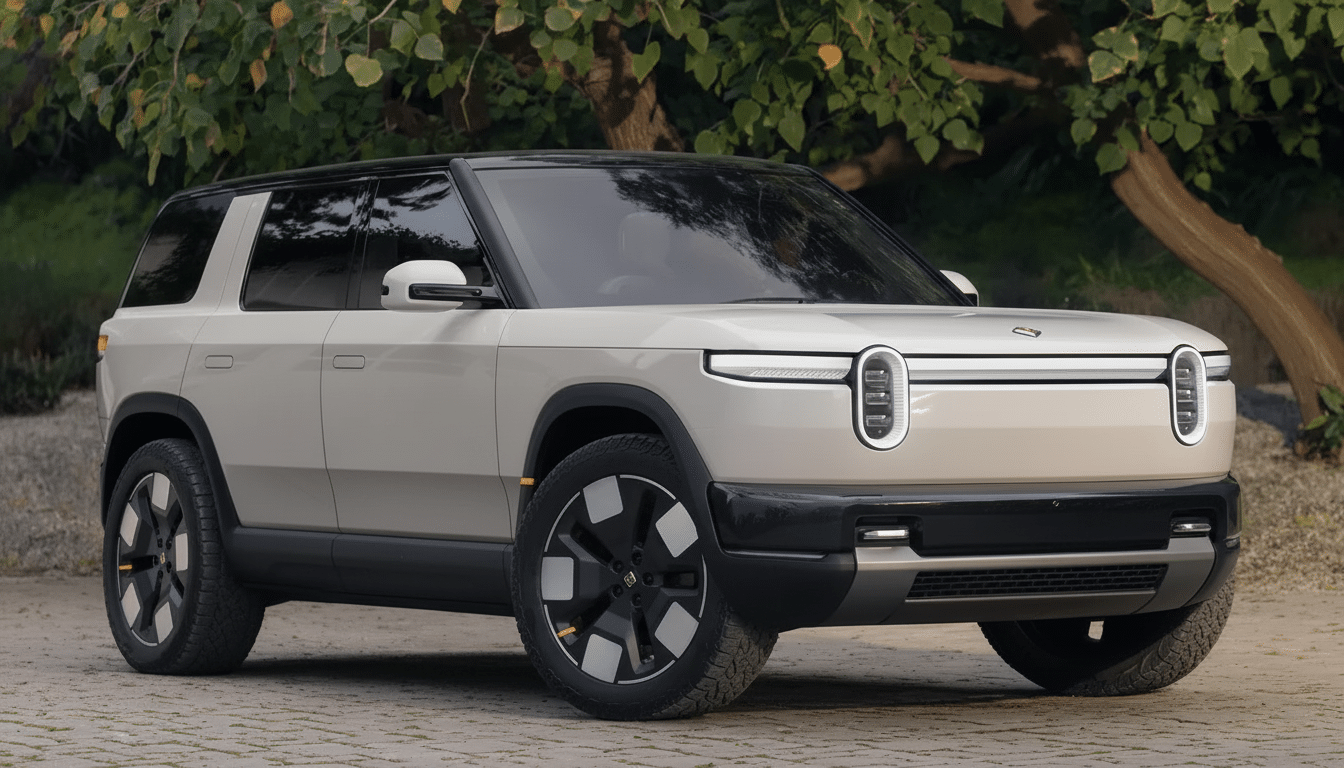
A Compressed 2026 Roadmap for Hands-Free and Eyes-Off
Rivian is aiming for hands-off “Universal Hands-Free” across 3.5 million miles where there are lane lines in the near term, followed by consumer point-to-point by late 2026. Early R2 purchasers could risk a timing mismatch: vehicles ready for delivery before the new autonomy computer and lidar. Those early units will still receive the hands-off point-to-point mode, but eyes-off will have to wait for the upgraded hardware.
The company is being up front about that phased rollout — a practical step to help inform purchasing decisions. Certainly, some customers will wait for eyes-off capability, while others will opt in now and plan to upgrade. That clarity is crucial, too, as Rivian drives the less expensive R2 further afield to ramp up installation numbers — and, critically, pour more data into the firehose serving LDM training.
How Rivian’s Approach Stacks Up Against Rivals and Rules
Rivian is stepping into a crowded, unsettled field. Tesla’s hands-off city-street feature is live across the country, driven by an enormous fleet data advantage. GM’s Super Cruise and Ford’s BlueCruise have expanded their geofenced hands-free coverage to hundreds of thousands and more than a hundred thousand miles of divided highways, respectively. Mercedes has also started eyes-off operation in certain zones supported by lidar-based redundancy. Rivian is betting that a flexible, end-to-end learner can get up to speed fast if the data pipeline is rich and the hardware is a fit.
Regulators are paying sharper attention. NHTSA has increased scrutiny of how robustly driver-assist systems’ names match their performance, while insurers and safety groups like IIHS are calling for clearer definitions of both driver monitoring and operating domain. Rivian’s lane-line requirement and phased eyes-off aspirations suggest an interest in cleanly defining ODD boundaries — a trust-building first step.
What Success Will Require to Scale LDM Safely by 2026
Three flywheels will drive the scaling of LDM: fleet miles to catch the long tail of edge cases, efficient training infrastructure to turn that data into better behavior quickly, and rigorous validation to show those safety gains are robust. That Rivian is adding lidar to its R2 offering says the company is designing for redundancy and safety margins that can actually be measured, not just something to announce.
The company also must make autonomy work for its brand. A vision of the future where an R2 can wend its way along pavement through a forest and meet you at the trailhead is far more on-message than rock-crawling heroics. That’s realistic, also, as LDM learns to drive responsibly past the city grid (unsatisfactorily marked rural routes, vibratory-graded dirt), cool adventure stuff emerges that doesn’t flirt with extreme-risk situations.
Two things emerged from the ride-along. First, Rivian’s full-stack pivot is genuine and already quite competent in regular traffic. Second, converting that competency into reliable and pervasive hands-off driving by 2026 will require a stunning velocity around data, compute, and safety validation. If it can actually deliver on its numbers, the long-awaited autonomy story might finally live up to its roguish image: not just meeting drivers where they start but taking them exactly where they want to end up.
