


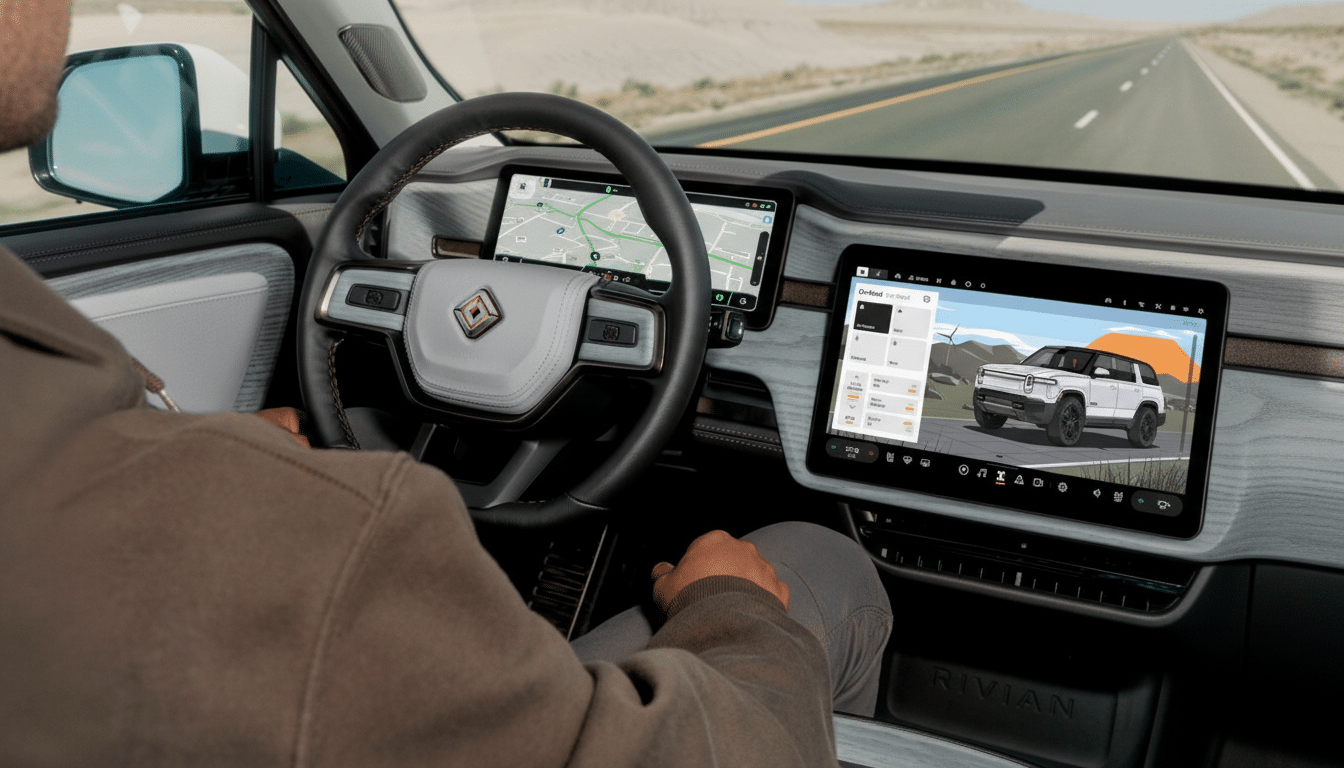
Rivian isn’t budging when it comes to Apple CarPlay or Android Auto, but the company is rolling out a promising alternative. The company revealed a new AI-enabled digital offering equivalent, the Rivian Assistant (he’s not a teal dot…we think), to meet texting, calendar managing, navigation, and deep vehicle control via natural voice needs in 2020s-style dash convenience without exclusively handing over minding your dashboard Apple or Google.
Rivian Doubles Down: No CarPlay Support in Its EVs
In a page from the Tesla and General Motors playbook, Rivian is also omitting third-party phone projection from its cabins to maintain one unified software experience. Executives say native interface allows faster iteration, more integration with hardware and fewer UI handoffs that can distract drivers.
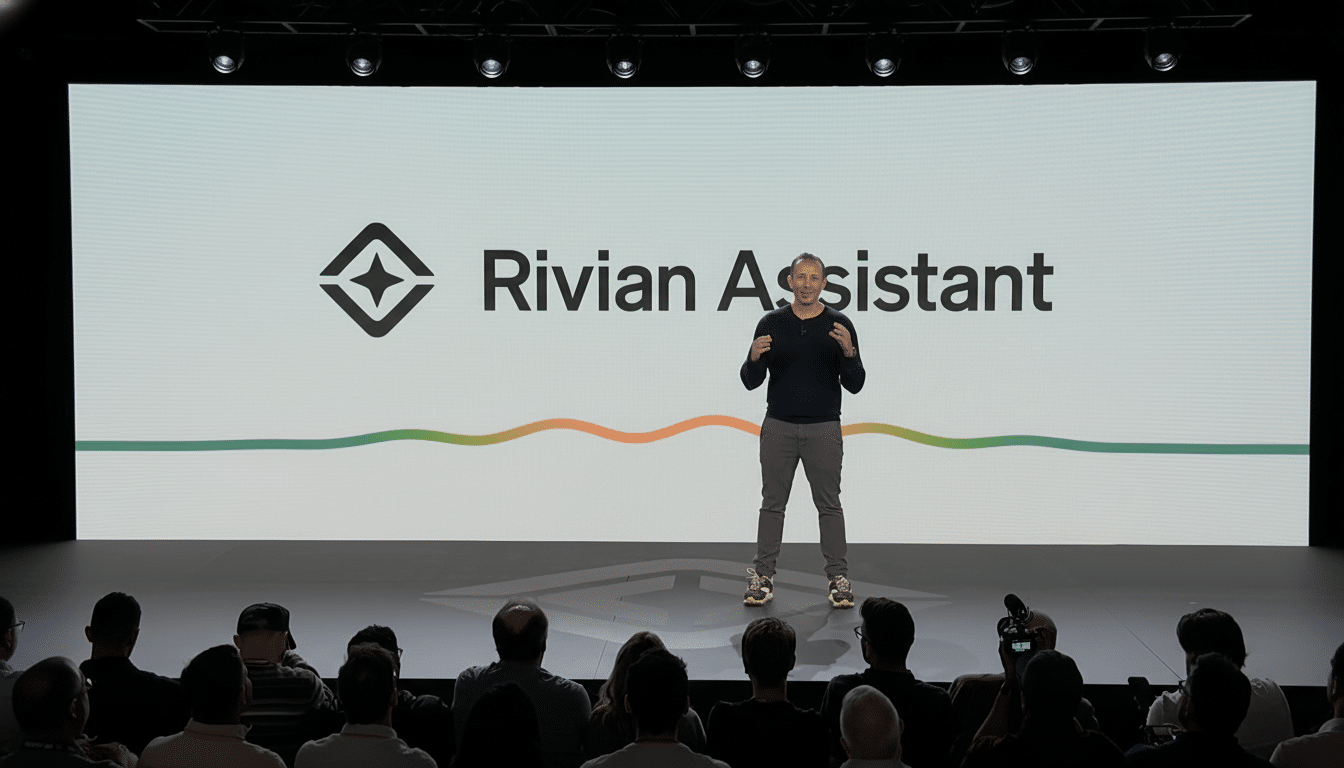
Speaking at the company’s Autonomy and AI event, Chief Product Officer Wassym Bensaid described the assistant as a bridge for owners that were left wanting after not getting CarPlay and Android Auto features. Instead of mirroring a phone, Rivian’s system mines the vehicle’s own sensors and software stack, so theoretically there should be a single voice command to read messages, change drive modes or share arrival times.
What the New Assistant Can Do for Rivian Drivers
Rivian says the assistant can also read and send texts for both iOS and Android users, which can be started from a steering-wheel button or “Hey Rivian.” In a live demo, the system pulled up recent messages, dictated a response, and sent it without hands — unless it was your own voice holding them — all without opening an app.
It also syncs with Google Calendar. This can allow drivers to ask what’s on the schedule, move meetings, and drive to appointments via the address included in the invitation. In the demo, the assistant texted a location to a friend along with an ETA for their rendezvous at a restaurant, crossing phone-based communication with this car’s native routing.
Importantly, the assistant also manages car features that CarPlay and Android Auto can’t. Examples presented were toggling the All-Purpose to Conserve mode button to better achieve ideal efficiency, selecting seat heaters as needed, and calculating state of charge when reaching a destination. And it’s that type of full-stack access — phone, cloud and car — that Rivian is hawking.
The assistant is powered by several large language models working together as components of the company’s Unified Intelligence platform and will be activated through an over-the-air update in early 2026. According to Rivian, the update will be applicable to all of its models — its first-gen vehicles (like our configuration) as well as its second-gen systems and the soon-to-come R2 — and it doesn’t require additional hardware.
Why All of This Matters to Drivers Considering CarPlay
For many buyers, CarPlay and now Android Auto have gotten to be table stakes. Smartphone mirroring has been consistently one of J.D. Power’s most-wanted features in its technology studies, and Apple has said that a significant majority of U.S. car buyers are “interested” or “very interested” in taking cars with CarPlay for a test drive at an Apple-friendly dealership. Rivian’s refusal is a risk of alienating that audience.
The company’s workaround is focused on the three pain points that tend to frustrate electric car drivers most: their inability to access messages, use a calendar or have its navigation system hand off guidance from a smartphone. If it functions the way GM might hope, owners get the convenience they’re used to with true vehicle control, none of which can be said about CarPlay or Android Auto in their current form. From a safety standpoint, and organizations such as AAA have been saying this for years, the name of the game is reducing visual-manual interaction; a good voice-first interface can mitigate that to an extent even if cognitive load still plays a part.
Caveats and Open Questions About Rivian’s Assistant
Voice assistants are notoriously prone to mishaps, and Rivian’s demo was less than seamless — one inquiry about a calendar took two attempts. The assistant is designed to remember and have context awareness, but in practice, real-world reliability will need to be judged before drivers trust the system for tasks that they take on while driving every day.
Another question is how wide third-party integration will be. Rivian confirmed Google Calendar and suggested that more apps and agents are coming, but didn’t specify music, messaging beyond system-level texts, or productivity services (like email or Slack). For the users who sat on certain CarPlay apps, this strategy will be as successful as Rivian is able to scale its system of partnerships.
Part of a Bigger In-Car Software and Autonomy Bet
The assistant is one piece of Rivian’s larger software and autonomy effort. It also unveiled a custom in-house autonomy processor and intentions to add LiDAR to its sensor suite, reflecting a broader industry consensus that the combination of multiple modalities beats cameras by themselves in low visibility. The assistant will also contribute to diagnostics and predictive maintenance, using telemetry and history to identify issues before they leave drivers stranded.
Rivian is making a classic product bet, stacked up: own the full UX and fill in the CarPlay gap with a native system that’s good enough — preferably better — because it touches everything from your calendar to your cabin temperature to how you’re thinking about battery plan. If the execution here translates to reality in 2026, Rivian could retain control of its touchscreen interfaces without losing the smartphone-centric conveniences that buyers expect.
