


A budget phone isn’t supposed to look or feel like a premium device, but Xiaomi’s Redmi Note 15 5G blurs that line so convincingly it begs a basic question: do most people even need a flagship?
That’s right: in what it claims is an attempt to break a mold or two, it gifts midrange buyers real-deal specs like a curved-glass AMOLED display, bold camera aspirations, and a commitment to long-term software support at under-premium pricing.
- Why this midrange phone matters in today’s market
- Premium features without the premium price tag attached
- Camera hardware that punches above its weight class
- Software support and longevity for extended ownership
- Price and the overall value proposition across regions
- What you still give up compared with true flagships
Why this midrange phone matters in today’s market
Consumers are counting harder than ever. TrendForce analysts have also spotted double-digit hikes in mobile DRAM contract prices, while IDC has observed phone replacement cycles expanding beyond the three-year mark across much of the globe. At the same time, Counterpoint Research shows the premium segment now accounts for 24 percent of global shipments even though most buyers are still looking at price points below that level. In other words, value is being scrutinized — and this phone comes tailored to that moment.
Premium features without the premium price tag attached
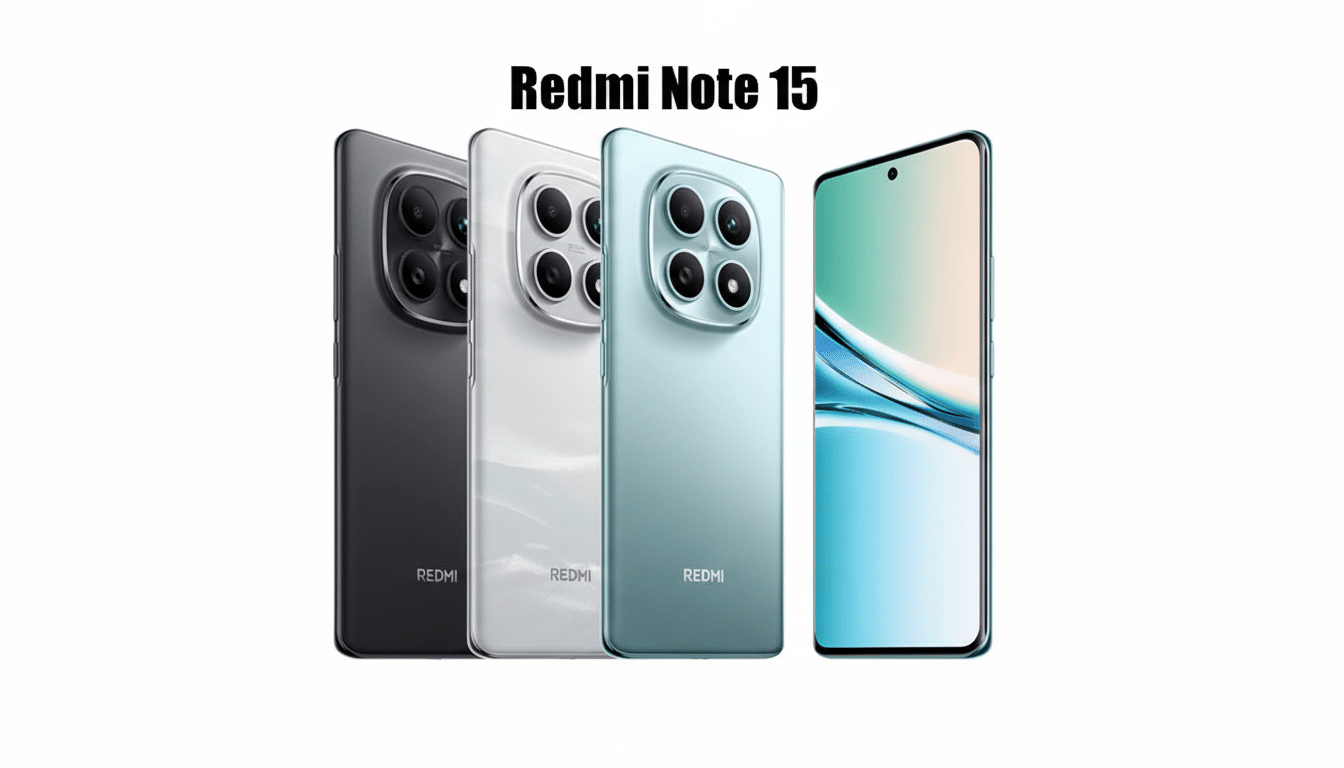
The Redmi Note 15 5G wears its ambition on the front: a 6.77-inch FHD+ AMOLED panel that curves at the edges, operates at up to 120Hz, and reaches a peak brightness of 3,200 nits.
Curved screens used to be a Pro-exclusive treat; here, they form part of a frame that measures an impressive 7.35mm in thickness and is light at just 178g, with support for an in-display fingerprint reader, IP66 ingress protection, and testing to MIL-STD-810H standards, showing intent around durability even if it’s not a rugged phone.
Under the hood is Qualcomm’s Snapdragon 6 Gen 3, a modern mid-tier chip that hits the “just right” balance between efficiency and reasonably responsive performance for social apps, web browsing, streaming, and popular games at sensible settings.
There’s a practical angle to its power, too, in the form of a 5,520mAh silicon-carbon battery alongside 45W wired charging — and the charger is actually in the box — plus 18W reverse wired charging to top up accessories.
Camera hardware that punches above its weight class
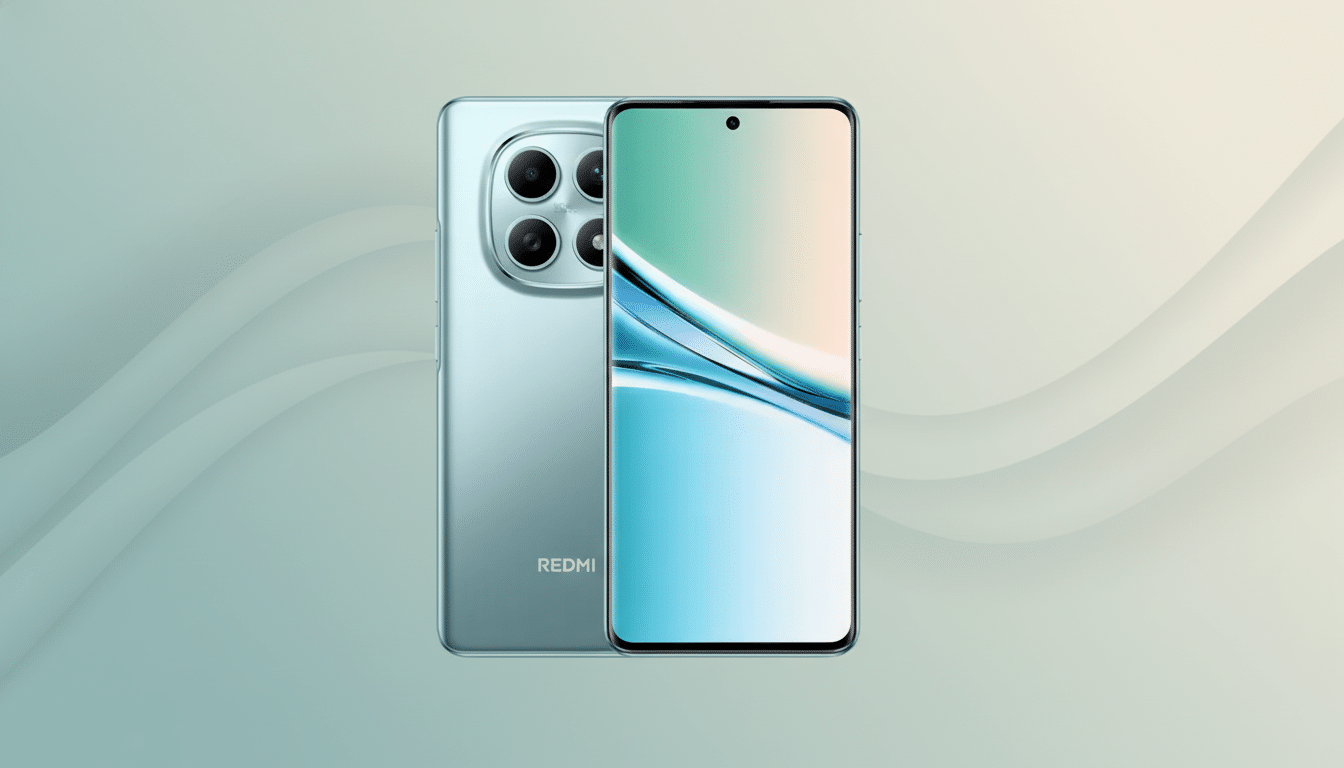
There’s a top-line camera in the shape of Samsung’s new 108MP ISOCELL HM9, with optical image stabilization and 4K video capture. On paper, that’s a nice step above the mushy 2MP stand-in sensors still found on many budget phones. It’s paired with an 8-megapixel ultrawide and a 20MP selfie, for a versatile trio designed to handle the real-world mix of daytime shooting, social-friendly ultrawides, and steady 4K clips.
With increasingly efficient computational photography, mid-tier sensors can dish up consistently good results across a huge number of scenes. You’re not getting the periscope zoom lens, nor the low-light wizardry of ultra-premium flagships, but between OIS, a high-resolution main sensor, and maturing image pipelines are enough to satisfy most users (who care more about sharing than pixel-peeping).
Software support and longevity for extended ownership
The device comes with Android 15-based HyperOS 2, and an update to HyperOS 3 based on Android 16 is pending. Xiaomi is also promising four years of OS updates and six years of security support. It’s not on the seven-year level some flagships claim, but it’s a strong promise at this price point and a clear acknowledgment of the longer ownership cycles consumers are now adopting. (And note that the Android 16 update has been added to the OS total — a little bit of transparency there.)
Price and the overall value proposition across regions
The value case is straightforward. India gets configurations starting at 8GB/128GB that go up to 8GB/256GB, while Europe has access to a 6GB/128GB variant. It will be priced at around $250–$330 equivalent, depending on location, much more affordable than the sticker-shock $800–$1,200 of many flagships. Practical additions, like an IR blaster for home electronics and strong 5G support, and the included fast charger make the day-to-day proposition — and your total cost of ownership — lower.
What you still give up compared with true flagships
Just to be clear, this isn’t a flagship killer. It’s more or less robust but definitely not on the same level as the IP68 rating some flagships are packing. There’s no telephoto lens, and wireless charging feels like it’s missing. The screen, although fast and bright, isn’t LTPO with 1–120Hz adaptive control. And the Snapdragon 6 Gen 3 will not keep up with top-shelf processors for sustained performance when running heavy 3D gaming or video-editing loads.
For most people, however, those gaps won’t make much difference. If your day is messages, maps, banking, streaming, and photos — plus a couple of games — the Redmi Note 15 5G delivers luxury design materials, competent stabilized 4K imaging, and multi-year updates for a price that undercuts the notion that you have to buy an expensive flagship to get into phone greatness.
