


Razer showed off Project Motoko at CES, a prototype AI-driven gaming headset that further breaks the category wall between audio gear and smart wearables. Rather than packing cameras or assistant software into glasses, as many companies are doing, Razer has stuffed multimodal AI into an over-ear headset form factor made for the kind of players who live in voice chat but don’t necessarily want a camera settling on their nose.
What Razer Showed on the CES Show Floor in Las Vegas
The Motoko prototype combines high-fidelity wireless audio with a front-facing, first-person camera array and an always-on assistant. Razer says the headset connects to top AI systems such as Google’s Gemini and OpenAI models, providing real-time object and text recognition, language translation, and rapid document scanning. Multiple onboard microphones listen for voice prompts and manage chat, with designs to keep the experience as hands-free as possible — no shouting wake words across comms, no holing up in a corner quietly typing when it’s time to fight.
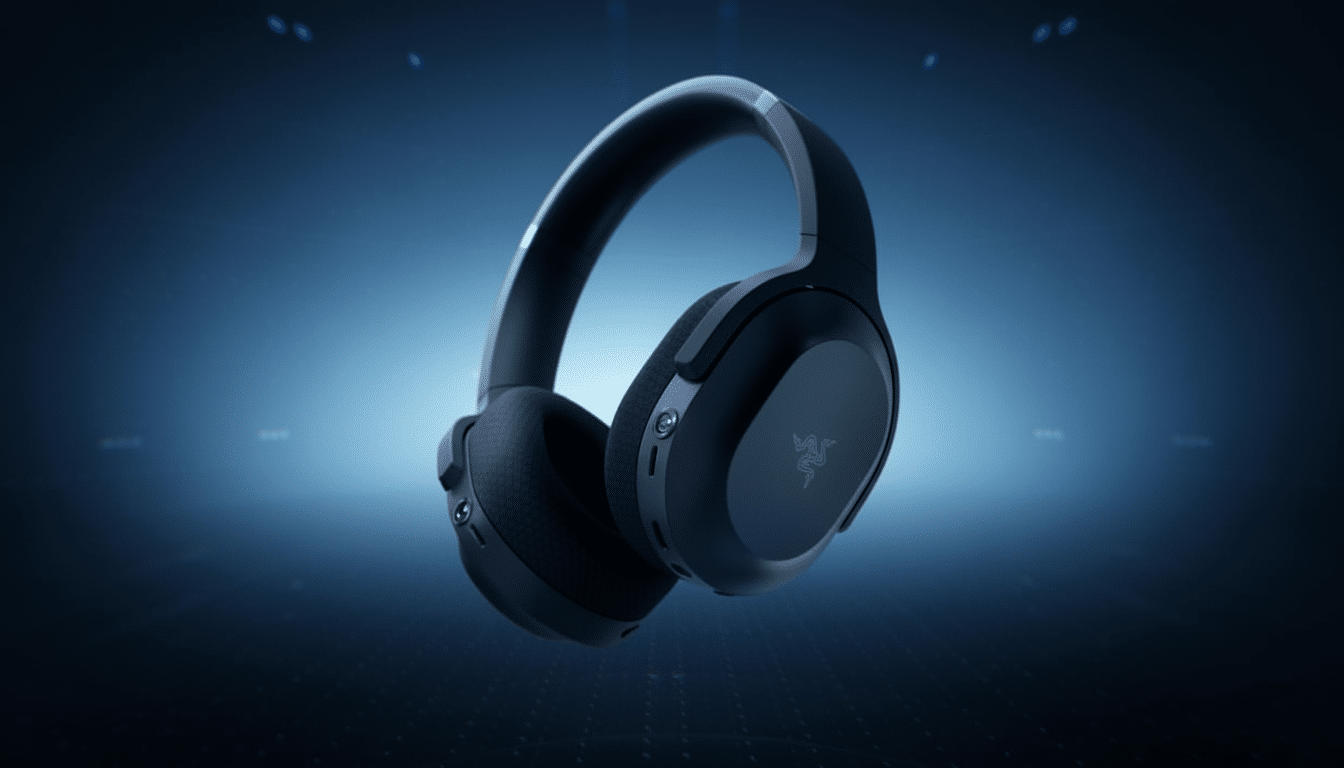
In other words, Motoko does many of the same tasks that today’s AI smart glasses aspire to — seeing and hearing and responding in real time — but gets the optics away from your face and reserves the soundstage for gamerland.
The device is designed to be a wireless wearable first, gaming headset second, in order for it to sit on your desk as an all-day assistant and then jump into a match without you having to adjust your space.
How AI on a Headset Changes the Experience
Because smart glasses have less space to house speakers and microphones, for the most part they sound significantly worse than headphones or earbuds. The kind of games competitive players play lie closer to the heart, where imaging, latency, and mic intelligibility all matter. And headsets are still the default for a reason. With the assistant piped through the same cans your squad is dropping callouts into, Motoko can bubble up short, context-rich responses without gimmicking out positional cues. Real-time models such as Gemini and OpenAI’s latest multimodal systems are becoming more comfortable with low-latency voice back-and-forth, and that is the interaction pattern gamers already use nightly.
The ability to use vision opens up a lot of interactions. Describing something your teammate is asking about — “Quest Item ACPI is telling you, what were we supposed to do with it?” Translating for your guild forum post that’s stuck in another language, summarizing the ruleset from the printed-out PDF you want to play tonight. It’s the sort of utility that AI glasses promise, but here it serves as another step in the audio pipeline most gamers prefer. The big question is whether Razer relies entirely on cloud inference, or layers on-device processing for privacy and responsiveness; the company wasn’t ready to share details on compute hardware, only platform compatibility.
Why Choose a Headset Instead of Smart Glasses Today?
Smart glasses continue to be a hard sell to everyday consumers — camera jitters, battery limitations, and style halfway houses aren’t what anyone has been asking for since Google Glass 1.0 came and went. Headsets, on the other hand, are already allowed and normalized on gaming stages and in livestreams. Voice chat is part of the experience for most people who play games: the Entertainment Software Association found that more than half of Americans do, in fact, play games — and a headset-based assistant would be much less awkward and more focused on its niche context than a general-purpose wearable.
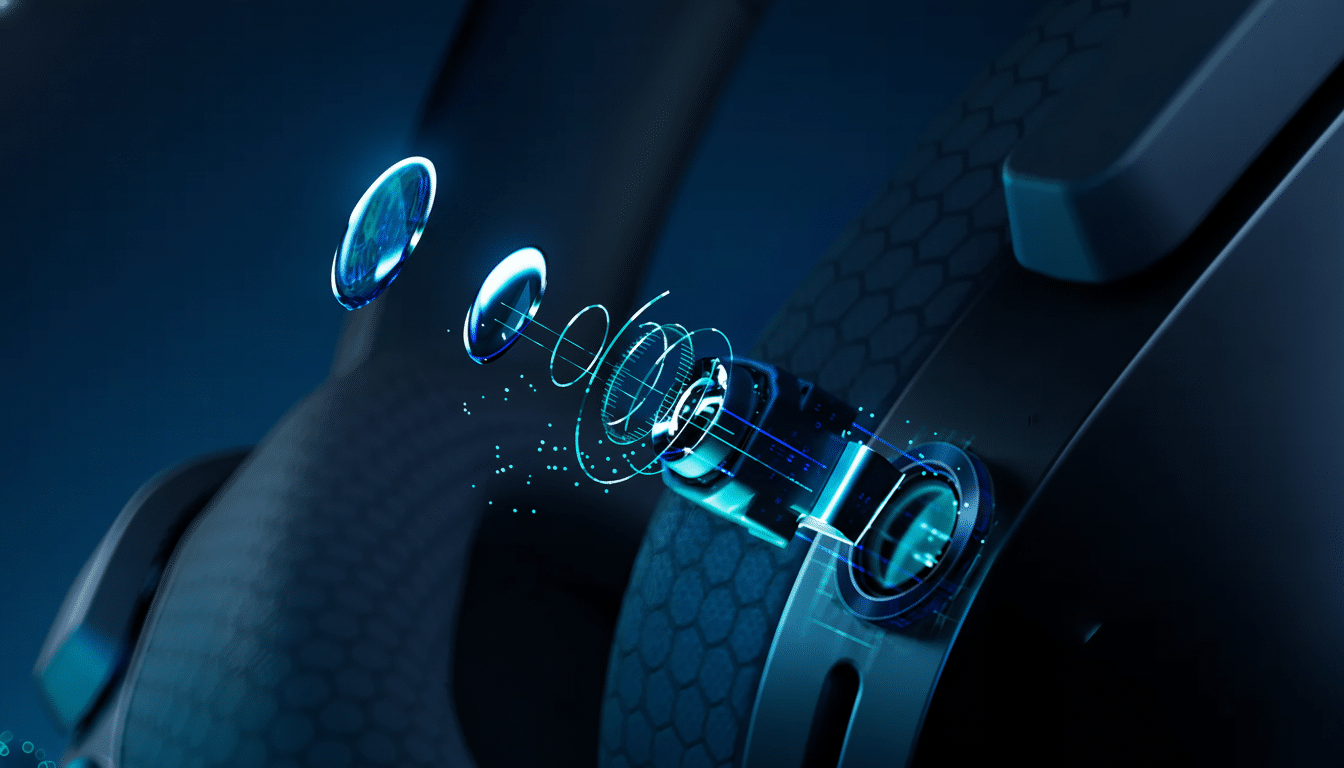
There’s also a practical angle. There’s also no reason for glasses to host fancy graphics, the latest games, and PC- or console-quality computing hardware; they can’t when lenses are passive and lightweight. Advance a headset with larger drivers, improved passive isolation (or better active noise cancellation), and bigger batteries than glasses, and you’re articulating a clearer path to full gamer-centric tuning — think spatial audio profiles tuned per game, game-specific EQs, or beamformed mic pickup optimized in favor of your voice over fan noise. Razer didn’t detail the acoustic specs for Motoko, but given its track record with THX Spatial Audio and low-latency wireless stacks, I expect Razer to attempt to keep competitive sound as table stakes and use AI to layer on top.
Early Use Cases Razer Is Pursuing for Project Motoko
Razer’s demos were about vision-plus-voice workflows: point the headset’s cameras at a document to scan and summarize, ask for live translation in co-op with your international teammates, or ascertain the make of gear sitting on your desk to troubleshoot a streaming setup. For artists, an assistant that can ‘see’ your scene, and what you’re inputting into it, could help speed up time-consuming tasks like naming clips, pulling in metadata, or drafting a description without having to leave your DAW or game.
There are clear guardrails needed. The privacy concerns of visual AI inside a headset are even more obvious, particularly in shared environments. Physical shutters, LED capture indicators, and rigorous on-device processing options are quickly becoming table stakes for camera-toting wearables. Razer has not confirmed those specifics for the Motoko, but products including Meta’s Ray-Ban glasses set buyer expectations by clearly indicating capture status and limiting use cases.
What We Still Don’t Know About Project Motoko
Details on this, like many CES concepts at the show, are paper-thin: no price, no release window, and nothing confirming battery life or the headset’s weight. Comfort and heat management are going to be issues if the headset carries any additional processing, while even cloud-first designs will need solid connectivity and sensible data policies. The company has a track record of using CES to check the pulse on ideas — some make it out to retail with tweaks, others stay prototype. Motoko’s road to market will ultimately be determined by developer interest and real-world ergonomics as much as those big-picture features.
If the product ships, Motoko could represent a new inflection point for AI in gaming peripherals as it pushes hard to bring smart assistants from the phone and into the gear with which players have grown to trust for audio. The pitch for the concept is invitingly plain and simple: Focus on the screen, keep your hands on the controls while AI does all the context work inside your ear. Now, the hard work starts: making a splashy demo into something that you take out of your bag every day and put on your desk next to the mouse and keyboard.
