


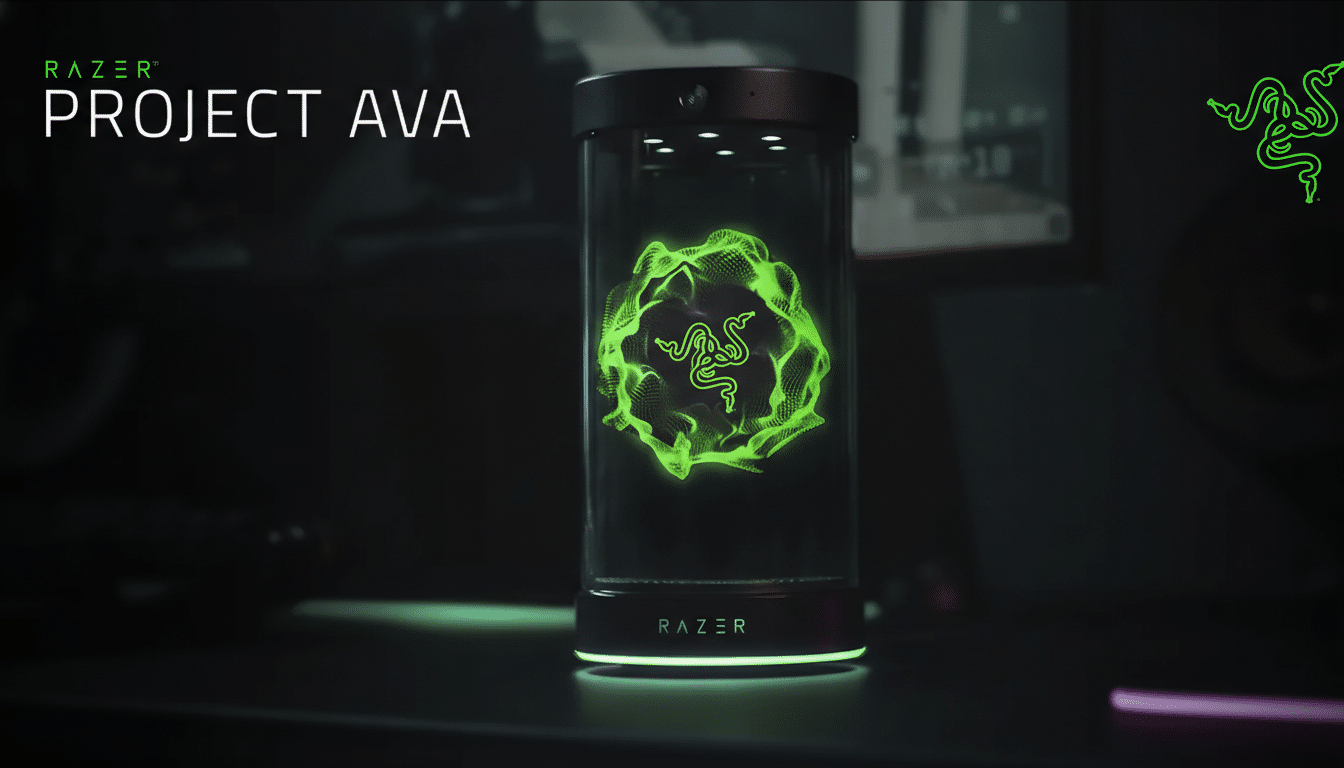
Razer’s Project Ava, an AI companion built to watch your gameplay and coach you in real time, is already one of the most polarizing gadgets to come out of CES. A new audience poll shows gamers split almost down the middle on whether Ava feels genuinely helpful or a little too human for comfort.
What the Poll Reveals About Interest in Project Ava
The quick takeaway: 55% of respondents said they aren’t interested in buying Project Ava, while a sizable minority indicated they would consider it. It’s an informal snapshot, not a scientific survey, but the result is telling—there’s real curiosity about a desktop AI that can parse on-screen action, suggest loadouts, and surface tips in the moment, even as many feel uneasy about the “companion” framing.
Price is an obvious swing factor. Enthusiasts open to the idea repeatedly flagged cost as the make-or-break, especially as gaming budgets already stretch across GPUs, storage, and accessories. If Ava lands closer to a premium monitor than a midrange headset, the lukewarm majority could harden into a no.
Cool Coach or Creepy Companion? Early Reactions From CES
Hands-on impressions from the show floor praised Ava’s speed at reading menus and meta screens—things like instantly parsing skill trees or recommending weapon perks without alt-tabbing to a wiki. Competitive players already lean on analytics and VOD breakdowns; bringing some of that intelligence to a desk assistant could shave real friction from learning curves.
Where sentiment soured was tone. Demonstrations highlighted playful banter, giggles, and nudges toward “bonding” with the assistant. Some viewers pushed back, arguing the device is a tool for gaming, work, or scheduling and that any flirtatious angle is purely user-driven. Others said the persona risks crossing the uncanny line, echoing broader concerns about anthropomorphized AI companions. Humans have always projected feelings onto tech—from Tamagotchis to virtual teammates—yet many still want clear boundaries when the assistant lives inches from a keyboard.
Privacy and Price Drive Skepticism Around Razer’s Ava
Ava’s value depends on seeing what’s on your screen. That raises familiar questions: what is processed on-device, what is sent to the cloud, who can access it, and how long is it stored? Regulators like the FTC have warned companies against manipulative design and opaque data practices, and privacy groups such as the Electronic Frontier Foundation have pushed for on-device defaults and minimal data retention. Ava will be judged not only on performance, but on how clearly it answers those questions in plain language.
Hardware economics also intruded on the conversation. Several gamers pointed out the irony of an AI “gaming friend” arriving as AI demand has driven up component costs. Industry researchers including TrendForce and Jon Peddie Research have documented intense competition for high-end GPUs for data centers, which can ripple into consumer pricing. For a community already squeezed by rising RAM and graphics prices, another AI accessory has to justify itself with unmistakable utility.
What Gamers Say They Want From an AI Coach Companion
Comments around the poll coalesced into a few pragmatic asks.
- A “coach-only” mode that dials back personality—no giggles, no small talk, just actionable tips.
- Granular privacy controls with a simple dashboard that shows what’s analyzed locally and what, if anything, leaves the PC.
- Transparent pricing and a firm stance against subscriptions for core features.
If Ava becomes yet another monthly fee, that 55% skeptic camp likely grows.
There’s also a clear niche for those who actually like the companion angle. Social connection is a real draw in gaming; the Entertainment Software Association has reported that a majority of players value games for stress relief and connection with friends. An assistant that respects boundaries but also lightens the mood could resonate with players who game solo or prefer a calmer voice in their ear than a random matchmade squad.
The Bottom Line on Project Ava’s Promise and Pitfalls
The split verdict on Project Ava isn’t a rejection of AI at the desk—it’s a referendum on execution. Gamers seem open to a fast, context-aware coach that reduces cognitive load in complex titles. They’re wary of a chipper hologram angling for intimacy, or a black box that silently hoovers up their screen. If Razer ships strong on-device processing, clear privacy guarantees, tone controls, and sensible pricing, that 45% could grow. Miss those marks, and Ava becomes another novelty that never escapes the uncanny valley.
