


The Queen of Versailles The Musical storming Broadway isn’t just a blizzard of rhinestones and snark; it’s also one of the most deliriously fun nights in town. Yes, it’s gaudy. Yes, it’s extra. And yes, I loved it. The show indulges in camp to dissect American excess, rendering too-muchness a glitter-cannon of satire and heart.
Why the camp works as both spectacle and sharp critique
This is a spectacle that weaponizes vulgarity. The creative team luxuriates in bubble-gum glam and gilded stage pictures to reflect the culture’s obsession with status and stuff. The laughs hit with fizzy precision in Act 1; Act 2, however, strips off the sequins to paint a surprisingly poignant picture of ambition’s collateral damage. The tonal swing isn’t a bug. It’s the point.
- Why the camp works as both spectacle and sharp critique
- From documentary to Broadway: expanding a real-life saga
- Kristin Chenoweth’s diamond-hard star turn as Jackie
- Tacky by design and not by mistake: a deliberate aesthetic
- The cost of more: unintended consequences and fallout
- Verdict: a riot with a beat, sequins, and surprising bite
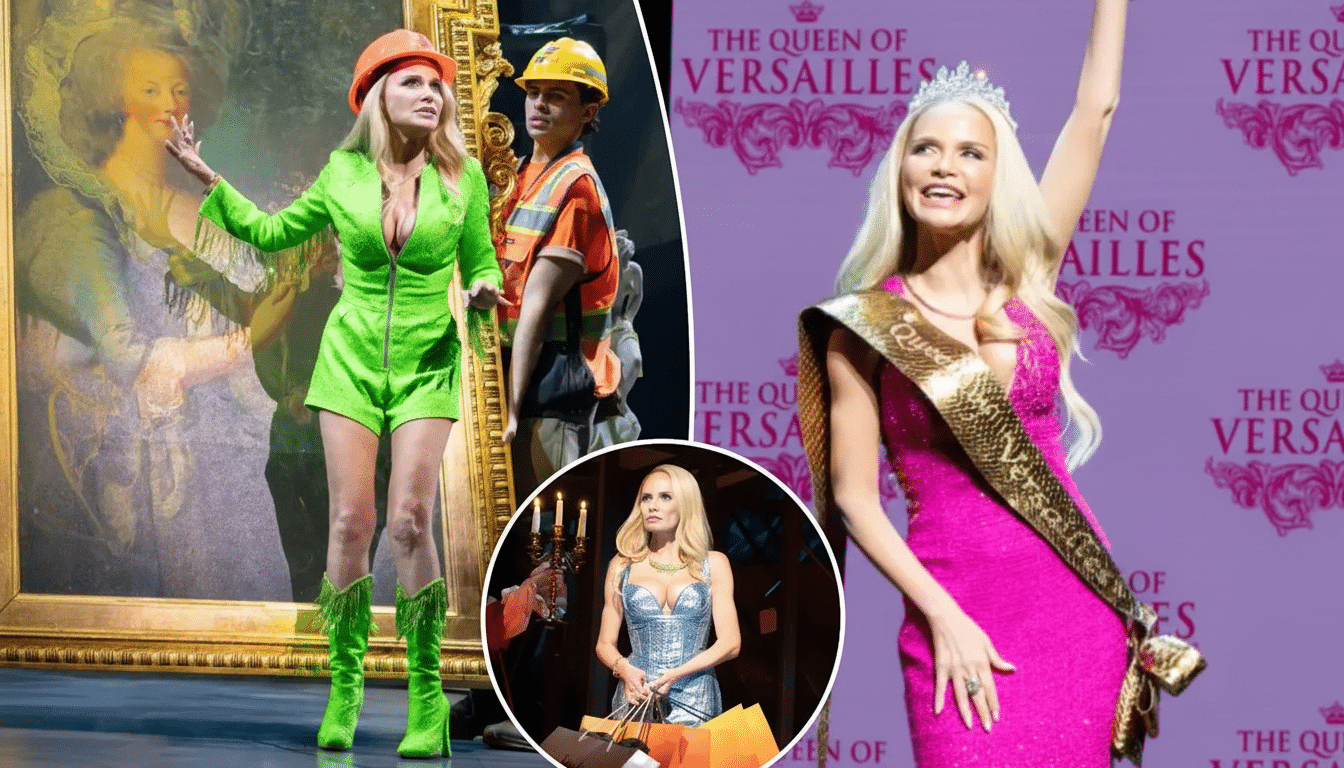
Putting Wicked collaborators Stephen Schwartz and Kristin Chenoweth back together whips expectation into the stratosphere, and the production refuses to shy away from the dare. Where many shows pull their punches, this one uses “too much” as a storytelling engine — and is bracingly alive because of it.
From documentary to Broadway: expanding a real-life saga
Based on Lauren Greenfield’s 2012 documentary, the musical stars Jackie Siegel, wife of the time-share magnate David Siegel, whose Florida mega-mansion — an ersatz Versailles — was a notorious emblem of pre-crash hubris and post-crash vulnerability. The stage version goes past the end of the film, factoring in the mid-2000s tabloid infamy and reality TV afterglow of the family at its center; this is a sharp decision on behalf of broadening the story’s cultural gaze.
Documentary-to-musical is rare but not unknown — Grey Gardens had set the template for elevating real-life voyeurism to theatrical empathy. Queen of Versailles updates that playbook, keyed around two daughters, Victoria and Jonquil, who are the emotional stakes of the show. Their arc recontextualizes the spectacle; we’re not simply witnessing a palace being built; we’re watching children acclimate to a house that never feels like home.
Kristin Chenoweth’s diamond-hard star turn as Jackie
Chenoweth offers a precision-engineered stroke of performance: a helium-bright soprano, razor-cut comedy timing, and an ironclad core underneath the glitter. Early numbers sketch Jackie’s scrappy origins with pop sheen and wry specificity, before pivoting to grandiose anthems of aspiration that feel knowingly overinflated. It’s a part that would seem to invite caricature; Chenoweth finds the narrow middle, rendering Jackie both absurd and recognizably human.
Schwartz’s score switches back and forth between satirical pop and aching ballads. Not every song flies — at almost three hours, including an intermission, individual sequences sometimes overstay their welcome — but the best of the numbers are impervious to gravity: buoyant melody meets biting commentary. Period pastiche interludes with the French court only underline the analogies between hereditary opulence and self-minted “royalty” in contemporary America. It’s a sassy device that opens the satire out beyond one family.
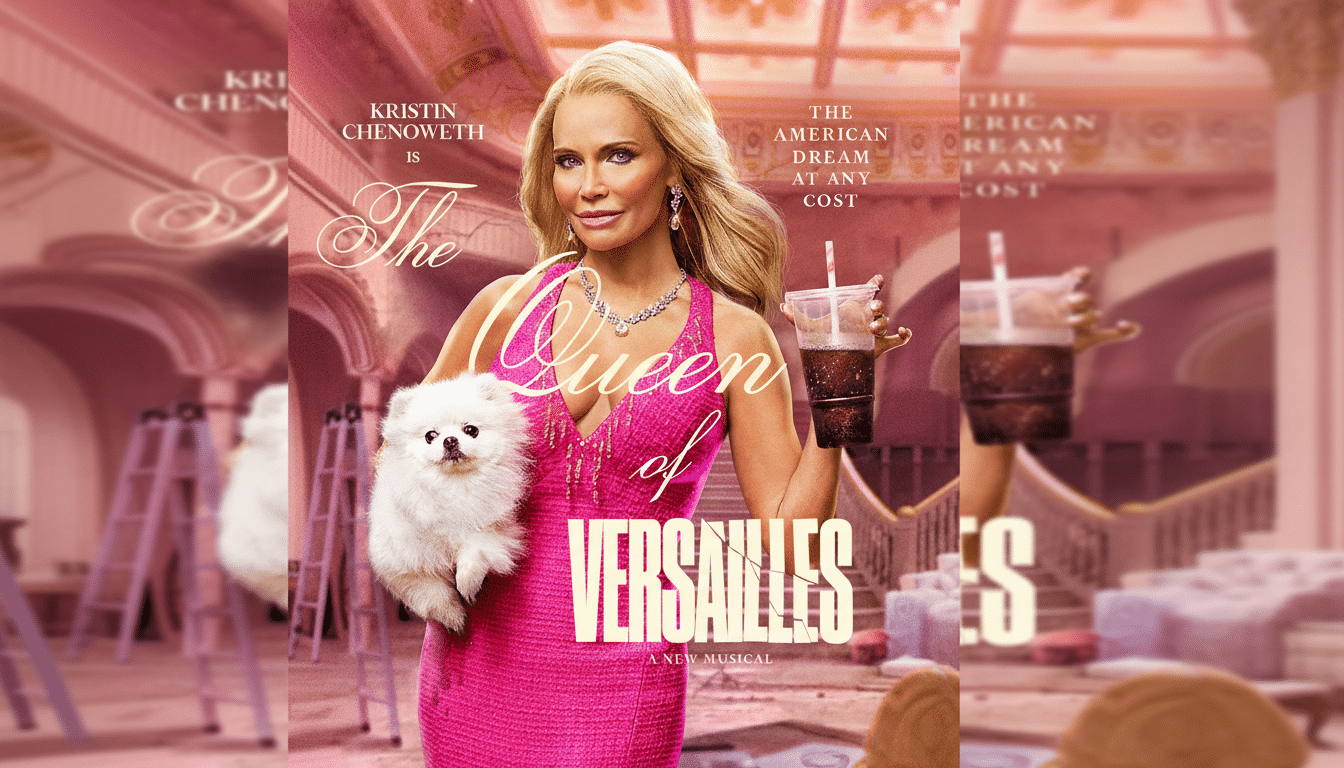
Tacky by design and not by mistake: a deliberate aesthetic
The visual is unashamedly nouveau riche: hot-pink sequins, trophy-wife silhouettes, and stage pictures gilded to the hilt. The design language is consistent and thoughtful — excess as thesis. The production even democratizes the dazzle with live-feed close-ups and screen elements, a choice that allows those in balcony seats to glimpse the micro-comedy and jewelry-box detail that can get swallowed in big houses like the St. James Theatre.
That design logic, such as it is, suits a Broadway moment in which form and content are often doing battle. Recent crowd-pleasers have embraced camp as a vessel for catharsis; this one pushes farther, harnessing glitz to beckon complicity and inviting audiences to scrutinize it. There are loud laughs here because we have a clear mirror.
The cost of more: unintended consequences and fallout
Where the shift really lands is in its depiction of unintended consequences. The daughters’ songs convey the isolation of growing up in a palace of diversions; and a subplot involving the family’s nanny provides vital texture, rooting the American Dream in the immigrant experience. The show’s most interesting question — when does “more” cross into “too much”? — resonates long beyond the last button.
And even the satire of present-day power and pageantry lands with a crowd-pleasing crackle. The night I attended, the audience groaned, laughed, and knowingly clapped for lines that nodded at modern political showiness. The room got the joke — and the jab.
Verdict: a riot with a beat, sequins, and surprising bite
Is it perfect? No. The energy flags in places, and a couple of teen-centric numbers don’t scratch as deep as the premise seems to guarantee. But as a work of live theater, it’s riotously fun, carefully crafted, and considerably more grounded than its sequins would lead you to believe. It’s the tackiest show on Broadway by intention — and that intention tells you something bracing about who we are and what we worship.
The Queen of Versailles The Musical, presented by We the People, is now playing through April 18, 2022, at the St. James Theatre (246 W. 44th Street), where the front row cheers and glitter clings.
