


Android Automotive OS is on course for a much quicker update release cycle following the announcement of a single reference platform from Qualcomm and Google, starting with Android 17. With Project Treble arriving for Snapdragon-powered cars, it will address one of the auto industry’s biggest software headaches—sluggish, fragmented updates—and promise a more straightforward, longer support roadmap for car manufacturers and drivers alike.
What the Qualcomm–Google partnership changes for car software
The new reference platform seeks to establish a standard for how Android Automotive runs on Qualcomm Snapdragon digital cockpit hardware. Rather than each car vendor going it alone or over-altering a board support package for every model, they can standardize on a common baseline that’s developed collectively. In practical terms, that would lead to less engineering churn, a faster validation timeline, and quicker access to Google’s latest features and services in the cabin.
- What the Qualcomm–Google partnership changes for car software
- Project Treble brings modular updates to in‑car Android systems
- Why faster Android Automotive updates matter for drivers
- Who benefits first from the unified platform and Treble support
- What to watch next as Android 17 rolls into car dashboards
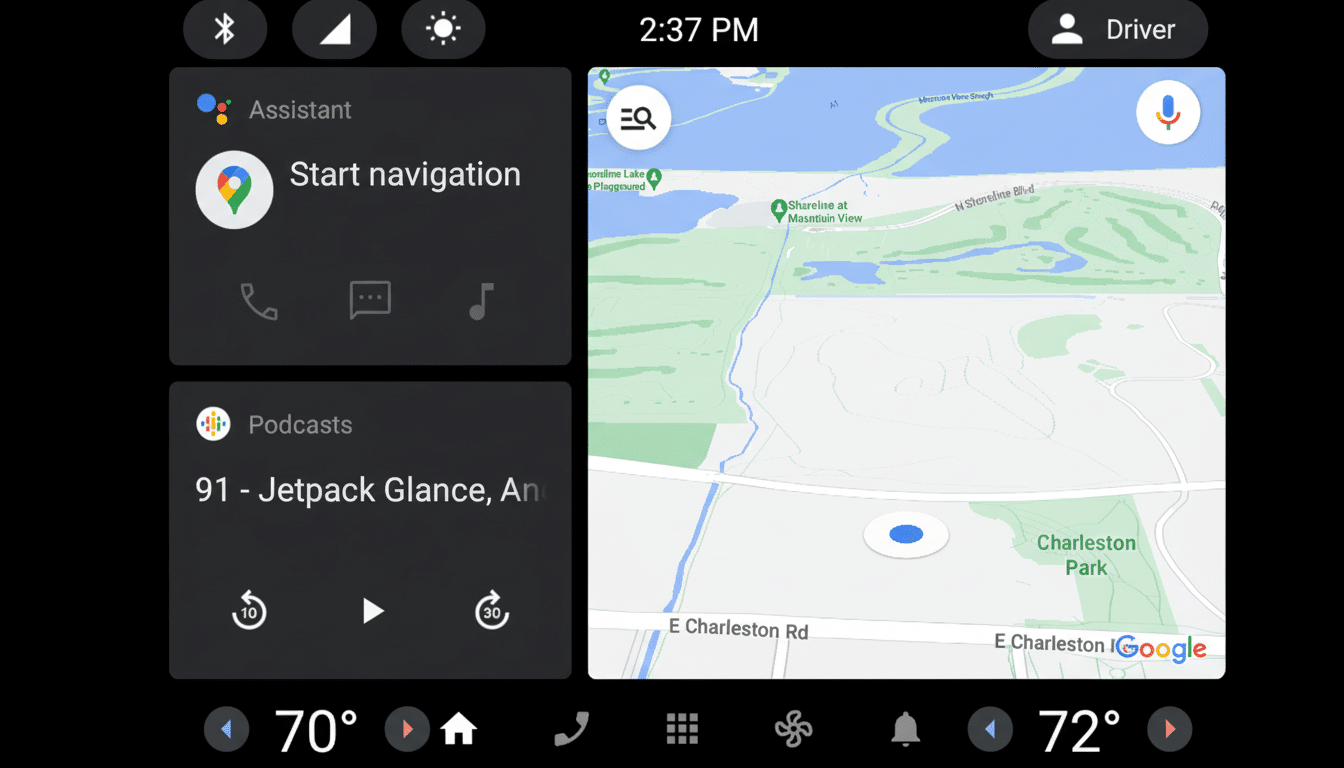
And since the platform debuts with Android 17, any manufacturers developing vehicles that won’t make it to market for a few years now have a precise target to aim for. The goal is a parallel closer to the smartphone world: when Google updates the core Maps app or makes a voice improvement to Assistant, those gains would be reflected on dashboards sooner rather than months or years later. Qualcomm says the partnership is also in support of a 10-year plan for core software updates, presumably acknowledging how much longer cars spend on the road than phones.
Project Treble brings modular updates to in‑car Android systems
Project Treble, first released with Android Oreo for phones, strips out the Android framework from low-level vendor code. Bringing that architecture to cars allows the operating system itself to be updated more independently of the very chipset-specific layers—thus avoiding expensive “all-or-nothing” rebuilds which have traditionally been a drag on car updates.
Qualcomm claims that Treble support is being introduced across four generations of its automotive chipsets and more than 14 individual processors. Those differences are important: automakers frequently use several generations of hardware throughout their lineups and across model years. With Treble, vendor implementations are kept constant while the OS is able to iterate faster on security patches and major version updates without having to undergo a full requalification of their hardware with each update.
Historically, many Android Automotive modules have been deeply integrated with specific silicon and supplier stacks. Treble decoupling, along with a shared implementation, should simplify over-the-air updates and lessen the integration cost for OEMs (original equipment manufacturers) and Tier 1 vendors.
Why faster Android Automotive updates matter for drivers
Infotainment is the top problem area in recent J.D. Power quality studies, emphasizing how expensive bad software can be. Quicker updates can help fix hardware wobbles and glitches sooner, add new features mid-cycle, and keep voice, navigation, and app ecosystems feeling modern throughout a vehicle’s life.
Longevity is another factor. The average vehicle age in the U.S. is now more than 12 years, according to S&P Global Mobility—meaning buyers expect those support windows to be longer. Critical components get a 10-year update schedule, which is also far more in line with real-world ownership than the norm implied by most smartphones. It also enables automakers to comply with ever-tightening cybersecurity requirements on connected vehicles.
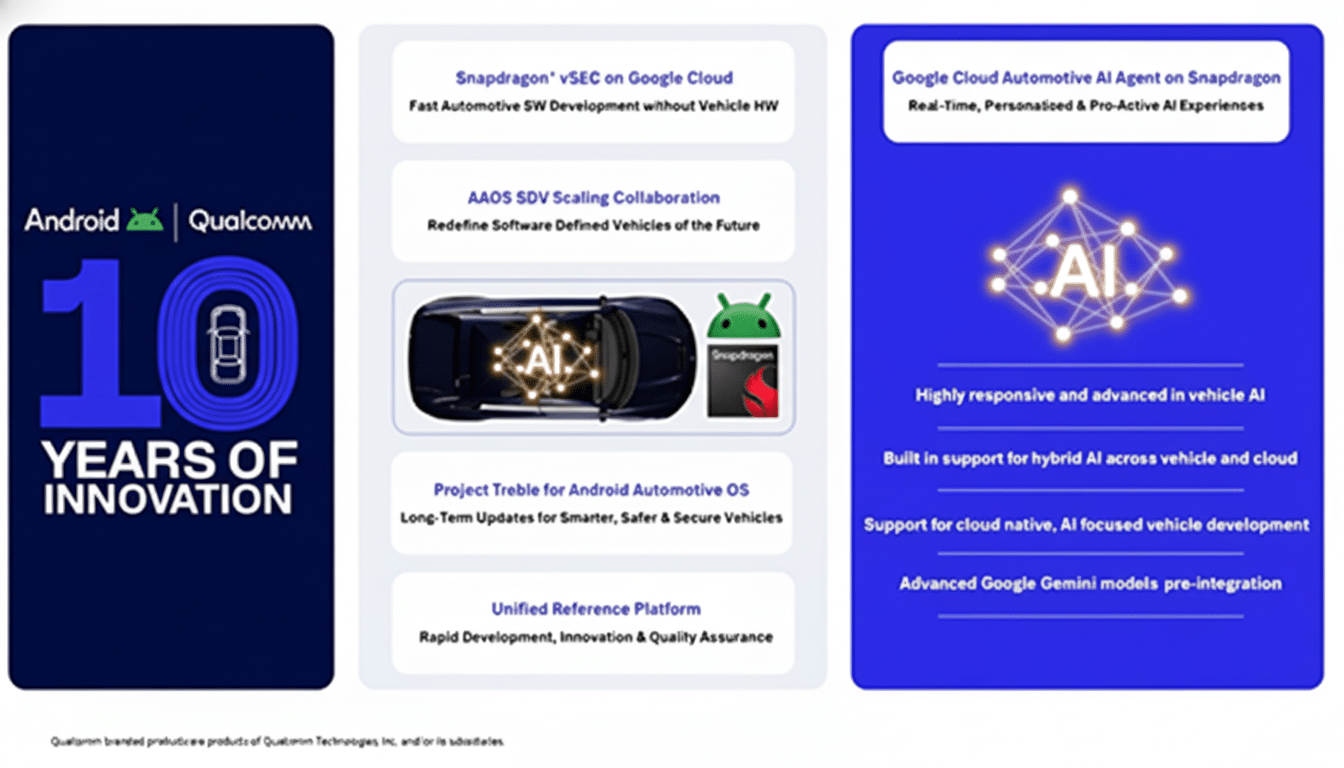
There are implementation caveats. Automotive stacks frequently run on top of real-time operating systems or hypervisors, and changes must be tested for safety and homologation. Even so, with the vendor layer now stabilized and a single reference in use, Android framework and app updates can be served faster—even as safety-critical domains (like profiles) remain properly gated.
Who benefits first from the unified platform and Treble support
Digital cockpit systems that are Snapdragon-based are popular in this category and particularly drive the infotainment experience in vehicles from manufacturers that have adopted Android Automotive OS such as GM, Renault SA, Honda, and multiple Stellantis brands.
Best poised to benefit early are the companies that will sync next-gen devices on Android 17 and deploy the unified platform and Treble-backed architecture.
Real-world examples show the upside. Polestar and Volvo have sent numerous over-the-air updates that introduce or refine Google apps, and GM has promised to deeply incorporate Google services in upcoming EVs. A cleaner update pipeline might help speed those rollouts while also ensuring more consistency across trims and regions, both in helping ensure feature parity and cutting down the delay that does nothing but frustrate owners.
What to watch next as Android 17 rolls into car dashboards
Key things to watch for will be OEM announcements attached to future infotainment stacks being based on Android 17, windows for Treble-enabled builds on current Snapdragon generations, and any indications of shorter delays in Google apps becoming outdated between phones and connected car implementations.
Also keep an eye on how Tier 1 suppliers integrate the reference platform with their own tap-to-wave UX layers, and how automakers juggle rapid updates for the infotainment system with the process of fielding a safety-driven vehicle elsewhere in the car.
If the partnership lives up to its promise, Android Automotive OS might finally break free of the slow-paced update cycle that’s plagued embedded infotainment for years—whether it means fresher software for drivers and more predictable, lower-cost update options for automakers to keep cars current.
