


MANGMI’s soon-to-arrive Pocket Max could be the most interesting Android gaming handheld in months, and its big draw isn’t some chip or display spec. The firm has shown us some remove-and-swap-in-seconds modular magnetic button islands — which we’ve seen on a few Windows-portable hacks before, but never on an Android handheld.
Although the clips shared by the brand are largely pretty brief, they do depict the D-pad and ABXY modules lifting out from their seats and sliding back in, suggesting a platform on which players will be able to fine-tune their controls not only to the game but also to how they hold their console or even to wear. If it ships as shown, Pocket Max would mark the first Android device to adopt genuine physical button modularity.
What Could Change With Modular Magnetic Buttons?
Modular control knobs fix two pain points in one: being able to make a physical change and serviceability. Want to go with a Sega-style six-button face for fighters, or a cross D-pad for retro platforms? Swap the module. Break a button? Replace the island and not the entire unit. iFixit and other repair supporters have long contended that modular parts mean longer lifespan and less e-waste; gaming handhelds are way behind on this.
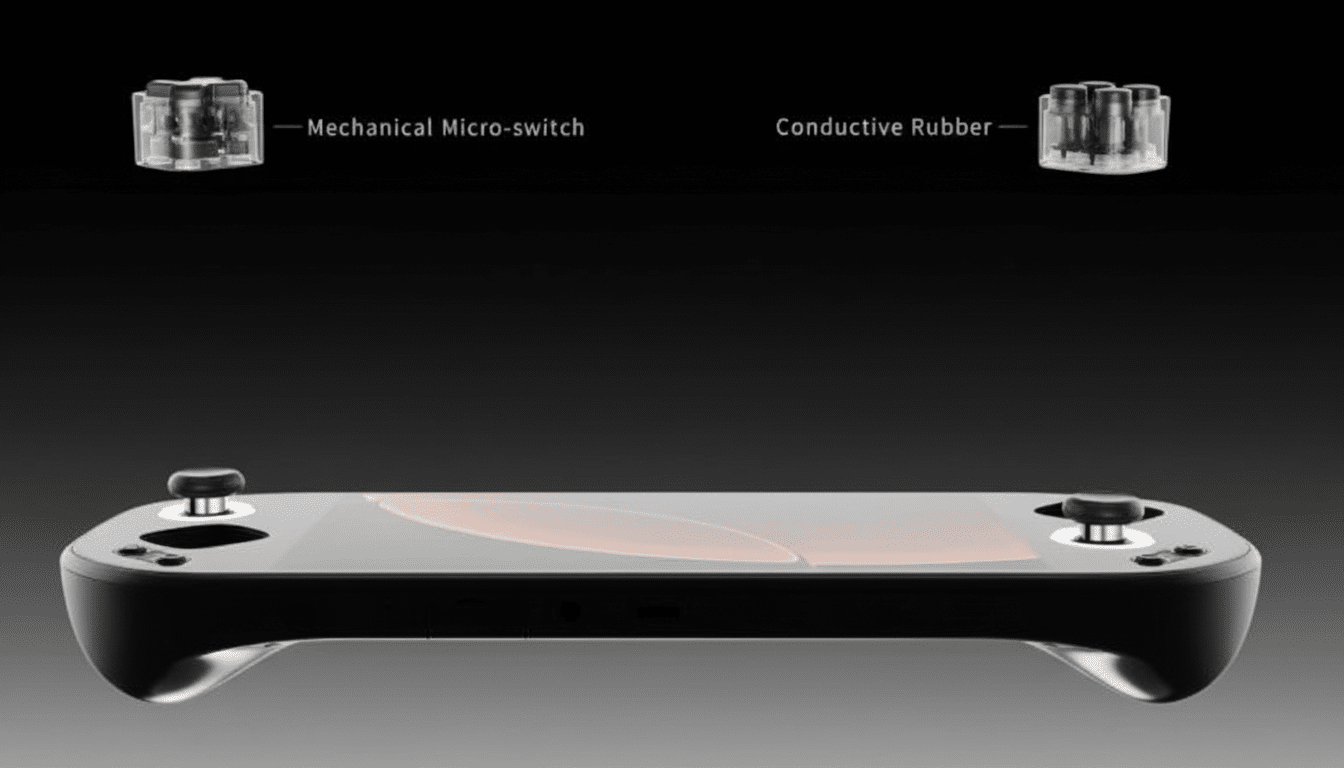
Windows-based portables such as the AYANEO 3 have played with swappable components, and premium gamepads like Sony’s DualSense Edge drew attention to removable sticks. Taking that idea to Android might be more significant than you’d think. Other buyers of Android handhelds must juggle emulation, touch-first mobile games and cloud services — each with their own control needs. A magnetically secured, pogo-pin-based interface would allow MANGMI to offer alternate D-pads, convex/concave buttons — even hall-effect options if it gets cozy.
And the engineering, of course, has to work. Magnets have to hold tight without being a pain to remove, and electrical contacts need to last through thousands of pulls without gunking up or developing chatter. Industrial pogo contacts are often rated for tens of thousands of cycles, but that’s an altogether different test than gaming-level abuse. The concept will live or die by reliability.
Big-Screen Value in Pocket Max Hardware Specs
Fun little gimmick aside, the Pocket Max resembles a big-budget handheld. Leaks and company teases hint at a 7-inch 144Hz OLED panel, which is a bit of a length in the Android space. To put it in perspective, a lot of Android portables max out at 60–120Hz or just use LCD panels; 144Hz OLED should offer both picture clarity and deep contrast — valuable for between-screen action and cloud streaming interfaces.
Under the bonnet, a Snapdragon 865 paired with 8GB of RAM and 128GB storage has been tipped. And that’s an older flagship SoC, but still plenty good: Adreno 650 graphics can run many Android games at high frame rates and emulation up through PSP with most PS2 to GameCube-era titles (with appropriate cores). It also helps to keep the costs down versus new silicon, which is crucial if MANGMI wants to undercut premium rivals.
The Personalization Signals And Accessory Potential
MANGMI has also been canvassing its community on X over button and D-pad colorways — white, black, and orange-accented combos have all made appearances — further cementing customization as one of this device’s defining tenets.
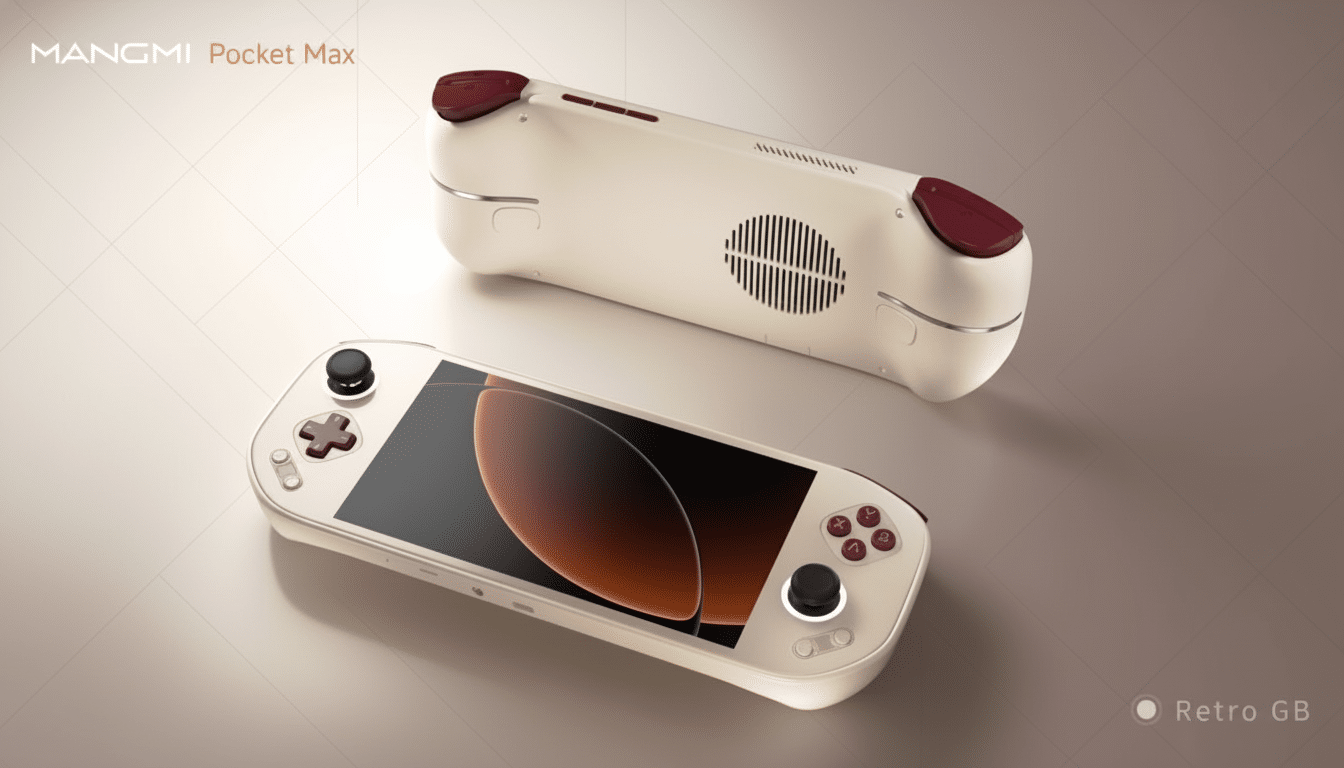
If the company opens up the interface to third parties, we might see an ecosystem of modules come out: clicky microswitch D-pads for platformers, low-profile buttons for racers, or themed packs based on game types.
There’s an upside for the long term, too. Hot-swappable modules ease the upgrade path. Picture them releasing a later version with better materials, or more/less travel, or hall-effect internals — owners would have the chance to refresh the feel without buying another handheld. This kind of modular roadmap isn’t unusual in pro controllers, and it could be a smart differentiator in a crowded field.
Caveats, Pricing, and Availability for Pocket Max
There is no price or launch window, and that matters. Die volatility has made a mess of handheld roll-outs; TrendForce reported roughly 10–20% week-over-week contract price increases for DRAM just now, which are squeezing BOM targets on devices that really need at least 8GB to seem civilized. Smaller brands are also hit hardest when there is turbulence in the supply chain.
MANGMI, however, also has to build trust on logistics. Earlier products, such as the Air X, drew gripes about fulfillment and timelines from early buyers. None of that dooms Pocket Max, but the onus is now on the company to show clear communication, realistic ETAs and robust QA before preorders open.
What It Means for the Future of Android Handhelds
Android handhelds have bloomed on the emulation, indie and cloud-service teat (GeForce NOW; Xbox Cloud Gaming), though most are indistinct: not slabs, same layout, another skin. A credible modular control system might be the most truly novel hardware idea the category has come up with in years.
If Pocket Max delivers on that 144Hz OLED promise and gets the tolerances right around those snap-in controls, it could serve as a blueprint for the next generation of portable designs. If not, it will become an interesting footnote. Either way, it’s something to keep an eye on — and a reminder that when it comes to handhelds, clever ergonomics can matter as much as raw specs.
