


According to a new poll, the exodus has likely begun for some users of Plex as the home media service continues to candy-coat its increasingly commercial platform. The findings indicate that while Plex is still the feature pacesetter for personal streaming, its dominance in the category may be slipping as users weigh cost, control, and long-term trust.
Survey signals a momentum shift among Plex users
In a recent survey of more than 7,500 respondents, just over 30% said they’ve already dumped Plex for an alternative; approximately 46% are considering it in the future; and only 22.9% are going to stick with Plex.
A poll conducted in 2022 found a contrasting picture, with 46.6% stating they were happy with Plex and 22.5% using Emby or Jellyfin. Although one must be taken with the other, the fact that they are opposing speaks volumes about a genuine change in mood among the home media community.
The trend mirrors what a lot of the broader community chatter has been about on forums and in developer repos, with Jellyfin’s rapid iteration and Emby’s steady refinement attracting users who’ve had libraries built around Plex going back ten years or so. The weight in this niche is beginning to shift away from the Plex-first world into a multi-entrant three-way battle.
Why some Plex users are departing for rivals
Some pain points rear up over and over again. Longtime users are disappointed by growing paywalls and a perceived pivot to monetization, including added emphasis on free ad-supported streaming, more on-by-default online features, and premium features locked behind Plex Pass. These changes may seem to be at odds with the origins of what was known as a lean, local-first media server that appealed to hobbyists.
Control and privacy are looming concerns as well. Jellyfin is fully open source, has local-first defaults, and finds fans among those who want a server that never phones home, with clients on the most devices, including LGR’s glorious 486s, varying metadata agents, and transcoding pipelines. Emby is proprietary, but it’s incredibly easy to set up and has a more intuitive UI if you’re used to Plex, and it even includes Emby Premiere, similar to Plex Pass.
Cost is another factor. Many early adopters purchased lifetime Plex Passes and are still pleased; others who pay monthly are considering whether the premium features justify continued costs when competitors offer similar functionality at a lower price, or even for free, especially households that don’t do much in the way of advanced remote streaming or DVRing.
What keeps Plex competitive in personal media streaming
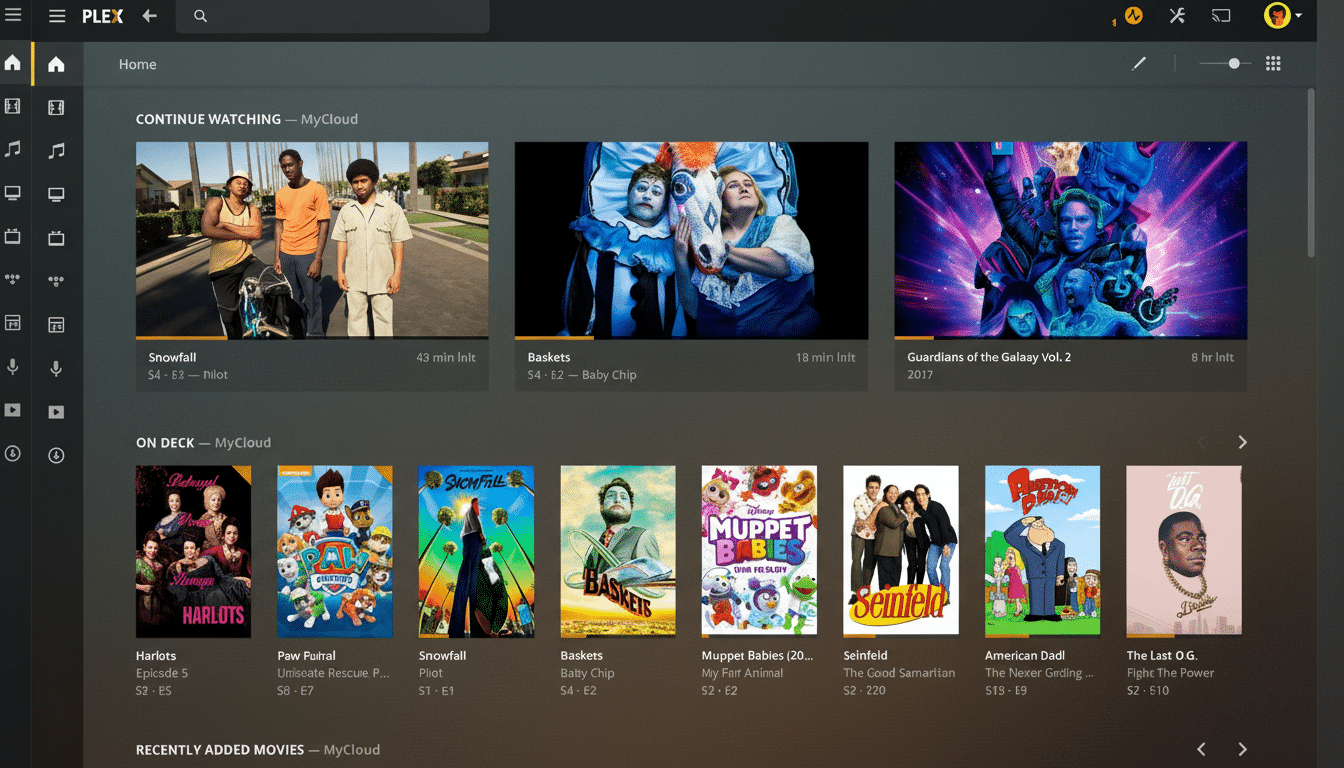
Plex still offers one of the smoothest, end-to-end experiences in the category. And its client apps are uniformly slick on Roku, Apple TV, Android TV, mobile, and the web. Power features like remote access with no port forwarding, robust user management, chapter and intro detection, and tuning for hardware transcoding push Plex over the top for those who want one streaming app to rule them all while retaining control.
Plex’s ecosystem and brand matter, too. The company’s investment in discovery features and cross-device support are a strong moat. Another advantage is the transcoder and remote/streaming stack that Plex has a mature version of (and for households with varied devices and bandwidth conditions it can potentially make all the difference, especially when you are sharing libraries with friends and family).
Rivals on the rise: Jellyfin and Emby gain traction
If you want transparency and community-driven development, Jellyfin is the best one out there now. The project itself on GitHub has racked up tens of thousands of stars, indicating a healthy contributor energy. Its developer-friendly plugin ecosystem, native clients for every platform, and integration with popular consoles like the PS4 and Xbox One make it a great solution for those who want something a little more customizable than Plex but still easy to use.
Emby, however, is more practical in this regard. It has an intuitive interface, excellent transcoding, and a simple interface on both mobile and home theater devices. Emby Premiere subscribers also enjoy the ability to automatically synchronize media between any Emby servers. For users who still want the Plex-style ease of use without all of Plex’s enhancements, Emby can seem like a snug fit.
What to watch next in the home media server space
The next front in this war will be fought around deep media-nerd values: codec support, which includes understanding Dolby Vision profiles and handling HDR well; power-efficient HW transcoding on consumer GPUs; subtitle management that works all of the time; and sane metadata. Audio and video formats will still be dictated by the licensing you can get, so what each platform can do out of the box versus through plugins or external tools will continue to be shaped accordingly.
The survey’s takeaway for users is heartening. Pressure from competition is forcing more frequent updates and delivering better apps with clearer value propositions. Whether you stick with Plex for hassle-free remote streaming, switch to Jellyfin to take control of everything, or land somewhere in between with Emby’s mixed bag, there’s never been a better time for personal media streamers. The stats seem to indicate Plex’s rule isn’t a given anymore, but something that will have to be earned with each release.
