


PlayStation and Nintendo left Xbox to chase from a distant third in the two-horse race that was Black Friday. According to retail tracking from Circana, PlayStation 5 accounted for 47% of US console sell-through during the Black Friday week, with Nintendo Switch coming in at 24%. Xbox went negative at -15%, which shows that a game’s momentum in consumer interest is really beginning to open up at the tensest time of the shopping season.
The story wasn’t just American. In the UK, PS5 accounted for over 62% of console sales, with Switch on around 23% and Xbox at under 10%, according to Windows Central. The pattern highlights a tale of two countries: Sony and Nintendo are transforming brand strength and well-timed promotions into market share at a critical time.

What the sales data is showing for Black Friday week
Circana’s weekly snapshot has PS5 besting Switch by close to double and Xbox over triple in the US. One significant wildcard also emerged: the screen-free Nex Playground (14% of the US market there), which even came in second the week before—a surprising result for a newcomer centered on simple, motion-led family play.
Altogether, the figures indicate that shoppers prioritized consoles with clear value hooks: games that can be found only there or are recognizable only on those systems, or tempting bundles and family-friendly appeal. The packing of Xbox’s share into the mid-teens during peak retail traffic suggests to me that discounts alone aren’t overcoming a positioning problem.
Why PlayStation and Switch won the day on Black Friday
PS5’s leadership largely has to do with a strong lineup of must-play games as well as a steady presence in marketing that has kept the console top of mind. Strong holiday bundles, sales momentum, and the “play it best on PlayStation” narrative around large third-party releases all helped conversion at point of sale.
Switch, meanwhile, continues to be the go-to family console and a reliable gift choice. Evergreen games, palatable pricing and a library bulging with kid-friendly hits ensure strong holiday traction for these perennial bundles. Even towards the end of its life cycle, the system’s ease-of-use and portability continue to be strong selling points for both multi-console households and more casual gamers.
Xbox is dealing with a strategy gap this holiday
Microsoft’s console pitch is increasingly access, not exclusivity. With so many first-party games debuting on PC at the same time as they arrive day-and-date on Game Pass, the impetus to buy Xbox hardware recedes for anyone who already owns a capable PC — or who is comfortable with subscribing for access elsewhere.
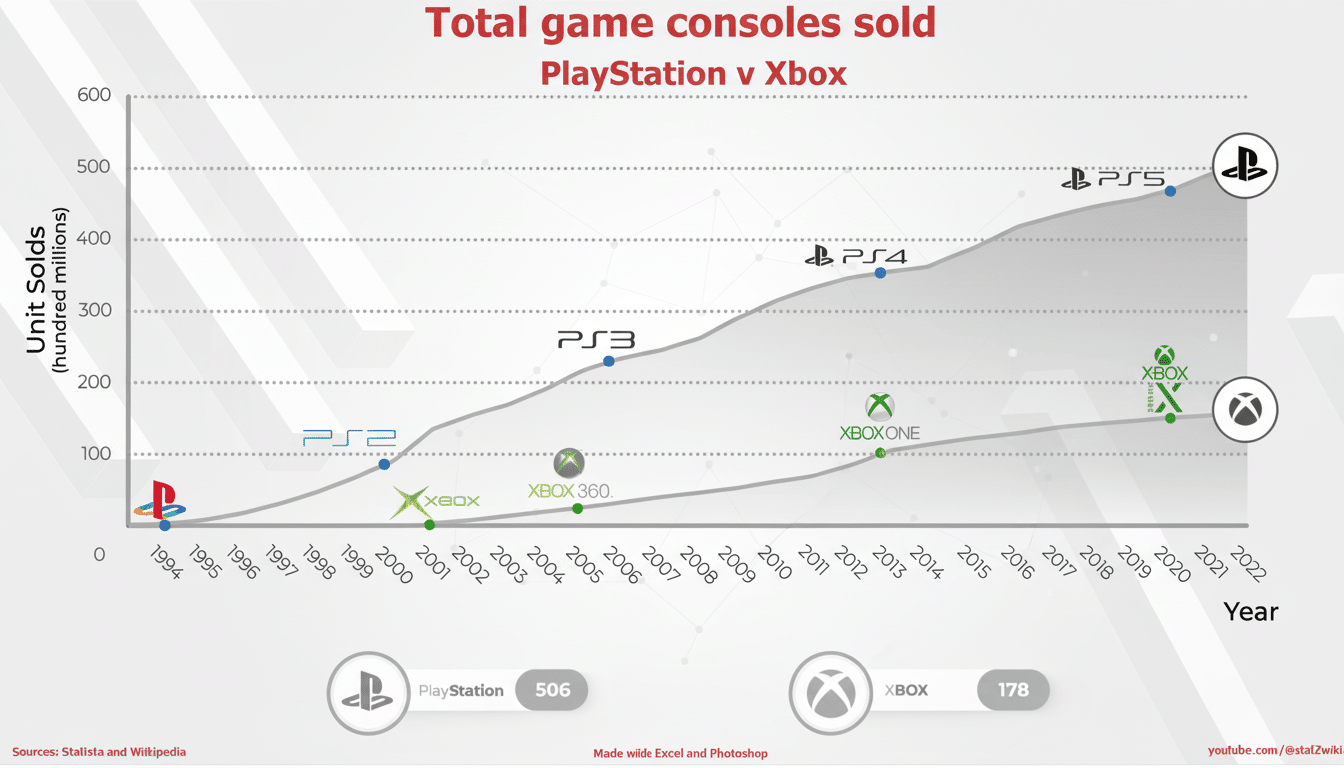
Value in hardware isn’t the complete story. [Read: Xbox’s brilliant strategy for outgunning Sony] Even with Series S discounts and across-the-lineup bundles, Xbox is struggling to convey a must-own identity next to Sony, which hails the blockbuster first, or Nintendo, where family comes first. Windows Central’s UK split — PS5 north of 62 percent, Xbox at a mere 10 percent — is the latest to solidify that this isn’t just a one-market peculiarity.
Microsoft has signaled ongoing investment in hardware, including diversifying manufacturing locations and progressing toward next-generation design. But for now, the company’s software-and-services focus still comes across as at the expense of pure console sales arguments.
The surprise fourth contender in Black Friday console sales
Nex Playground’s 14% share in the US during that period, and a brief second-place finish last week, show there’s an opening for new, approachable devices or services when the pitch is clear. Ironically, that whole motion-focused, living-room-first vibe the device supports brings to mind things Microsoft once pursued with Kinect—evidence that simple social experiences can still cut through on gift lists.
What to watch next for the rest of the holiday season
If that Black Friday divide holds through the rest of the season, PS5 winds up exiting this year with a strong lead in cumulative momentum while Switch stabilizes its own late-cycle install base alongside whatever comes next.
But for Xbox, the way forward probably depends on sharpening the case for owning its hardware, either by platform-defining exclusives, differentiated features, or a clearer bridge between Game Pass and console ownership.
The headline is clear from the data: when consumers were seeking a new box for their living room, PlayStation and Nintendo walked away with a decisive weekend victory. Xbox looks like it will need more than price cuts to change that story.
