


On the Pixel Watch 4, Google’s expanding on hands-free control with two new one-handed actions: Double pinch and Wrist turn. The update homes in on those times that tapping a postage stamp screen is cumbersome, adding controls at your fingertips — literally! However, all of them are big enough so you can leave the bag on and punch with gloves if you need to.
The additions come in addition to the watch’s existing Raise to Talk feature for Gemini, rounding out a fuller gesture suite for Wear OS. Crucially, Google is coupling these gestures with contextual on-screen cues so you know exactly when a jab of the fingertip or a twist of the wrist will work properly.
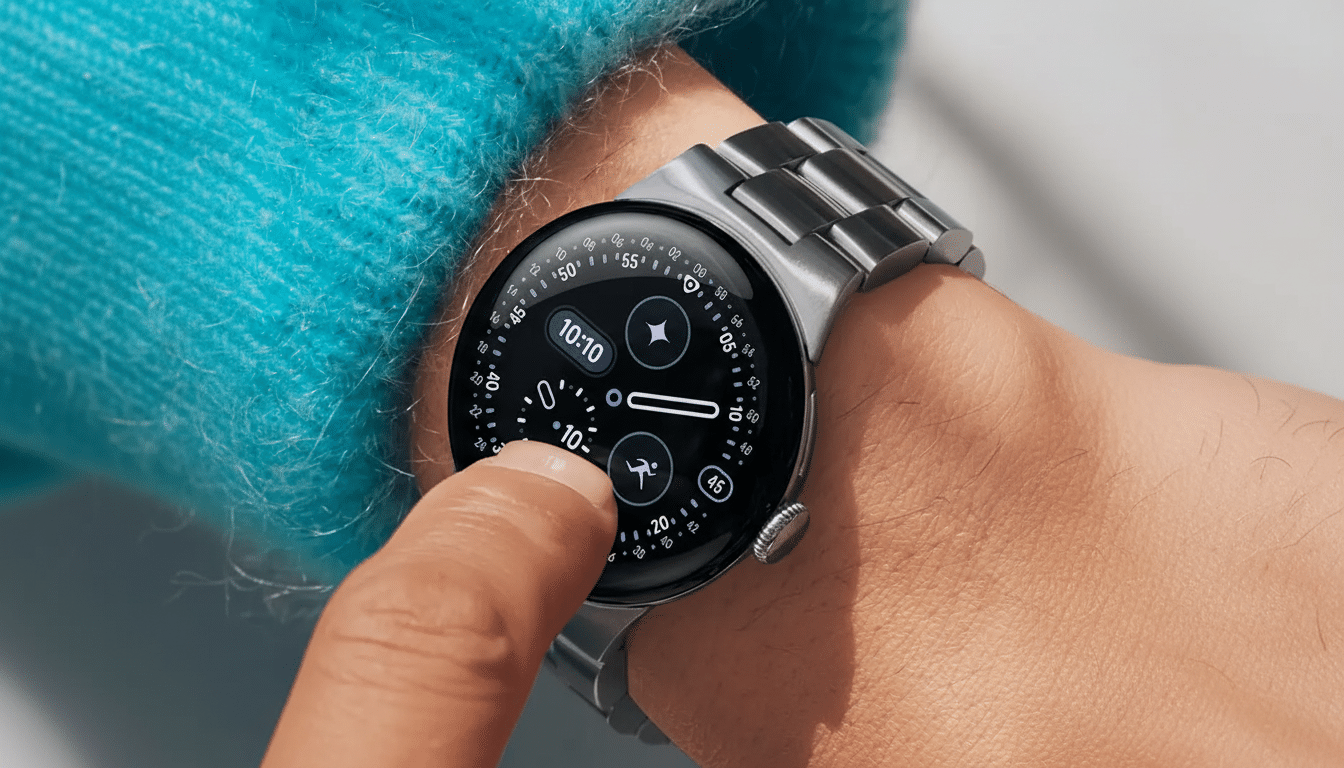
How Double Pinch Works on Pixel Watch 4 for Hands-Free Use
Double pinch for tapping you, measured between your thumb and index finger… the watch triggers closest to the specified tap point. Google pitches it as a solution for “hands full” situations — pausing music while cooking, turning off an alarm during a run, or taking a call when your other hand is occupied. Pinch to zoom is quick and deliberate, made to bypass the friction of tiny touch targets.
Google hasn’t detailed every supported action, but the intention is similar to what has become de rigueur for premium wearables now. Apple’s Double Tap uses micro-movement sensing tech to answer calls or snooze timers, and Samsung’s gesture suite is there so that you can manage alerts without touching the screen. Anticipate that Google’s take will focus on high-frequency activities — playback, timers, calls and notifications — boiled down to a single repeatable action.
Behind the scenes, gestures such as Double pinch typically combine data from accelerometers and gyroscopes of Tanzio with subtle variations in hand muscle movement detected by FLORA’s heart rate sensor scanned against a locally stored model to differentiate between intentional movements and incidental twitching. Google’s decision to expose gestures only when necessary — with the help of on-screen hints — should reduce false positives and preserve battery.
Wrist Turn Returns With More Context on Pixel Watch 4
Wrist-based navigation has its roots in the early days of Android Wear, but Wrist turn on the Pixel Watch 4 is a modern take. You can be whisking through notifications, responding to an alert or getting to controls with a flick of the wrist — no need for a tap. That’s an experience thing, so when the watch knows you’re looking at an actionable card — say, it’s telling you about an incoming message or a running timer — it will prompt you with a cue that a wrist flick can deal with it.
That context-aware layer matters. Instead of memorizing a few cryptic commands, users develop the type of muscle memory their bodies use to reach out and catch that well-thrown football. In samples tossed across competing platforms, context-based nudges enhance feature discovery and retention across these alien worlds, and Google’s move around suggests it wants the same “it just pops up when you need it” feel that helped usher in gesture navigation on phones.
Accessibility and Everyday Speed for Pixel Watch 4
Gestures are not just a gimmick — they’re an accessible feature that has some actual substance. For people with poor dexterity or who use assistive devices, it is vital to reduce the need for precise taps. Apple’s AssistiveTouch and Double Tap, Samsung’s Accessibility gestures, and now Google’s Double pinch and Wrist turn all indicate an industry consensus that microgestures can help lower the cost of interactions and make it more possible for everyone to comfortably use a smartwatch.
There’s also a speed point about the rush to capture global data at virtually all costs. Small, repeatable motions save seconds in the average chore. According to user studies cited by wearable HCI researchers, consistency and discoverability are the strongest predictors of whether or not people will stick with gesture controls. Google’s new version plays to both, providing a single memorable gesture and contextual prompts from the watch face.
Setup and Availability on the Pixel Watch 4
The gestures come courtesy of the new Pixel Watch 4 software update. Toggles and configuration are available under Settings, generally in Gestures or Accessibility, where you’ll also see a short tutorial on what Double pinch recognizes and when Wrist turn applies. Google is also updating onboarding for Raise to Talk, which will make voice-first interactions easier to learn and re-learn.
It’s unclear whether Google plans to roll out Double pinch and Wrist turn on the previous Pixel Watch models. The firm is upping the power of its on-device Smart Replies within the Pixel Watch 3 and 4, but as with other features here the big news is this expanded embrace of one-handed control — especially when your watch surfaces hints to you that there’s a quick gesture available to perform.
Why It Matters for Wear OS and Pixel Watch Owners
Smartwatch shoppers increasingly want the convenience of hands-free operation that they can use while on the run, in transit, cooking or running barbells at the gym. Research firms like Counterpoint and IDC have observed incrementally growing interest in high-end wearables, with Apple and Samsung leading the way on features that fade into the background. With some precise, context-specific microgestures under the investment bank, Google narrows that gap and provides Pixel Watch 4 owners a real-world upgrade.
To the degree that Google can keep false activations to a minimum and show users the correct gesture at the right time, Double pinch and Wrist turn could be just the type of small, but sticky features that help define the experience of any Pixel Watch — and incentivize other Wear OS devices to adopt them too.
