


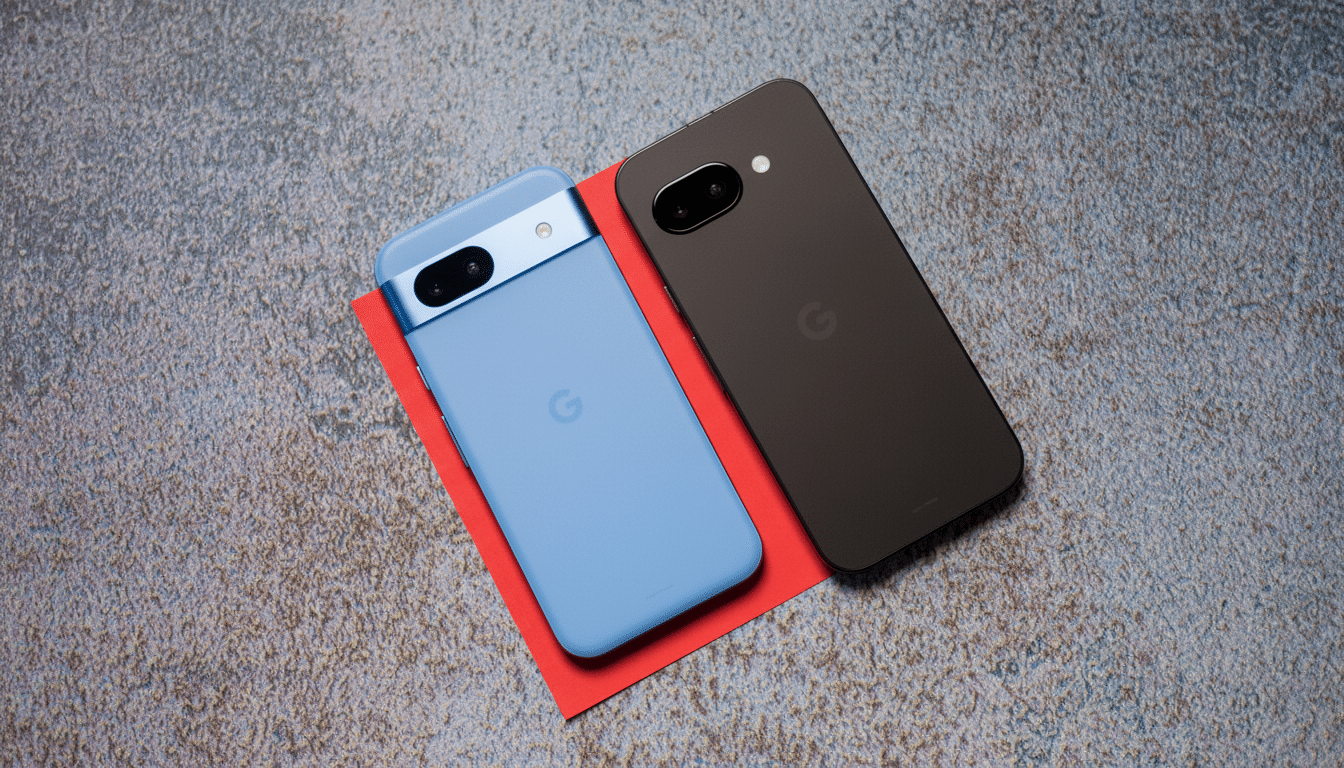
I spent time with Google’s new Pixel 10a, and the first thing that changed how the phone feels in daily use isn’t a spec sheet bullet—it’s the completely flat camera bar. It slides into a pocket without catching, sits perfectly level on a desk, and gives the back of the phone an elegant uniformity you usually only see on concept hardware. Small change, big effect.
Design and build quality get practical refinements
Google kept the minimalist look from the last A-series but refined the geometry. The camera module no longer forms a ridge; it’s flush with the rear surface. That means no wobble while typing on a table, less lint snagging around the camera glass, and easier one-handed pocketing. It’s the kind of ergonomic tweak you notice a dozen times a day.
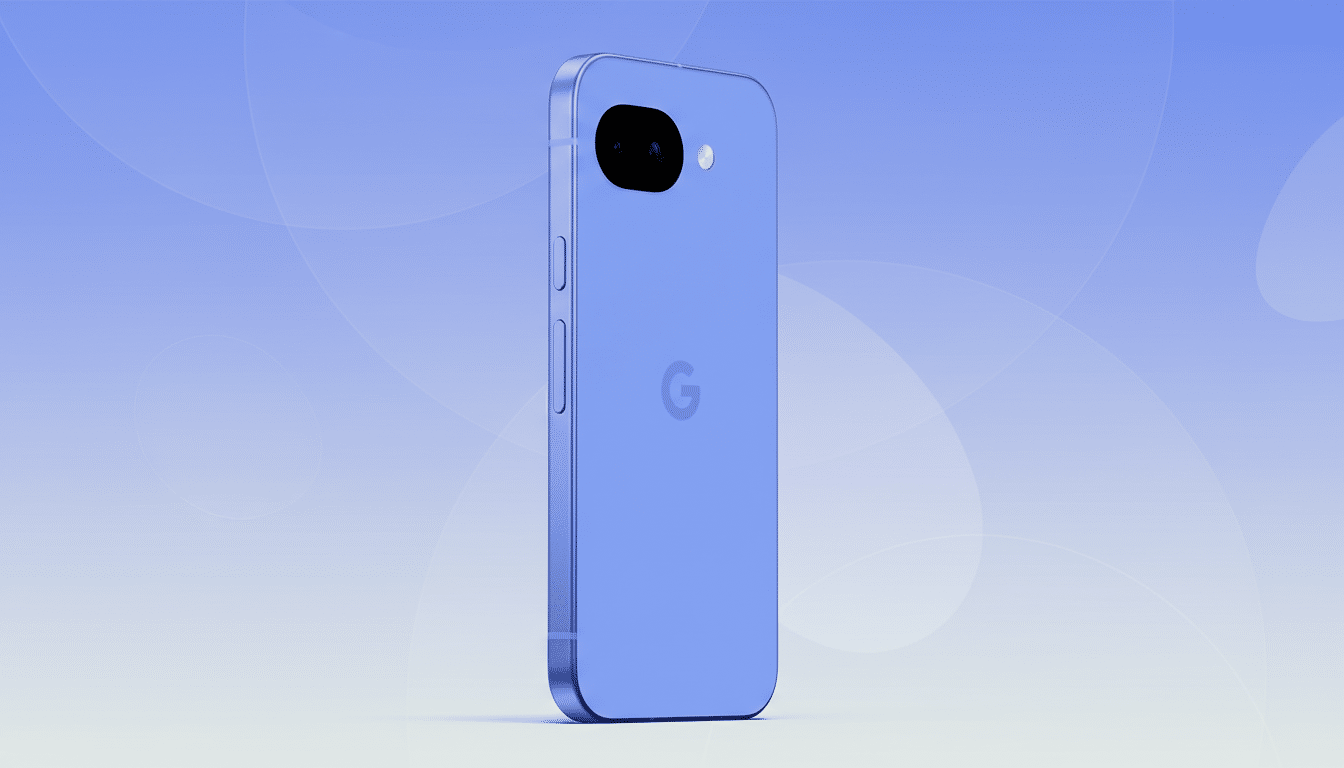
The 10a measures 6.1 by 2.9 by 0.4 inches and weighs 6.5 ounces, essentially the same footprint as its predecessor while shaving a tenth of an ounce. It feels compact by 2026 standards and balances well during long reading sessions. For context, Apple’s iPhone 16e comes in smaller and lighter at 5.9 ounces, but Google’s grip-friendly sides make the 10a feel secure without a case.
Materials matter here. The frame is recycled aluminum, the front upgrades from Gorilla Glass 3 to Gorilla Glass 7i for better drop and scratch resistance, and the matte plastic composite rear fends off fingerprints. With IP68 dust and water resistance, the 10a is built to handle real life, not just retail shelves. Color options include Berry, Fog, Lavender, and Obsidian.
Display and core hardware see brighter refinement
The 6.3-inch OLED sticks to 2,424 by 1,080 resolution and a 60–120Hz adaptive refresh, but brightness jumps to 3,000 nits peak—an 11% lift over the prior model’s 2,700 nits. In bright ambient light, that extra headroom reduces glare and keeps HDR highlights punchy. Text looks crisp at 422ppi, and color tuning skews natural rather than oversaturated.
Under the hood, Google keeps the Tensor G4 from the previous A-series rather than moving to the flagship G5. In practice, that means you’re getting well-tuned everyday speed and on-device AI features without chasing benchmark glory. Storage tiers remain 128GB at $499 and 256GB at $599. If you’re coming from an older A-series, the consistency here is intentional—stability over novelty.
Cameras and smart features emphasize stability
Camera hardware is familiar—a 48MP main sensor with f/1.7 and OIS, paired with a 13MP ultrawide at 120 degrees, plus a 13MP front camera. The main camera bins to 12MP images for cleaner detail and lower noise, and video reaches up to 4K60 on the rear, 4K30 on the selfie cam. The flat bar doesn’t just look good; it also helps the phone lie evenly on tripods and gimbals, reducing the micro-tilt that can throw off horizon levels.
Software is where the 10a stretches its legs. Auto Best Take captures multiple frames and intelligently merges them so everyone’s eyes are open and faces look natural. Camera Coach offers on-screen framing guidance, useful for new shooters and seasoned photographers alike. You still get Super Res Zoom up to 8x, Night Sight and Astrophotography for low light, Face Unblur, Real Tone, and video tools like Audio Magic Eraser, Cinematic Pan, and 240fps slow motion.
The phone ships with Android 16 and a seven-year pledge for OS upgrades, security updates, and Pixel feature drops—matching the longest policies in the industry and outpacing many midrange rivals. Built-in AI helpers include Gemini, Circle to Search, Live Translate, and Call Assist, all of which feel fluid on-device.
Connectivity and battery upgrades favor real use
A new modem improves radio stability while keeping 5G to sub-6GHz, including C-band, which remains the sweet spot for speed and coverage in North America according to carrier deployment reports. There’s dual SIM support (one physical SIM plus one eSIM), Wi-Fi 6E for crowded networks, and a noteworthy addition: satellite-based emergency SOS. Offering satellite safety at this price tier is a genuine consumer win.
The 5,100mAh battery returns, now paired with faster 30W wired charging and 10W wireless. Qi is supported, but not Qi2’s magnetic accessories, so you won’t get the auto-alignment perks some newer chargers provide. Google estimates around 30 hours of typical use or up to 120 hours with Extreme Battery Saver, and based on the prior model’s endurance, that feels achievable for mixed workloads.
Why the flat camera bar changes daily usability
Camera bumps have become the tax we pay for big sensors—wobble on tables, snagging on pockets, thicker cases to protect protrusions. By going truly flat, the Pixel 10a sidesteps those daily annoyances. Case makers can design slimmer shells, the camera glass faces fewer edge impacts, and the phone’s center of gravity feels more natural in the hand. It’s a design choice that reads modest but plays outsized in real life.
Early takeaway after hands-on time with Pixel 10a
The Pixel 10a doesn’t chase spec sheet headlines. Instead, it nails the fundamentals—durability upgrades, a brighter screen, practical connectivity—and then quietly revolutionizes the back of the phone. If you can live without mmWave and Qi2 magnets and don’t need the latest flagship silicon, the 10a’s balance of price, polish, and that brilliantly flat camera bar makes a compelling case.
Preorders are open through the Google Store and major carriers, with the 128GB model at $499 and the 256GB at $599. Expect promos from carriers that could bring the entry price even lower.
