


Pisen is turning the everyday charging hub into a desktop showpiece. The company’s new iDock Qi2.2 AI Robot Charging Station brings 25W magnetic wireless charging, along with 65W GaN USB-C power, active cooling, and a built-in Bluetooth speaker—features that would typically dwell in separate boxes—to the convenience of one rotating contraption.
Qi2.2 Pushes Beyond Early Qi2 Charging Speeds
In the middle is a 25W Qi2 magnetic wireless pad, adhering to the Qi2 protocol. That’s noteworthy given many early Qi2 devices maxed out at 15W—this is a more than 57 percent higher wattage ceiling on paper, which ought to boil down to noticeably faster top-ups for compatible phones. The magnetic positioning—which finds its most advanced expression in the Wireless Power Consortium’s Magnetic Power Profile—makes it easier for coils to lock into an efficient sweet spot and is far more energy-efficient, with less wasteful heat production than older “place-and-pray” Qi pads.
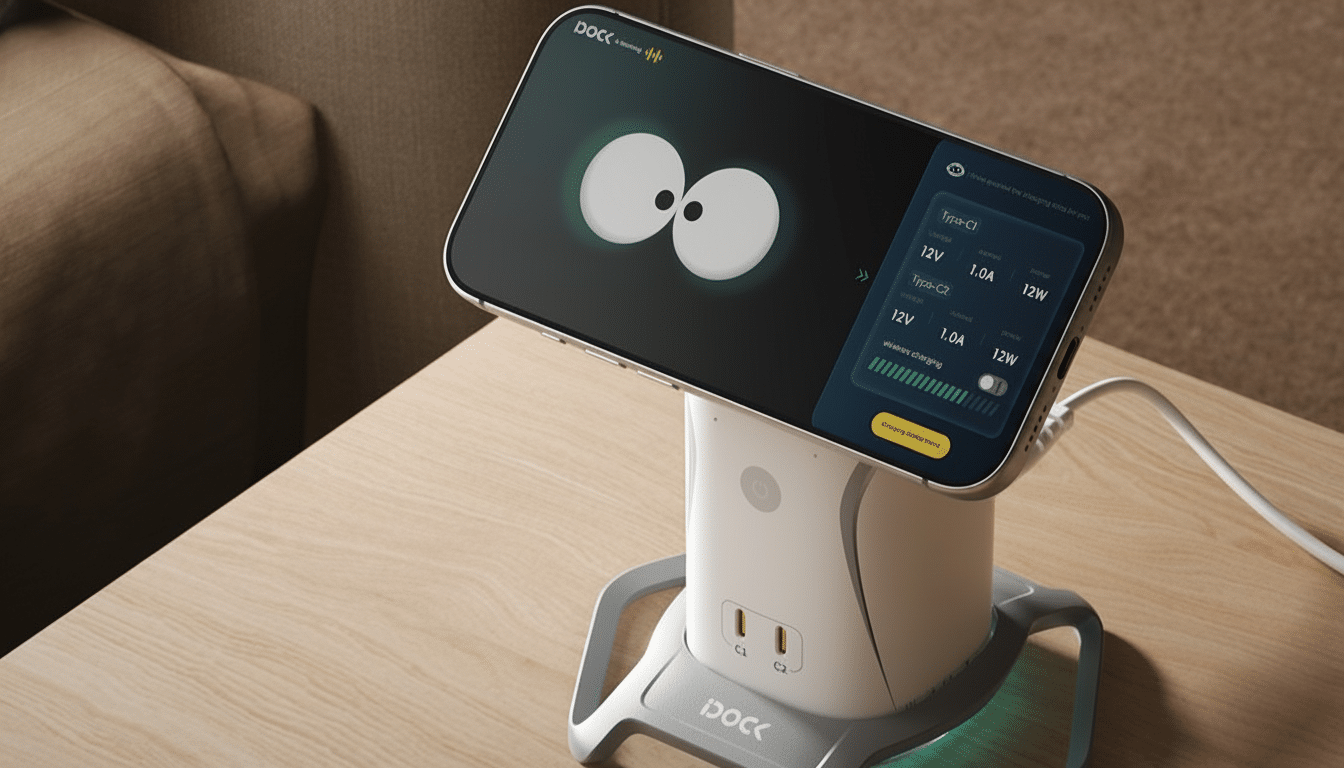
Practical payoff: better transient response at high speed is more likely to provide stable, high-speed charging without microcorrections all the time. The 25 watts the iDock targets for use with Qi2-ready devices (like recent iPhones and a growing number of Android phones) helps narrow that gap between wired charging and short, frequent desk sessions.
GaN Muscle for Laptops and Efficient Multitasking
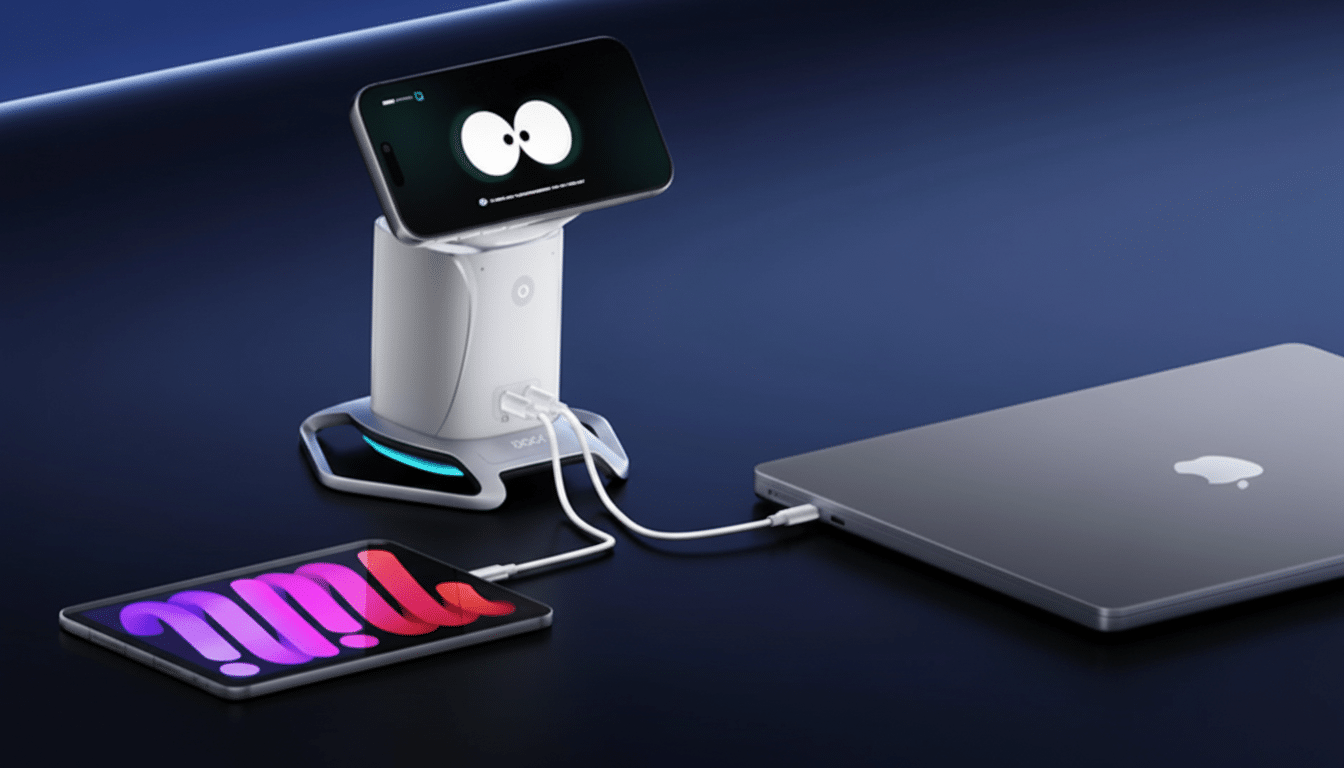
There’s also wired charging, with two USB-C ports powered by a 65W GaN power stage from Pisen. Its gallium nitride components flip more electricity on and off than garden‑variety silicon, producing smaller, cooler chargers that punch well above their weight class in terms of laptop‑class power. Lots of ultraportables are most at home in the 45–65W range, so the iDock should be able to keep a thin‑and‑light notebook happily humming along while charging up a phone or tablet.
Pisen claims an AI routine optimizes output across the ports, giving power dynamically while a device is transmitting or charging. In real-life terms, that’s the hub giving priority to a work session—sending around 45W to your laptop—without starving a second hungry device going for a quick wired charge. The approach is consistent with how the USB Implementers Forum envisions USB Power Delivery: smart negotiation rather than fixed rails.
Active Cooling Keeps the iDock Library-Quiet and Cool
Higher wattage typically brings heat. To combat that, the iDock comes with a semiconductor thermal system and runs at less than 25 dB of noise using an internal fan—the equivalent of a quiet library. And there is a silent mode for nightstands or audio or computer workspaces. With its ability to actively dissipate heat away from coils and regulators, the unit is capable of operating at full speed for longer periods while minimizing thermal throttling between back-to-back charging sessions.
Speaker and Lighting Designed for the Front of the Desk
This is not merely a power brick you slap some magnets onto. It comes with a built‑in Bluetooth speaker that is optimized for near‑field audio, combined with dynamic RGB lighting along its adjustable modular base. The LEDs are responsive to music and voice interactions, transforming the dock into something more atmospheric than a block you hide behind your monitor. The “robot” theme isn’t mere marketing flash: You can rotate the design to easily swing ports—and, without pulling out cables, the magnetic pad—in your direction.
Touch to Connect and Other Integrated Smarts
Tap‑to‑Connect NFC creates a connection between your phone and speaker and wakes up AI voice control. Pisen showcases things like instantaneous prompts, surface‑level assistant queries, and helpful commerce actions. The point is to make the dock a part of your workflow, rather than just a block of plugs.
Who This iDock Is Designed For and Best Suited To
If your nightstand is a spaghetti nest of cables and one‑hit chargers, the iDock’s value proposition is plain: one AC plug in leads to many charging options out. Hybrid workers can dock a laptop via USB‑C, set a phone down on the 25W magnetic pad between conference calls, and pipe in background music through the speaker—all while maintaining temperature and noise control. Lastly, creators and streamers could opt for the lighting and voice‑triggered commands that come with a compact desk setup.
Pisen tells me that the iDock will be available for purchase through leading online retailers as well as the company’s own store. With Qi2.2 representing a genuine performance bump for magnetic wireless and GaN pushing dense, efficient USB‑C power, this is the rare charging hub that welcomes a home in plain sight rather than the cable drawer.
