An experimental malaria vaccine called PfSPZ-LARC2 prevented infection in 13 of 15 vaccinated participants in a small controlled human challenge study, according to the University of Washington Medicine. Two vaccinated participants became infected after exposure to malaria parasites, compared with all seven people who received placebo, a result the university reported as 87% efficacy against infection.
The finding, presented Nov. 19 at the American Society of Tropical Medicine and Hygiene annual meeting, offers an early signal that the vaccine may protect against infection for at least several months under carefully controlled conditions. But it is based on 22 people, not a field trial in communities where malaria is endemic, and it cannot yet show whether the vaccine prevents severe illness, deaths or malaria transmission in everyday settings.
What the trial found
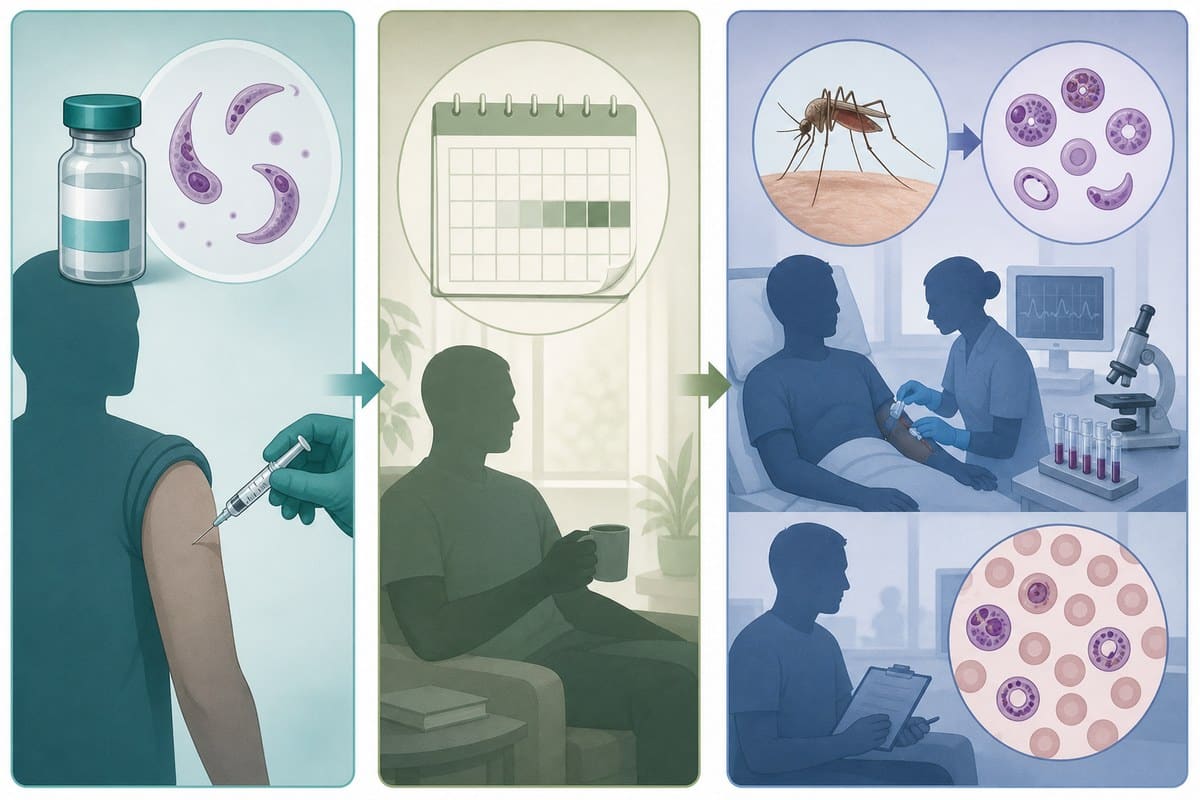
According to the University of Washington Medicine report, 15 participants received PfSPZ-LARC2 and seven received placebo. They underwent a controlled malaria challenge 12 to 16 weeks after their final vaccine dose. The university said infections were promptly treated.
The percentage in the announcement is derived from the infection rates in the two groups: about 13% of vaccinated participants, or two of 15, were infected, versus 100% of placebo participants, or seven of seven. Relative to the placebo infection rate, that works out to about 87% protection against infection in this experiment.
Those absolute numbers are important context for an eye-catching percentage. With seven people in the placebo group and 15 in the vaccine group, one additional infection or noninfection would substantially change the estimated efficacy. The university’s public account does not provide confidence intervals, a full statistical analysis, participant characteristics or the vaccine dosing regimen.
The study was described as a phase 1, placebo-controlled controlled human malaria challenge trial. Because it compared vaccine and placebo groups under a controlled challenge protocol, the result is evidence of protection in this specific experimental setting. The public report does not describe how participants were allocated to groups.
A cross-strain test, but not proof of global protection
One notable feature was the parasite mismatch between vaccination and challenge. UW said the vaccine was derived from a parasite strain from West Africa, while the challenge strain came from Brazil. The result suggests the immune response was not limited to the particular parasite strain used to make the vaccine, at least for the strains and conditions tested.
That is encouraging in a disease caused by parasites that vary across regions, but it is not proof that the candidate will protect against the diverse Plasmodium falciparum strains encountered worldwide. A single challenge strain is not the same as repeated exposure to parasites circulating across multiple places and seasons.
PfSPZ-LARC2 is a whole-parasite vaccine candidate developed by Sanaria. UW said it uses parasites altered with two genetic deletions intended to stop their development during the liver stage. The announcement characterizes that design as the basis for exposing the immune system to the parasite without allowing normal infection to progress. Detailed laboratory and clinical data supporting that account were not included in the public report.
What remains unknown
Controlled human challenge studies have a distinct role in vaccine development: they can test whether a candidate prevents infection under standardized, closely monitored exposure. They are not designed to replicate the range of conditions in malaria-endemic areas, where people may face repeated bites from infected mosquitoes, differing parasite strains and varying levels of prior immunity.
The trial also assessed participants at one point, 12 to 16 weeks after their last vaccination. It therefore provides no answer about protection over a year or longer. Nor can this small study establish uncommon safety risks. UW said the vaccine was safe and well tolerated among vaccinated participants, but it did not release adverse-event tables or a detailed safety dataset.
No peer-reviewed paper, trial-registration record or full protocol was identified in the university’s report. The results were presented at a scientific meeting, where findings can be important but may change as analyses are completed and reviewed. A distributed version of the UW announcement similarly provides the reported infection counts but not underlying study documentation.
UW said enrollment began in summer 2025 and that the work was conducted through the Infectious Diseases Clinical Research Consortium with sponsorship from the National Institute of Allergy and Infectious Diseases. The university posted its announcement Nov. 19; republished accounts, including one from Medical Xpress, were dated the following day.
For now, the result is a preliminary efficacy signal rather than evidence of a deployable malaria vaccine. Larger studies will need to determine whether the protection holds up in malaria-endemic populations, against broader parasite diversity and for longer periods after vaccination.