The U.S. Treasury Department has stopped manufacturing new pennies, formally ending production of the one-cent coin while leaving the far larger task of adapting cash commerce to retailers, banks, payment-system providers and state tax authorities. Existing pennies have not been withdrawn: they remain legal tender indefinitely, and the Federal Reserve will continue recirculating available coins for as long as possible.
The policy is a manufacturing halt, not an abolition of the penny. In guidance published Dec. 23, Treasury estimated that about 114 billion pennies are already in existence and said the government no longer considers further production fiscally responsible or necessary for commerce. The department projects immediate annual savings of $56 million in reduced material costs, a figure that does not represent total savings and excludes any later efficiencies from changes to Mint facilities.

Cash payments, rather than prices, are the point of adjustment
Treasury’s proposed operating model is designed to preserve cent-based pricing while reducing the need for a coin that will gradually become harder to obtain. It recommends that merchants round the final total of a cash transaction to the nearest five cents after taxes, fees and duties have been calculated. A $10.02 total, for example, would be settled at $10 in cash; a $10.03 total would be settled at $10.05.
The recommendation does not call for individual items or tax rates to be rounded. Nor does it apply to cards, checks, gift cards or other non-cash payments, which Treasury says can continue to settle at the exact cent. That distinction puts much of the practical work at the point of sale: retailers will need to determine whether their registers, payment software and cash-handling procedures can distinguish cash from electronic tenders at the final-total stage.
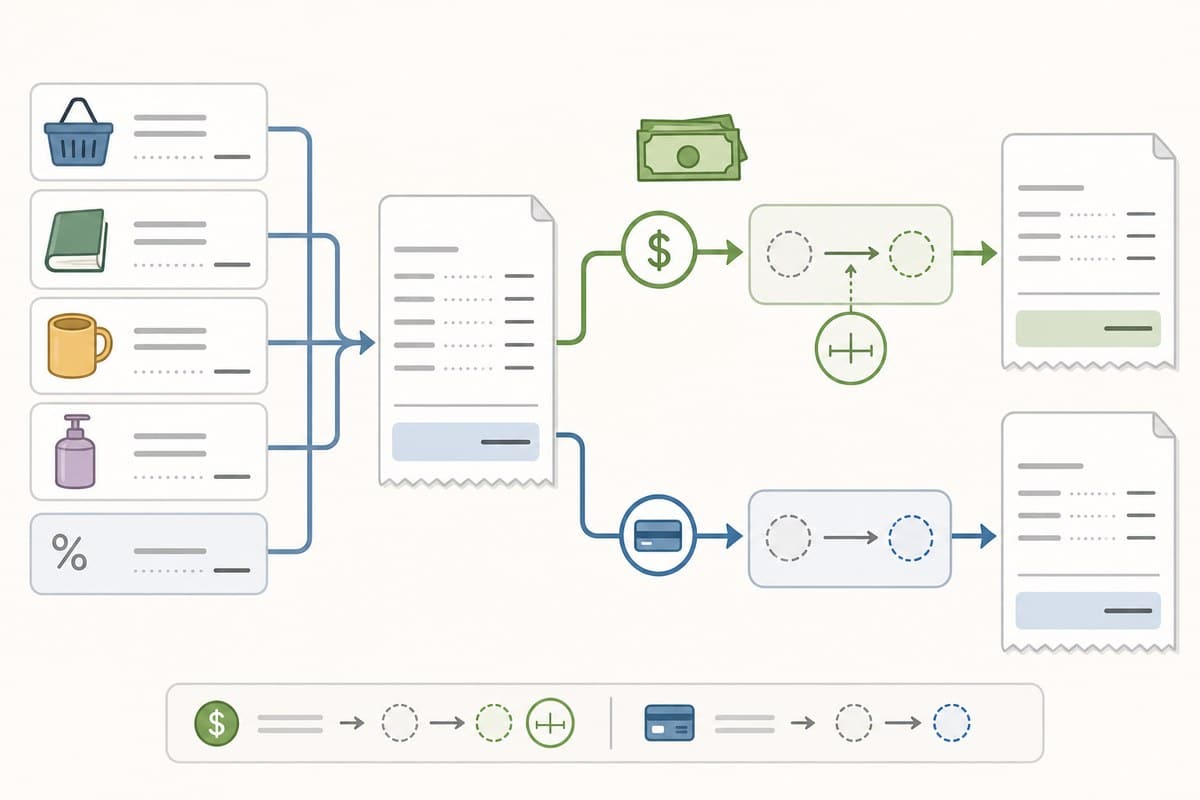
Treasury says totals should round down as often as they round up, and therefore expects no aggregate effect on consumer prices. That is the department’s assessment, not a binding federal pricing rule. Its guidance explicitly says state and local jurisdictions retain responsibility for any revisions to sales-tax laws and related rules. A merchant’s ability or obligation to use nickel rounding can consequently depend on local law, as well as on the capacity of its checkout systems.
The legal point is equally important for consumers and businesses holding jars, rolls or till drawers of pennies. Treasury says the coins retain their nominal value and legal-tender status without an expiration date. The Federal Reserve’s continued recirculation plan means the transition will be uneven: some areas and merchants may continue using pennies routinely for a period, while others encounter shortages earlier.
Costs drove the decision, but the savings measure is narrower than a loss calculation
Treasury said the all-in cost of producing a penny rose from 1.3 cents to 3.69 cents over the past decade. That estimate includes materials, facilities and overhead, showing why a coin with a one-cent face value had become an increasingly conspicuous cost center. The department’s $56 million projection, however, is specifically for immediate annual reductions in material costs; it should not be read as a calculation of the Mint’s entire annual penny-production loss or as a full estimate of the policy’s budget effect.
Earlier reporting on President Donald Trump’s February instruction to halt penny production cited fiscal 2024 costs near 3.7 cents per coin and a reported $85.3 million loss. The contemporaneous Economic Times report described the order as a response to the coin’s expense. The two dollar figures measure different things and periods: Treasury’s later $56 million number is a materials-savings estimate, while the earlier figure was reported as a broader fiscal-year loss.
Treasury grounds its authority in federal provisions allowing the secretary to mint and issue pennies in amounts necessary to meet U.S. needs. Its conclusion that additional production is unnecessary rests on the stock already in circulation and a recirculation system intended to keep those coins moving. The decision therefore does not require consumers to redeem pennies or banks to stop accepting them.
A transition with unresolved supply and collector details
The public record contains a notable discrepancy over the number of pennies available. Treasury’s current FAQ uses an estimate of roughly 114 billion coins in existence. A Nov. 13 report by The Epoch Times, citing Mint statements around a Philadelphia ceremony, put the circulation figure at roughly 300 billion. The available accounts do not explain whether the gap reflects different dates, definitions of circulation, inventory treatment or an underlying revision. Treasury’s later official estimate is the more authoritative current measure, but it does not resolve the difference.
The same report said Treasury Secretary Scott Bessent and Treasurer Brandon Beach attended a Nov. 12 event for a final U.S. penny and that limited numismatic pennies for collectors would continue. Treasury’s Dec. 23 FAQ says broadly that the federal government has stopped manufacturing new pennies, but does not address collector issues. As a result, the operational policy is clear for ordinary circulating coin production, while the status of any separate numismatic production is not established by Treasury’s published guidance.
For merchants, the immediate commercial consequence is not that every cash sale must change tomorrow. It is that a longtime fallback coin is no longer being replenished. The pace at which rounding becomes routine will depend on local penny availability, state and municipal tax rules, and how quickly businesses revise checkout procedures to preserve exact-cent accounting for electronic payments while handling cash totals in five-cent increments.