


A new health wearable is slipping into an unexpected place. Petal, a compact tracker designed to sit inside a bra, measures blood flow near the heart and promises up to 18 days on a single charge—outlasting most mainstream smartwatches and smart rings. The design aims to make continuous health monitoring more discreet, more comfortable, and, crucially, closer to the chest where cardiovascular signals are strongest.
How a Bra Insert Can Track Blood Flow Near the Heart
Petal uses bio-impedance, a technique that runs a tiny, imperceptible current through tissue to capture changes in fluid volume and composition. Placing the sensor against the chest gives it a cleaner view of hemodynamics than the wrist, which is prone to motion artifacts and looser contact. While smartwatches rely heavily on optical photoplethysmography at the wrist, chest placement brings the sensor closer to the heart and central arteries, improving signal-to-noise for beat-to-beat trends and respiratory patterns.
- How a Bra Insert Can Track Blood Flow Near the Heart
- What It Tracks Beyond Heart Metrics and Body Changes
- Battery Life and Charging for Extended Wear Time
- Design, Comfort, and Discretion in Daily Wear
- Privacy, Data Use, and the Medical Wellness Context
- Availability and Pricing, Preorders and Launch Timing
- A Broader Shift To Inconspicuous Wearables
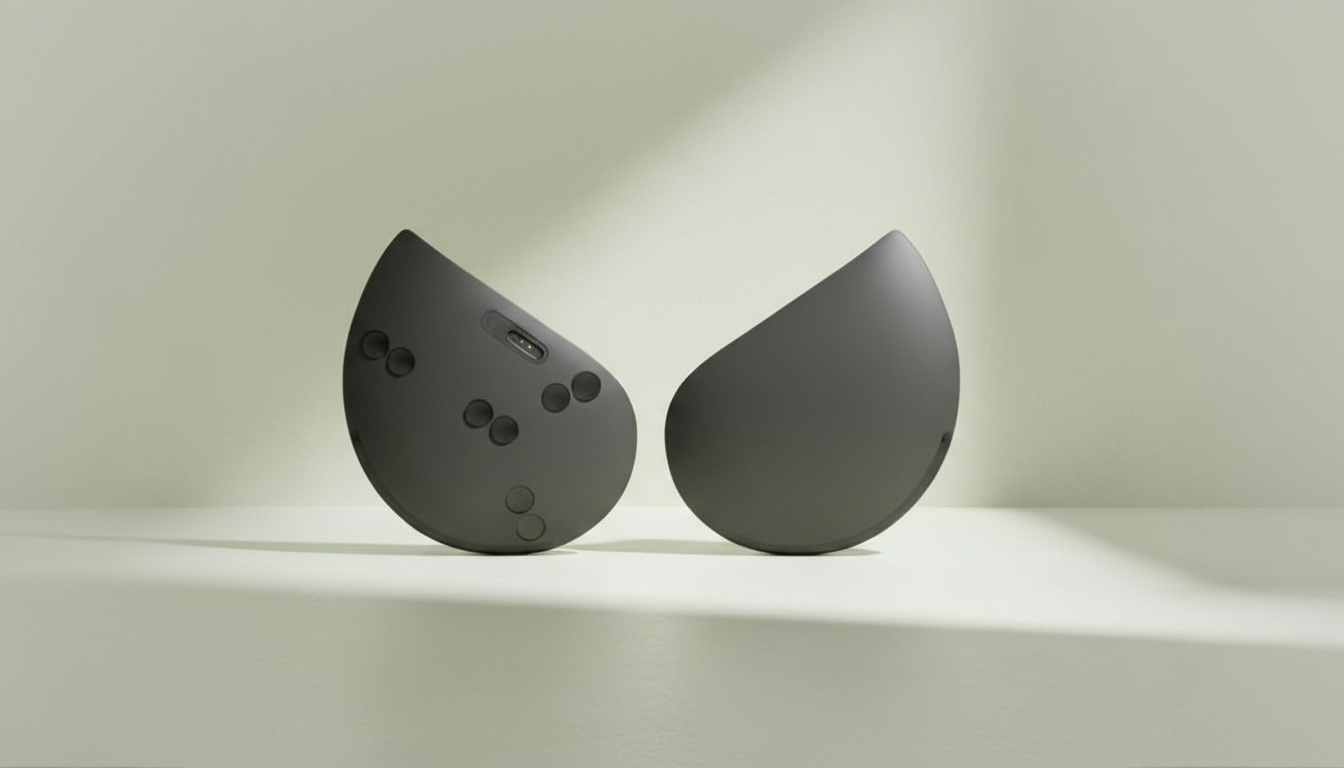
The insert is built from biocompatible materials—soft European fabric on the exterior with a polyurethane-coated interior—so it nestles against the breast without rigid hardware pressing into the skin. One size is designed to fit most bras and sit flush against each breast, aligning the electrodes with thoracic tissue for consistent readings.
What It Tracks Beyond Heart Metrics and Body Changes
Petal’s app organizes data under four pillars: heart, mind, body, and cycle. Beyond heart rate and blood-flow trends, the company says the device monitors variations in breast tissue and water content across the menstrual cycle—changes that are hard to capture from the wrist. It also estimates midsection and visceral fat levels using multi-frequency impedance, the same underlying method found in some smart scales.
Cycle-aware monitoring matters because physiology shifts across phases. Research has shown basal body temperature typically rises about 0.3–0.5°C in the luteal phase, and fluid balance and heart rate variability can fluctuate as hormones change. A sensor placed near the thorax may pick up those shifts more reliably, enabling earlier notifications when patterns deviate from a user’s baseline.
Battery Life and Charging for Extended Wear Time
Battery life is a standout: up to 18 days per charge. For context, many popular smartwatches offer roughly 1–2 days in typical use, while several smart rings last 4–7 days. Some endurance-focused fitness watches can stretch to multiple weeks, but they are larger and more conspicuous. Petal’s endurance in a tiny form factor increases the odds of 24/7 wear, which often yields more stable trend data and fewer gaps in sleep or cycle insights.
The insert charges via a compact dock. The long runtime should reduce charge anxiety, a top reason people abandon wearables after the honeymoon period, according to multiple consumer research panels from firms like IDC and Counterpoint.

Design, Comfort, and Discretion in Daily Wear
Because the tracker hides inside a bra, there is no wrist tan line or jewelry-like device announcing you are measuring your health. That discretion can be appealing in clinical settings, workplaces, or events. It also keeps the sensor tightly coupled to the body without bands loosening overnight, which can compromise readings. Colors include black and blush to blend with common bra palettes.
Privacy, Data Use, and the Medical Wellness Context
As with most consumer wearables, Petal is aimed at wellness tracking, not diagnosis. The U.S. Food and Drug Administration has issued guidance for low-risk general wellness devices, and most companies in this category position their products accordingly. Users should treat insights as informational and consult clinicians for medical concerns. That caveat is especially important in women’s health, where cardiovascular symptoms can present differently and heart disease remains the leading cause of death for women, accounting for about 20% of female deaths in the U.S., according to the Centers for Disease Control and Prevention.
Availability and Pricing, Preorders and Launch Timing
Petal is slated to ship in May, with preorders open now. Early buyers get $50 off, bringing the price to $149 at launch. The single-size insert is designed to slip into most bra styles with minimal adjustment, and the companion app delivers trend summaries, deviations from baseline, and cycle-aware insights.
A Broader Shift To Inconspicuous Wearables
Petal joins a growing wave of health trackers designed to disappear into daily life. Recent examples include smart earrings that read blood flow at the earlobe, women’s health rings that emphasize cycle and recovery metrics, and fitness bands that hide under sleeves. For many users, the best wearable is the one they forget they are wearing—so long as it captures reliable data and lasts more than a week on a charge.
The promise here is simple: chest-level signals, long battery life, and cycle-aware analytics in a form factor that stays out of the way. If those elements hold up in real-world use, this bra insert could become a compelling alternative for anyone who wants serious health tracking without a screen on the wrist.
