


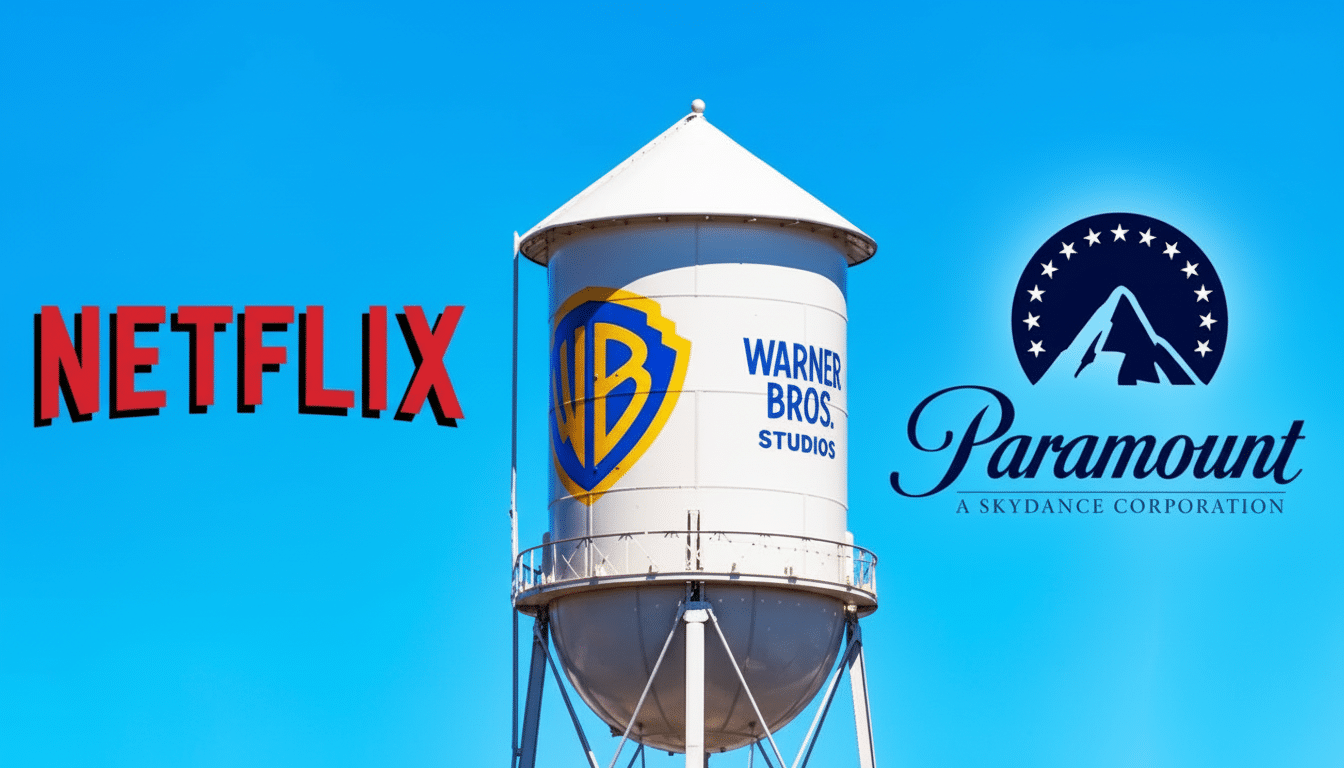
Paramount–Skydance has renewed its pursuit of Warner Bros. Discovery. The revised offer came with a potentially high-impact twist: an irrevocable personal guarantee by Oracle co-founder Larry Ellison to support $40.4 billion of the equity financing, and to pay damages if it fails. The deal escalates a high-stakes face-off with Netflix, which had already landed a binding agreement to acquire the storied studio at $27.75 per WBD share and an enterprise value of $82.7 billion.
The updated plan doesn’t change the headline terms for Paramount’s proposal at $30 per share, but does so in a way that locks in funding certainty to mitigate questions raised by the WBD board, which last week rejected an earlier offer because it was not deemed credible regarding financing.
What Was In the Offer That Is No Longer There
Whereas Paramount’s initial bid featured equity and debt funding commitments, the added feature in this round is Ellison’s personal guarantee — a rare overture in big-media M&A intended to address “certainty of funds,” the boardroom litmus test that often decides contested trades. Paramount is playing up that cash will be in hand at closing and that it is willing to take on liability if the deal blows up.
The pivot comes after the WBD board pushed back that Netflix’s deal needed no equity raise and had a strong debt component, making it more immediate and manageable. CNBC: How key is funding assurance to a WBD about-face? It turned down multiple Paramount overtures in the past and didn’t blink, underscoring that there must be some significant assurances here beyond “hey, we’ll give you more $$$ than even CRAgg?”
Why Ellison’s Guarantee Matters to the WBD Board
Such large personal guarantees are rare in corporate takeovers, and particularly so in a sector that is grappling with cord-cutting, losses from streaming services, and increasing interest rates. Ellison’s support provides leverage with respect to execution risk, diminishing reliance on credit markets that can be turbulent and potentially lowering break-fee exposure by strengthening reverse termination provisions.
And as a practical matter, it enhances confidence on the part of WBD directors that “cash is cash,” not conditional upon market windows. By contrast, in megadeals, regulators and boards analyzed financing for AT&T’s $85 billion acquisition of Time Warner; in Disney’s $71.3 billion deal to acquire much of Fox, certainty and timing were what would determine approval odds and shareholder backing.
Paramount Versus Netflix, on Terms and Deal Certainty
At issue is the headline price that Paramount, a studio led by Robert Spiegel, is offering — $40 per share versus Netflix’s $37.10 — after having initially made a hostile offer of about $108.4 billion. But Netflix has the luxury of a signed, enforceable contract and one with deal structure that WBD had once deemed less contingent.
What WBD shareholders need to decide is if the premium and certainty of financing trump the costs associated with switching, including any termination fees, earnings dilution, timing differences, and regulatory process.
Ellison-led certainty will close that gap, but the board still has to balance speed and execution risk against value uplift.
Stakes in Great Chunks for the Studio’s Future
By consuming WBD, Skydance would be combining a deep library and franchise engine — DC, Middle-earth, Harry Potter, HBO — with a production pipeline supported by David Ellison’s playbook for premium theatrical and tentpole product at Paramount.
The company says additional capital and a single slate would increase theatrical output, enhance content ROI (return on investment), and bolster licensing economics.
WBD’s calculus is equally complex. The company has been slimming down, cutting content spending, and hacking away at a heavy debt load. Any change of control must maintain the key assets and not impede Max’s pace, sports rights negotiations, or international distribution plans.
Regulatory and Execution Hurdles Facing Both Deals
Regulators have cracked down on consolidation, especially when it comes to content libraries and distribution scale. A Paramount–WBD deal would shrink competition in film and premium television, while a Netflix–WBD union would merge a top-dog streamer with one of the leading studios and sports portfolios and raise other, but equally potent, antitrust concerns.
Recent results have been a mixed bag: Amazon’s acquisition of MGM for $8.5 billion was approved, but previous media mega-mergers faced drawn-out reviews.
Watch for focus on market share at theatrical release, premium series pipelines, and bargaining power with talent and distributors.
What to Watch Next as WBD Weighs Rival Bids
All eyes are on whether WBD triggers any matching rights or go-shop provisions and how it measures revised financing against commitments. Fiduciary duties of the board revolve around total value, deal certainty, and timing — things that could prompt another round of bids or a negotiated truce.
Assuming that Paramount’s bolstered financing package convinces WBD’s board, the deal process could shift gears fairly quickly to confirmatory due diligence and regulatory preparation. If not, the Netflix deal is still the path of least resistance. Either way, Ellison’s $40.4 billion promise has turned an auction into an all-out brawl to determine the author of Hollywood’s next chapter.
