


OpenClaw, the lobster-themed AI agent captivating developers and “vibe coders,” promises a hands-off assistant that can organize your inbox, manage files, and message you updates without constant prompts. The catch is as big as the pitch: making an agent powerful enough to be useful means giving it access to a lot of your digital life. That’s why the hottest new agent is also drawing serious scrutiny from security researchers.
What OpenClaw Actually Does, and How It Operates
Built by Europe-based developer Pete Steinberger, OpenClaw can proactively take actions, not just answer questions. It can plug into messaging apps like WhatsApp, iMessage, and Discord to notify you when it’s finished a task, a convenience traditional chatbots generally don’t offer. Under the hood, you can point it at local models or cloud APIs, give it access to external accounts, and even let it read and modify files on your machine.
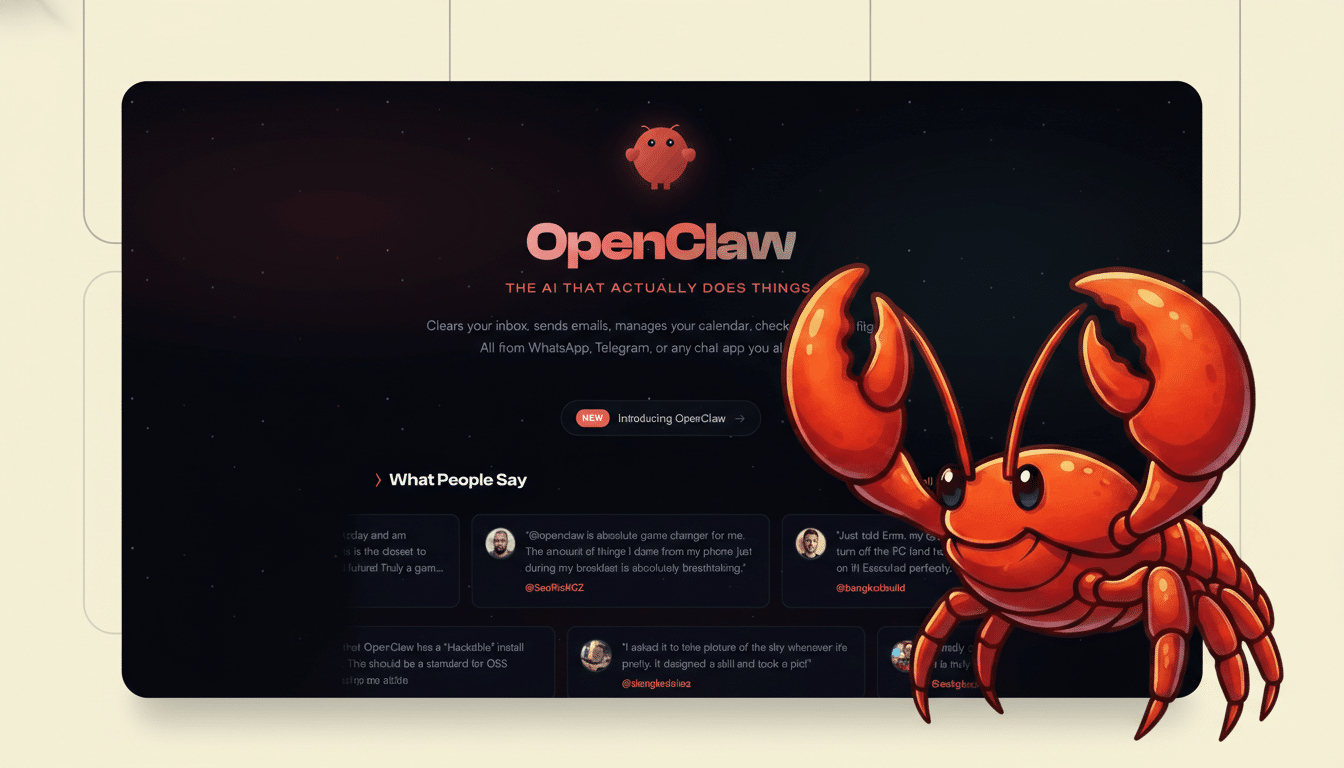
It isn’t a one-click install. OpenClaw lives on GitHub and expects technical setup, from model configuration to sandboxing. It’s free to download, with typical hosting costs in the $3–$5 per month range on a basic VPS; some users report success on a major cloud provider’s free tier. Despite rumors, you don’t need specific Apple hardware—an old laptop or a small server will do.
A Rapid Rebrand and the Broader Agent Landscape
OpenClaw’s identity has shifted quickly: it debuted as Clawdbot, became Moltbot, and now carries the OpenClaw moniker after a naming tangle drew attention from Anthropic, maker of the Claude chatbot popular with developers. The volatility underscores a broader industry question: are autonomous agents ready for the mainstream?
Recent attempts suggest “not quite.” Perplexity’s Comet browser felt promising but early, according to hands-on testers. OpenAI warned that its experimental Atlas agent could buy the wrong item on your behalf and is susceptible to prompt-injection attacks—where malicious content hijacks an agent’s behavior. Claude’s Cowork mode shows what’s possible when an agent can see your files, but it also illustrates how risky broad permissions can be if not tightly scoped.
The Security Trade-offs You Can’t Simply Wish Away
OpenClaw’s own documentation acknowledges the risk: giving an AI shell access and broad file permissions is inherently “spicy,” and there’s no perfectly secure setup. Threat intelligence firm SOCRadar notes that a useful agent must read private messages, store secrets, execute commands, and keep state—all activities that undermine traditional perimeter-based security assumptions. In plain terms, you’re centralizing sensitive data and capabilities in one automated system.
Some users argue that keeping data local is safer than sending it to the cloud. That helps with platform privacy, but it doesn’t make you invisible to attackers. Security researchers tracking info-stealing malware say “local-first” agents concentrate credentials, tokens, and personal data on a single box—making a high-value target if your machine is compromised.
If you do try OpenClaw, treat it like privileged infrastructure.
- Isolate it on a dedicated user account, container, or VM
- Lock down filesystem paths and use an allowlist for directories and commands
- Restrict outbound network access
- Store secrets in a manager and rotate tokens frequently
- Gate actions with confirmations or “dry-run” modes for anything financial
- Rigorously limit who can message the agent
Audit logs, 2FA on connected services, and model-level protections against prompt injection (including input sanitization and domain-specific guardrails) are table stakes.
Moltbook Hype Meets Reality After Data Exposure
The frenzy intensified when posts claimed OpenClaw agents were chatting freely on Moltbook, a Reddit-style “social network for AI agents.” A viral thread even drew praise from a prominent AI researcher for its sci‑fi vibe. Community fact-checkers later flagged screenshots as being linked to human-run accounts, puncturing the narrative that autonomous agents were suddenly hanging out online without us.
There was a more serious footnote. Cybersecurity firm Wiz analyzed data exposed from Moltbook and found about 1.5 million registered agents but just 17,000 human owners—roughly 88 agents per person. Wiz reported that 1.5 million API tokens, 35,000 email addresses, and private agent messages were accessible during the exposure. The company says it worked with the Moltbook team to secure the issue quickly and delete accessed research data. The episode is a vivid reminder that connecting an agent like OpenClaw to third-party platforms expands your attack surface well beyond your own machine.
Is OpenClaw Safe to Use? Proceed With Caution
It can be used responsibly, but only if you approach it like a production system and not a weekend toy. Start with minimal permissions and widen cautiously. Keep it away from financial accounts and irreversible actions until you’ve proven your controls. Run it in a sandbox with strict access policies and be prepared to maintain it—patches, key rotations, and monitoring aren’t optional.
For most people, the convenience of an agent that emails you a briefing or files your receipts won’t outweigh the risks and operational overhead yet. For developers and security-conscious tinkerers, OpenClaw is an intriguing testbed for agent design and safety practices. The real measure of progress won’t be how “autonomous” it feels on social media, but whether it can earn trust in the messy realities of everyday systems—and that will take more engineering, more guardrails, and fewer shortcuts.
