


OpenAI has gone to “code red,” redeploying its staff to improving the core quality of ChatGPT over increasingly fast incremental releases from Google’s Gemini. An internal memo from the company’s chief, Sam Altman, obtained by The Wall Street Journal and The Information, in effect instructs teams to focus on improving personalization, speed and reliability and broadening answer coverage over new bells and whistles.
That means postponing efforts like ads within ChatGPT, and retail and task-specific AI agents, as well as a voice-first personal assistant dubbed Pulse. The lesson is simple: Firm up the foundation before hiking up the skyscraper.
- OpenAI prioritizes quality improvements over new features
- Google’s Gemini gains real momentum across users and tests
- Enterprise stakes and a third player reshape competition
- Follow the money and the GPUs driving AI infrastructure
- What users can expect next from OpenAI’s renewed focus
- The bigger picture of OpenAI’s strategy amid competition
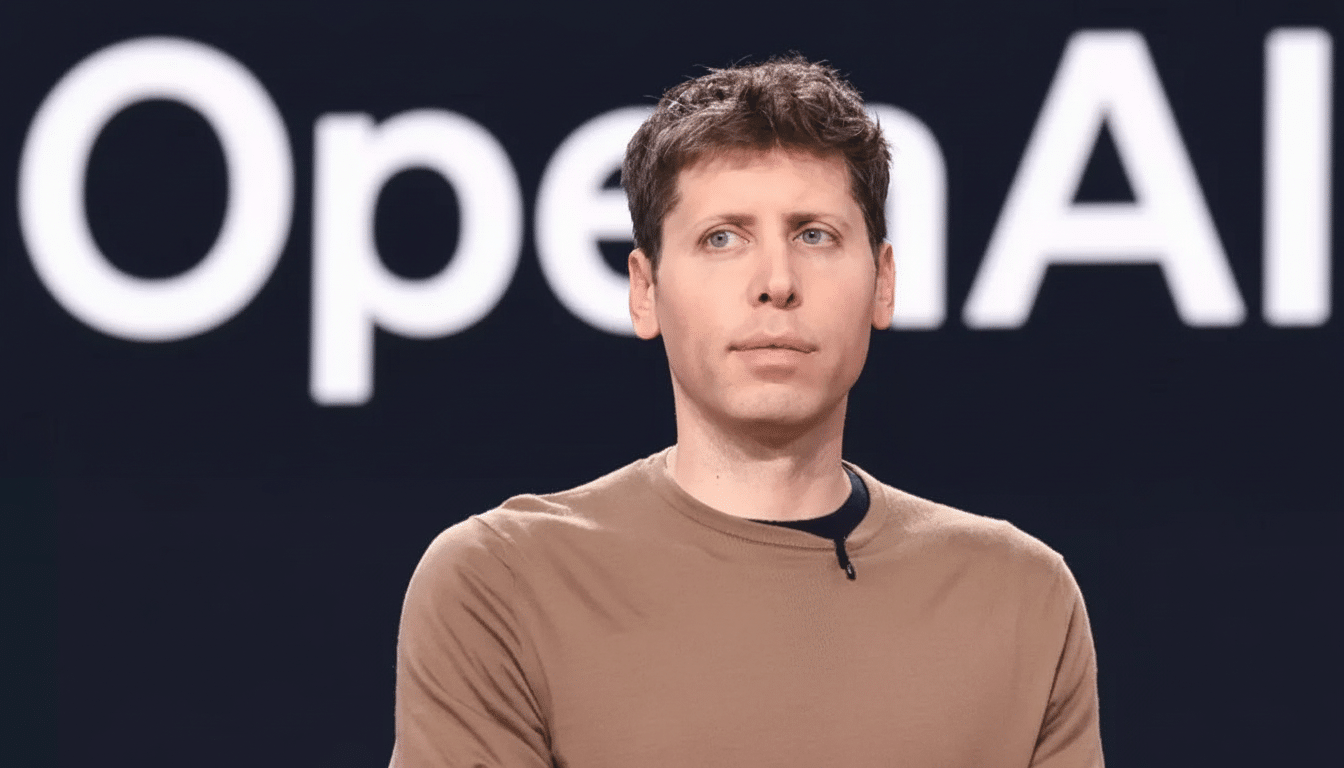
OpenAI prioritizes quality improvements over new features
Altman’s mission focuses on solving the everyday pain points users are most attuned to. Personalization could very well involve longer-lasting, user-managed memory and context awareness that persists even between sessions. Trimming latency and making the app more reliable could include smarter routing of model results, better caching, and infrastructure tweaking to make sure there are no slowdowns or timeouts when demand peaks.
Just as important is what ChatGPT can answer credibly. That means lessening extraneous refusals, loosening factual correctness with retrieval tactics and promoting more consistent tool-using behavior for activities like browsing, coding and data analysis. Prepare for more strict A/B testing and a rollback mechanism to keep regressions at bay that have, on occasion, annoyed power users.
Google’s Gemini gains real momentum across users and tests
The competitive pressure is tangible. As of September, OpenAI claimed about 700 million weekly active ChatGPT users. Meanwhile, Google claims Gemini has increased the number of its monthly active users from around 450 million in July to 650 million in October, constituting a 44% rise within that time frame. Making Gemini available as part of Search, Android and even Workspace puts the model in users’ paths by default.
On public benchmarks, Gemini versions show top-ranking scores on multiple suites, and especially in multimodal reasoning. While benchmarks serve as flawed proxies for real-world performance, they shape perception — and perception is what counts when CIOs and consumers decide where to invest time and resources.
Enterprise stakes and a third player reshape competition
OpenAI also suffers a steady drip of pressure from Anthropic’s Claude, which has developed some entrenched trust in the enterprise with long-context capabilities and an emphasis on safety-first positioning. Anthropic, The Wall Street Journal has reported, expects to break even circa 2028 and might reach firm financial footing before certain rivals. And such a timetable, if fulfilled, could encourage corporate buyers to have confidence in long-term adoption.

Large organizations worry more about reliability and governance than flashy new features. Better knobs for data retention, consistent formatting of the output and predictable action latency can be worth more than headline-grabbing demos. OpenAI’s new focus is on a core good, one that lines up with those economic realities.
Follow the money and the GPUs driving AI infrastructure
The business backdrop is unforgiving. The privately held company is on pace to lose autoworker salaries, and faces losses of more than 10 worker paychecks annually for years ahead, according to figures The Wall Street Journal reported were included in internal OpenAI projections that detail a potential $74 billion loss in 2028 with no profitability fence post in sight until around 2030, dependent upon adding about $200 billion additional annual revenue. Throughout the sector, companies have needed to tap heavy upfront capital and complex financing mechanisms to finance compute and data center buildouts.
Google has an inherent advantage: the ability to fund AI work through advertising and cloud cash flows, as well as distribute Gemini at scale across its consumer and enterprise offerings. OpenAI has to fight on product quality and developer engagement, while also dealing with increasing infrastructure costs as each new user comes online and the context window gets larger.
What users can expect next from OpenAI’s renewed focus
In the short term, that means fewer flashy launches and more real improvements to day-to-day use. Faster responses, fewer network errors, more consistently performing tools and smarter personalization are probably higher-order concerns. The ad-free breaks, native shopping agents and Pulse suggest OpenAI wants to build trust before piling on monetization or complex agentic workflows.
Developers can expect clearer rate limits, better uptime and a lower variance in outputs — as well as routing between lighter-weight models and heavier ones, balancing cost with speed. If OpenAI can actually boost reliability, even for the cost of increased quality, then it will be able to blunt Gemini’s momentum as well as slow enterprise switching to Claude.
The bigger picture of OpenAI’s strategy amid competition
“Code red” here sounds more like prioritization than panic. But with Gemini picking up steam, and Claude building its enterprise legs, OpenAI is betting that getting the basics right will matter more than feature bloat. The verdict will depend on whether users and businesses have the feeling of difference — every session, every query, every time.
