


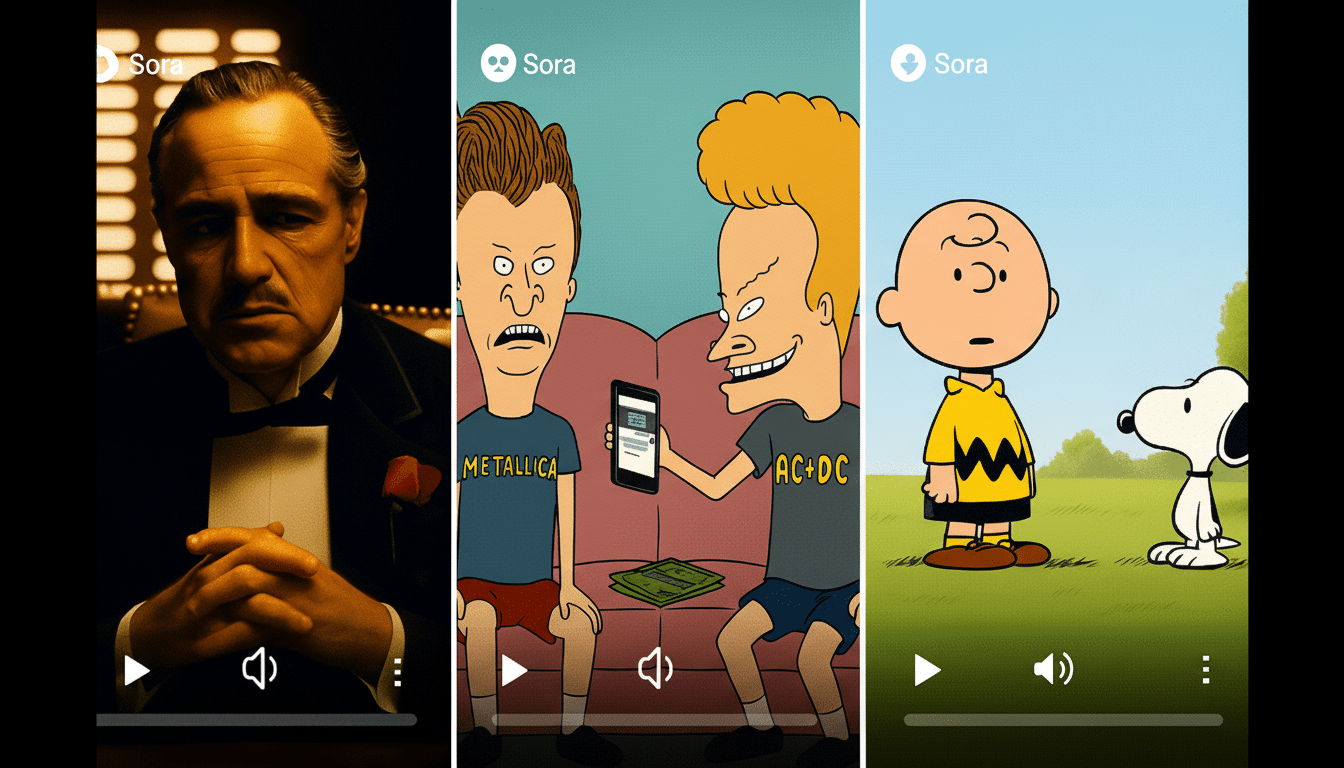
OpenAI is aiming for the end of the endless scroll era with a new short‑form video app built around its most recent text‑to‑video model, Sora 2. Users don’t shoot or edit scenes; they conjure them with prompts, swap in their own face and voice, and upload the results to a TikTok‑style feed. What you have is a feed that plays like a fever dream of deepfakes — amazingly watchable, wildly pliable, and potentially volatile.
What Sora 2 Does in Practice: Multi‑shot Clips and Audio
Sora 2 provides you with multi‑shot clips with stitched camera angles, higher quality motion and physics, and high fidelity audio such as dialogue, sound effects, and music. In demos, OpenAI showed off scenes ranging from lunar vistas to Arctic jet skiing — all in the space of a single prompt — which took about two minutes to render per clip.
The pièce de résistance is Cameo, a service that allows users to post their face and voice on it so others can create self‑deepfakes with that person’s consent. That is to say, you can star in an action short; draft a travel montage with future‑you; or put your dog on a dragon. Sora 2 can also speak in several languages, though OpenAI notes the model is still allowed to hallucinate; that means not getting accents quite right.
Functionally, it’s what consumers are already acclimated to with social mechanics: a vertical feed, fast creation, and frictionless sharing. The camera, instead, has been replaced by a generative engine.
Deepfakes On Demand And The Equation Of Risk
Turning anyone into a protagonist is an engagement win — but it also lowers the barrier to abuse. Synthetic media has already helped spread election-season misinformation and fuel fraud. That was when misinformation penned by AI took the top spot in the World Economic Forum’s Global Risks Report as humanity’s most critical short‑term global risk. Fraud‑prevention companies like Sumsub have observed annual triple‑digit increases in deepfake attempts in every industry.
The power of Sora 2 exacerbates that trend. A convincing voice clone on a photorealistic face can spread rumors, spoof attempts by companies to convey meaningful information, or harass people at scale. Because the model conjured up the details, even well‑intentioned creators can unwittingly disseminate mistakes. The tension is clear: the more cinematic, the greater potential for harm.
Guardrails, Watermarks, and the Policy Gap
OpenAI says it is introducing Sora 2 with cautious content policies, consent‑based Cameo tools, and clear AI watermarks for downloads. The company also has lined up behind efforts to verify the source of content, including the Coalition for Content Provenance and Authenticity supporting tamper‑evident metadata dubbed Content Credentials.
Those are important steps, but they’re not silver bullets. Source metadata may be removed and visible watermarks can be cut off. Academic labs and industry groups, such as Stanford’s HAI and Sensity, have demonstrated that detectors and watermarks can be circumvented in compression or re‑encoding. The regulatory landscape is similarly patchwork: The EU AI Act calls for a platform‑scale disclosure of synthetic content, but in the US, disclosure requirements are based on state laws and guidelines from federal bodies like the FTC remain more like best practices outside commercial applications.
For Sora 2 to not be an accelerant of disinformation, OpenAI will have to employ a number of layer defenses: proactive detection, cross‑platform provenance standards, rapid takedown pathways, and partnerships with major social networks that can honor labels end‑to‑end.
Why OpenAI Wants a Social Feed for Sora 2
Wielding the feed means more than distribution. It builds a consumer brand, creates network effects, and might open up future revenue streams including subscriptions, creator tools, and branded content. And it places the OpenAI app in direct competition with TikTok, YouTube Shorts, and Instagram Reels for attention minutes — the most valuable commodity on mobile.
According to data.ai, TikTok is the leader in global consumer spend among social apps and has an unusually high time‑spent per user (when you compare its time‑spent metrics with other social networking giants). That’s the white whale: If synthetic video can iterate at a rate far faster than filmed content, creators could ship 10 concepts before lunch, see what hits, and keys early success with prompts rather than production crews. ByteDance demonstrated the power of combining editing tools like CapCut with a social graph; OpenAI is betting that a generative‑first stack can be even stickier.
How Creators and Brands Can Use It Effectively
Look for early traction among storyboarders, advertising specialists, and music video directors.
Indie filmmakers can pre‑visualize the next blockbuster; marketing pros can try a dozen different ideas while targeting their audience with pinpoint accuracy; educators can bring their subjects to life in fun, engaging ways and even reach out to anyone anywhere, quickly and easily. But it will be a matter of rights management. Unauthorized use of a likeness bumps up against right‑of‑publicity laws, and the entertainment industry is still reeling from negotiations around virtual doubles as evidenced in SAG‑AFTRA deals.
Smart brands will bake in internal disclosure rules and consent workflow from day one. Transparent labeling, opt‑in voice models, and provenance metadata are fast becoming table stakes, not feature fetishes.
Availability and the Future of OpenAI’s Sora 2 App
Sora 2 is currently being launched via invite on iOS, and there’s an Android app in the works. It’s already possible to achieve a two‑minute latency per clip on short‑form social; even faster performance will nudge it into live‑ops levels where prompts shift during trends.
The stakes are straightforward. If OpenAI can navigate spectacle and safety, Sora 2 could reimagine the creator stack and coerce incumbents to go generative‑first. And if guardrails fall behind, the app could become the most watchable misinformation machine yet. Either way, the feed is about to be a whole lot more synthetic.
