


OpenAI’s first consumer hardware won’t reach buyers until 2027, according to a new court filing that also confirms the company has abandoned the “io” brand for any device. The disclosure cools months of speculation around a near-term launch and resets expectations for the AI leader’s hardware ambitions.
The filing, spotted by Wired, emerges from an ongoing trademark dispute with startup Iyo and states that OpenAI will not use “io” or variations thereof for future gadgets. OpenAI previously scrubbed “io” references after a court order, and the latest document effectively closes the door on that brand path while sketching a sales window in early 2027.
- What the court filing reveals about OpenAI’s device timeline
- Timing and strategy for a possible 2027 OpenAI hardware launch
- What the device might be and how it could function
- A market reality check for standalone consumer AI devices
- Branding and IP implications of abandoning the ‘io’ name
- Noise versus reality amid rumors and fake device leaks
- What to watch next as OpenAI’s hardware plans progress
What the court filing reveals about OpenAI’s device timeline
While OpenAI has not detailed the product, the filing indicates retail availability is planned for early 2027, aligning with a strategy to announce earlier and ship later. It also clarifies that any hardware won’t carry the disputed “io” name tied to a venture OpenAI acquired that had been associated with Jony Ive’s design efforts. In practical terms, the company is prioritizing legal clarity and brand hygiene before it invests in a consumer-facing identity.
This matters because naming conflicts can derail launch marketing, packaging, and regulatory paperwork across multiple regions. By exiting the “io” fight, OpenAI avoids costly delays and the risk of forced rebranding after a reveal.
Timing and strategy for a possible 2027 OpenAI hardware launch
OpenAI has said it was on track to debut hardware before the end of 2026, and both statements can be true: a late-year unveiling followed by first shipments the following year is a well-worn consumer electronics playbook. It gives teams time to finalize firmware, scale manufacturing, pass certification, and seed developers while maintaining momentum with an announced product.
For a novel AI form factor, the extra runway can be crucial. Beyond the industrial design, OpenAI needs reliable wake-word performance, robust on-device privacy controls, fallback behaviors when connectivity drops, and a clear path for updates. Each of these has tripped up early entrants in the AI companion category.
What the device might be and how it could function
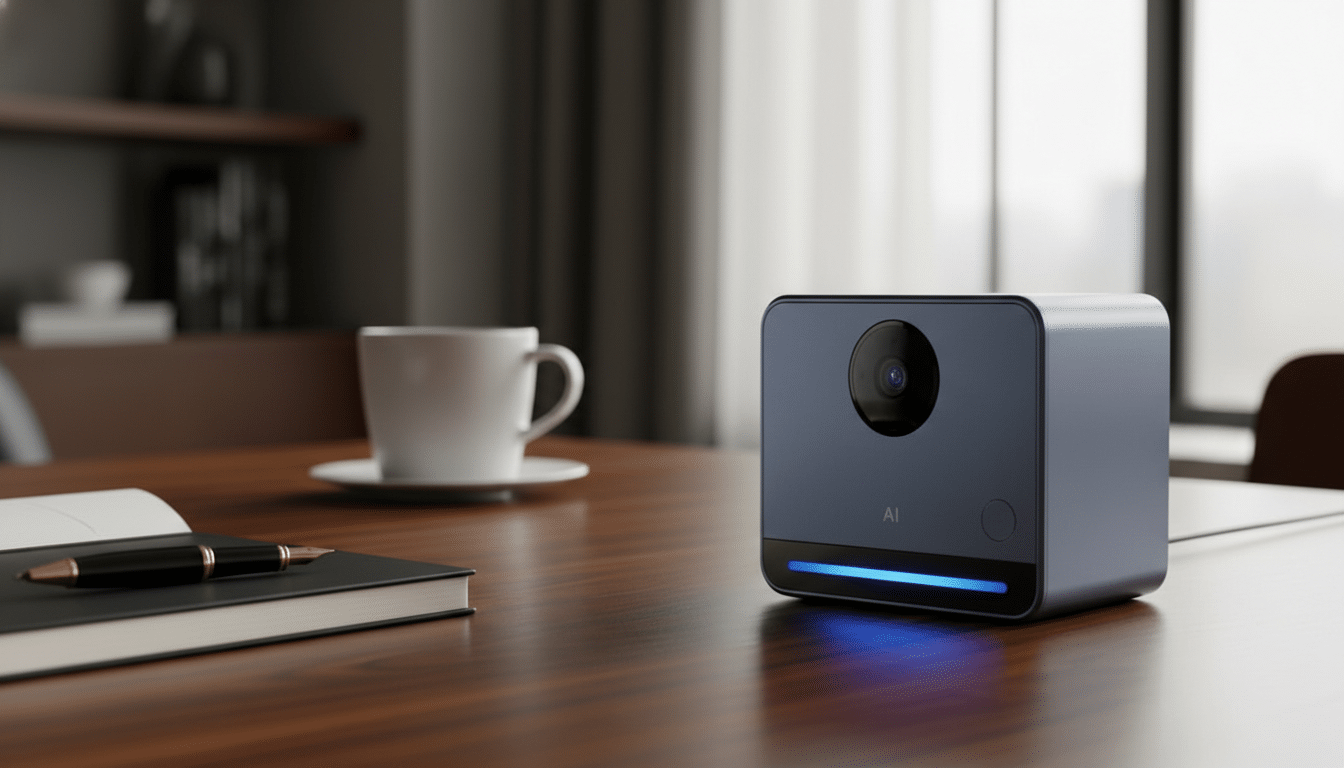
OpenAI has kept the concept under wraps, but reporting by the Financial Times suggested a screenless, ambient device designed to live near you rather than in your pocket. That aligns with longstanding chatter about an “iPhone of AI” collaboration with Jony Ive’s design studio, emphasizing natural interaction over apps and icons.
In practice, that could take the shape of a tabletop orb, a wearable pin, or an ear-first assistant—any of which would lean on OpenAI’s multimodal models for voice, vision, and context. The key design choice will be how much inference runs locally versus in the cloud, a trade-off that affects latency, battery life, and privacy.
A market reality check for standalone consumer AI devices
There’s a reason OpenAI appears unhurried. Standalone AI devices have struggled. Humane’s AI Pin faced safety concerns that led to a battery recall and widespread criticism of performance and usability. Rabbit’s R1 drew headlines but disappointed on reliability and speed in real-world use. Early adopters were curious; mainstream users were unconvinced.
Meanwhile, incumbents are threading AI into familiar hardware. Meta’s smart glasses now handle hands-free queries and visual identification, while smartphone assistants are quietly gaining generative features. Apple is reportedly exploring a pin-like device, according to The Information, but it too appears to be in exploratory phases. The lesson: utility must be immediate, not aspirational.
Branding and IP implications of abandoning the ‘io’ name
OpenAI’s pledge to sidestep “io” removes a thorny legal risk and frees product teams to lock packaging and marketing ahead of production. In an era when naming collisions are common, a clean trademark lane can be as strategic as a component choice. Expect a brand that signals ambient intelligence without inviting confusion with developer domains and file extensions that already use “.io.”
Noise versus reality amid rumors and fake device leaks
The delay also helps separate signal from hype. A viral Reddit post recently claimed a Super Bowl reveal featuring actor Alexander Skarsgård interacting with a shiny orb, allegedly called “Dime,” plus earbuds. OpenAI quickly dismissed the clip as fake and ran an entirely different ad centered on its Codex tool. As the timeline lengthens, expect more speculative leaks; treat them skeptically.
What to watch next as OpenAI’s hardware plans progress
Meaningful breadcrumbs will come from hiring and hardware ops: roles in radio certification, logistics, and quality assurance signal build readiness. Regulatory filings, developer documentation for accessories, and partnerships with contract manufacturers are other telltales. If OpenAI plans a late-2026 unveiling, those threads should start appearing well before units reach consumers in 2027.
For now, the message is clear: curiosity is warranted, urgency is not. OpenAI is taking the scenic route to hardware, and if history is any guide, that patience is less a retreat than a bid to avoid the missteps that have sunk first movers. Don’t expect to put an OpenAI device in your cart until 2027—and that might be exactly the point.
