


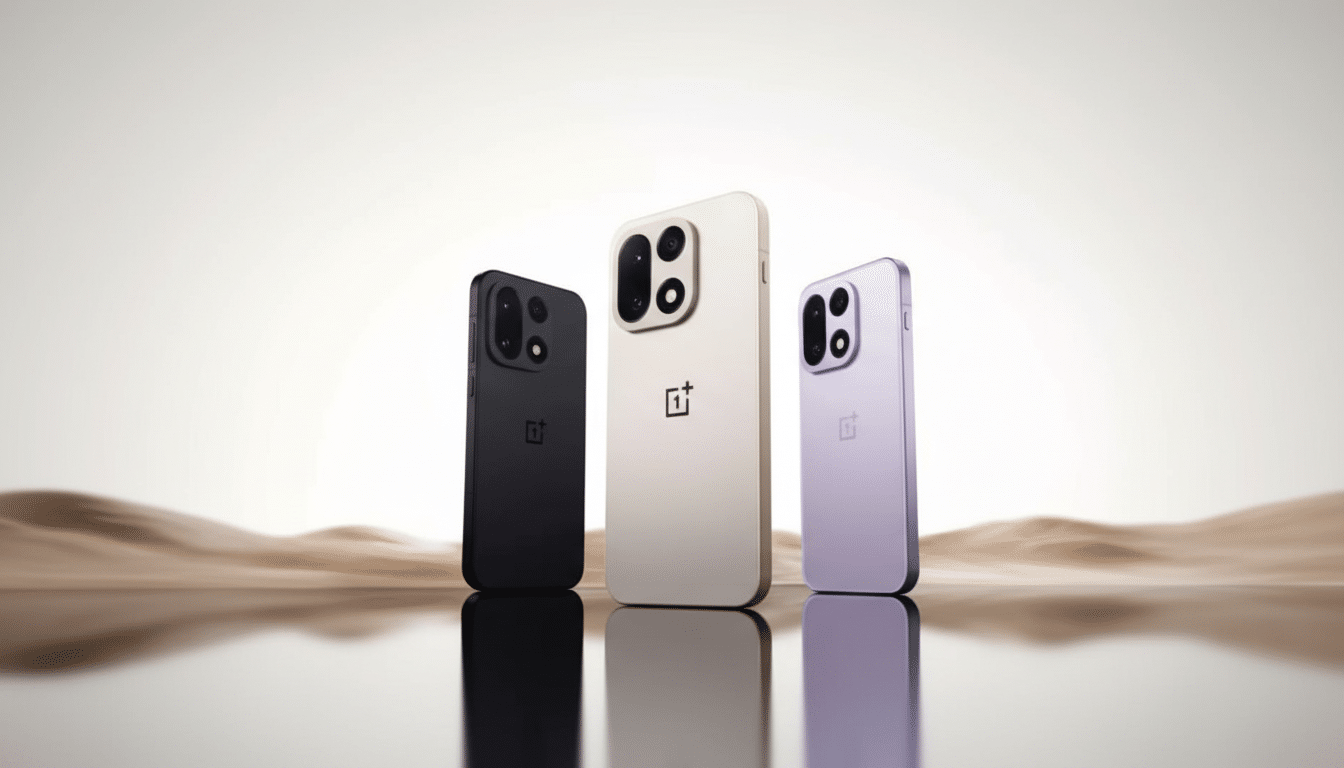
Live images of what seems to be OnePlus’s anticipated Turbo smartphone have emerged, suggesting a midrange offering that comes with an eye-poppingly hefty battery and a clean, flat-edged design.
The unit photographed above has a glossy blue-green back that resembles plastic, suggesting OnePlus’s focus was on durability and cost rather than premium materials.

Live photos suggest midrange build and practical design
Photos of the phone were shared by Android Headlines; they show a device with squared-off edges, a shiny rear panel, and an overall sleek design. The camera layout isn’t fully detailed in the shots, but the finish and frame jive with what we saw from the brand’s previous mid-tier design language: simple, pocket-friendly screens, and practical features. The plastic back could help keep the weight and repair costs down — a smart move if battery capacity is what’s inside.
The color shown is a subdued blue-green that feels more “functional” than flashy, in keeping with general consumer taste in the mid-market for understated hardware. There are also flat edges, hinting at a more robust in-hand feel — something a lot of people like for grip and case fitment.
Battery and charging appear to be the main focus here
Headline spec here is a quoted 9,000 mAh battery — way beyond the typical 5,000 mAh capacity we see in this class. If true, that’s about 80 percent more than what the midrange norm is, which could translate to multiday use with an average workload and a lot of peace of mind for travelers, gamers, and heavy streamers.
Just as worth noting is the 80W wired charging. OnePlus and its sister brands have long been advocates of fast-charging tech, and 80W has already been shown to be mature and reliable in recent devices. The problem will be thermal management with a cell that size; smart heat dissipation, battery health algorithms, and protective charging profiles will be more crucial than ever. Credentials from labs like TÜV Rheinland will be part of the story, you can expect, if this feature set ships as rumored.
Display and chipset aim for smooth, fluid performance
Leaked specs indicate a 6.8-inch screen with a maximum 144Hz refresh rate. That’s a rate we more often see in gaming-centric phones and a couple of other value plays, indicating that OnePlus wants the Turbo to be quick and seamless throughout day-to-day use. We don’t know the panel type, but at this stage of the refresh, I’d say adaptive switching will be a necessity to prevent power drain where it’s not needed.
As for the processor, it is expected to be powered by Qualcomm Snapdragon 7s Gen 4, paired with 8GB of RAM. Recent 7-series chips from Qualcomm have been optimized for efficiency per watt, and when coupled with an oversized battery it could certainly make for standout endurance without sacrificing responsiveness. As a point of reference, the phones on modern 7-series silicon I’ve used have handled multitasking, casual gaming, and high-refresh displays without issue, albeit not chasing top-tier flagship benchmarks.
Branding and availability remain a moving target
Android Headlines says the phone could be released outside of China under the Nord name, which would align with OnePlus’s previous use of Nord to signify value phones in Europe and select regions in Asia. Whether or not these Nord models will make it to the US is unclear — historically, the company has introduced some versions of its Nord phones over here while restricting better ones to other places.
Timing is equally murky. What with the usual leak cycle and the company’s product cadence, a reveal around the Mobile World Congress window seems feasible enough, but nothing is confirmed. Certification databases like China’s 3C or TENAA often reveal charging and battery information in the run-up to launches — keep an eye on those channels for early proof of the 80W and 9,000 mAh figures.
Why this OnePlus Turbo leak could matter to buyers
If OnePlus brings to market a midrange phone packing a 9,000 mAh battery, it would reset expectations about endurance in the class. Most “long-lasting” mainstream phones today cap out at around 5,000–6,000 mAh; gaming-focused models sometimes go higher, but not infrequently with some degree of thickness-related baggage. As such, the Turbo will be under close examination for thickness and weight — factors that influence whether all-day power is coming with all-day wrist fatigue.
That potent mix of a high-refresh display, power-efficient 7-series silicon, and rapid wired charging could make the Turbo an everyday workhorse that’s also a credible gaming and media tool. It could be a value standout if it is sold globally under Nord branding, provided the cost hits the sweet spot and the software support window is on par with the best of its class.
For now, the live photos underscore an easy takeaway here: It seems that OnePlus is prepping a battery-first midranger with performance flairs in areas where they count.
As certifications and leaks continue to roll in, look out for confirmed battery capacity, charging standards in-box, panel specs, and regional branding. Those statistics will show whether the Turbo is all talk and big numbers or an actual endurance king.
