


Nvidia is injecting $2 billion into CoreWeave to accelerate a planned expansion to more than 5 gigawatts of AI compute capacity, a scale that would vault the fast-growing cloud provider into the top tier of infrastructure players. The move pairs fresh capital with a strategic buildout of “AI factories” using Nvidia’s newest chips and systems, locking in long-term demand for the chipmaker while shoring up a partner carrying a heavy debt load.
A Strategic Bet on AI Factories and Data Centers
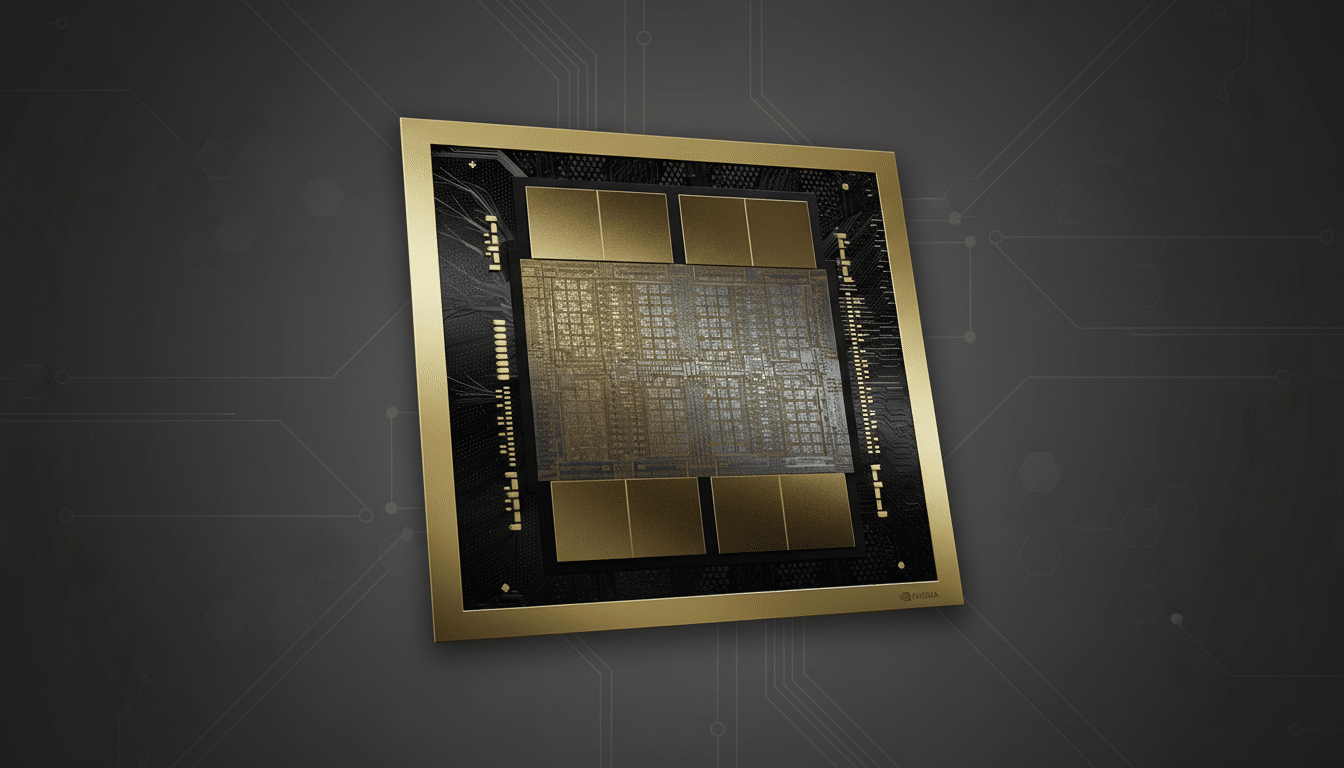
Nvidia purchased CoreWeave’s Class A shares at $87.20 apiece and will co-develop data centers designed around its full-stack platform. CoreWeave plans to integrate Nvidia’s Rubin architecture, the successor to Blackwell; the BlueField platform; and Vera, Nvidia’s new CPU line. This tight coupling turns CoreWeave’s footprint into a showcase for Nvidia’s reference architectures aimed at enterprises and cloud buyers.
- A Strategic Bet on AI Factories and Data Centers
- Debt Overhang Meets an AI Infrastructure Demand Shock
- How Big Is 5GW of AI Compute in Data Centers?
- Customer Base and Stack Expansion Across AI Cloud
- Financing Mechanics and Competitive Pressure
- Key Risks and What to Watch in CoreWeave’s 5GW Plan
- The Bottom Line on Nvidia’s $2B CoreWeave Investment
Beyond silicon, Nvidia will assist CoreWeave with land acquisition, power procurement, and facility design—practical bottlenecks that now define AI capacity as much as GPU availability. By engaging upstream on real estate and energy, Nvidia is effectively underwriting the operational hurdles that have slowed many data center pipelines.
Debt Overhang Meets an AI Infrastructure Demand Shock
CoreWeave’s rapid ascent has been financed with substantial leverage. PitchBook data indicates the company carries $18.81 billion in debt obligations, even as it posted $1.36 billion in revenue in its latest reported quarter. Shares climbed more than 15% on the investment news, suggesting investors view Nvidia’s backing as validation of the model and a potential reducer of financing risk.
CoreWeave’s leadership has argued that asset-backed financing—using GPU fleets as collateral—is a rational response to unprecedented compute demand. Critics call it circular, since vendors, customers, and financiers are often intertwined. Proponents counter that coordination is necessary to bridge a once-in-a-generation supply-demand dislocation in AI infrastructure.
How Big Is 5GW of AI Compute in Data Centers?
Five gigawatts of data center power is enormous by industry standards. A single hyperscale campus often ranges from 100 to 300 megawatts; 5GW implies dozens of campuses or multiple mega-sites, contingent on power density and cooling. It’s roughly the output of several utility-scale power plants, underscoring why land, grid interconnects, and long-term energy contracts are now strategic assets.
The International Energy Agency has warned that data center electricity consumption is set to climb sharply as AI workloads proliferate. Against that backdrop, Nvidia’s involvement in power and site strategy signals a belief that compute scarcity will remain primarily a power-and-supply-chain problem, not a demand problem.
Customer Base and Stack Expansion Across AI Cloud
CoreWeave’s roster includes OpenAI, Meta, and Microsoft—buyers with voracious and consistent compute needs. The company has been assembling a broader software and tooling stack through acquisitions: Weights & Biases for experiment tracking and MLOps, OpenPipe for reinforcement learning, Marimo as an open notebook alternative, and Monolith for AI workflows. The goal is to offer a vertically integrated environment spanning GPUs to developer tooling, tuned to Nvidia’s hardware and software.
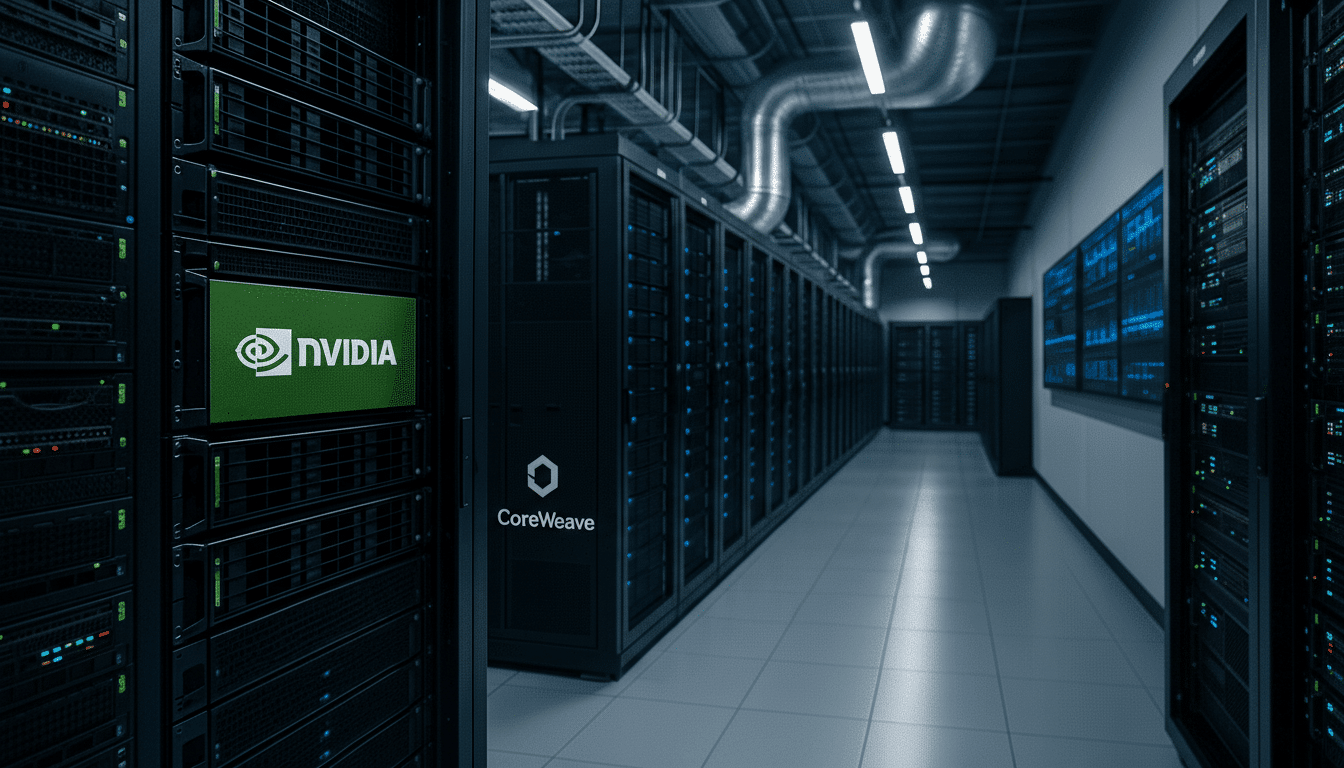
That alignment benefits Nvidia, too. Each layer of CoreWeave’s platform—from orchestration to storage to networking—can be optimized around Nvidia’s SDKs and accelerators, making it easier for enterprises to deploy large-scale training and inference with predictable performance and cost profiles.
Financing Mechanics and Competitive Pressure
CoreWeave’s financing approach mirrors a broader trend in AI infrastructure: asset-backed facilities tied to GPU fleets, combined with prepayments or long-term commitments from anchor customers. While this can compress go-to-market timelines, it raises sensitivity to interest rates, resale values of prior-generation GPUs, and the cadence of new chip launches.
Competition is intensifying. Hyperscalers are building in-house capacity while sovereign clouds and specialized AI hosts vie for supply. Nvidia’s stake gives CoreWeave priority alignment on next-generation chips and system designs, which could be decisive during product transitions from Blackwell to Rubin.
Key Risks and What to Watch in CoreWeave’s 5GW Plan
The pivot to 5GW hinges on power availability, grid interconnection timelines, and permitting—issues that have stalled projects across North America and Europe. Watch for multi-year power purchase agreements, on-site generation or advanced cooling deployments, and evidence of diversified regional builds to mitigate grid constraints.
On the financial side, monitor debt service coverage, utilization rates, and contract duration with anchor tenants. Any softening in AI training demand could pressure margins, but durable inference workloads and expanding model-serving use cases may provide a steadier revenue base.
The Bottom Line on Nvidia’s $2B CoreWeave Investment
Nvidia’s $2 billion investment is both endorsement and enablement: a vote of confidence in CoreWeave’s debt-fueled expansion and a pragmatic step to convert chip leadership into sustained compute supply. If CoreWeave executes on a 5GW roadmap, it will not only ease today’s GPU bottlenecks but also set a template for how chipmakers and cloud specialists co-build the next generation of AI infrastructure.
