


NVIDIA’s ACE technology is part of Creative Assembly and its smart assistant, your conversational AI Advisor within Total War: Pharaoh, that provides plain-language answers to in-game questions, helping navigate complex systems without stepping out onto the battlefield.
The aim is a simple but audacious one: cut the learning curve that drifts strategy-curious players away from the genre.
A More Intuitive Approach to Classic Advisor
The Total War series has been shipping with advisors and tooltips forever, but those helpers usually push static prompts or tightly contextual hints. The ACE-backed Advisor takes it one step further, mixing in live game-state data about the match with a vast database of game rules and reference material, listening to whatever question the player might ask and giving them personalized answers in an easy-to-understand back-and-forth.
Instead of waiting for pop-ups, players can ask open-ended questions such as “Why did a rebellion break out?” or “Can I do much with the strength of the rebels?” The Advisor describes aspects of the current state in the campaign (e.g., relative city happiness levels, army composition, or resource scarcity) and provides specifically actionable rationale. In tests, it revealed the very source of trouble and suggestions for what to do to make your province stable—all without needing to read through eight UI panels.
ACE, or Avatar Cloud Engine, on the other hand, is what NVIDIA calls a suite of offerings that will help enable natural-language interactions within games. In Pharaoh, that means near-instantaneous reactions and mode shifts for newcomers or veterans: NVIDIA’s AI acceleration keeps response times at a few milliseconds while also mimicking the ephemerality of on-the-fly play.
How It Works in Practice in Total War: Pharaoh
Advisor is an integrated, context-aware wiki that knows what move you’re currently on. Since it refers only to stuff within the player’s purview and known game systems, no spoilers or unfair advantages are here, just a way of translating dense iconography and nested mechanics into legitimate language.
That might mean figuring out why public order fell apart in a particular settlement, piecing together how treaties or taxes affect stability, or sketching the probable result of an approaching skirmish according to visible unit types and morale levels. For new players trying to wrap their heads around Pharaoh’s delicate dance of economy, diplomacy, and warfare, this dials down the friction and drives less need for alt-tabbing out to external guides.
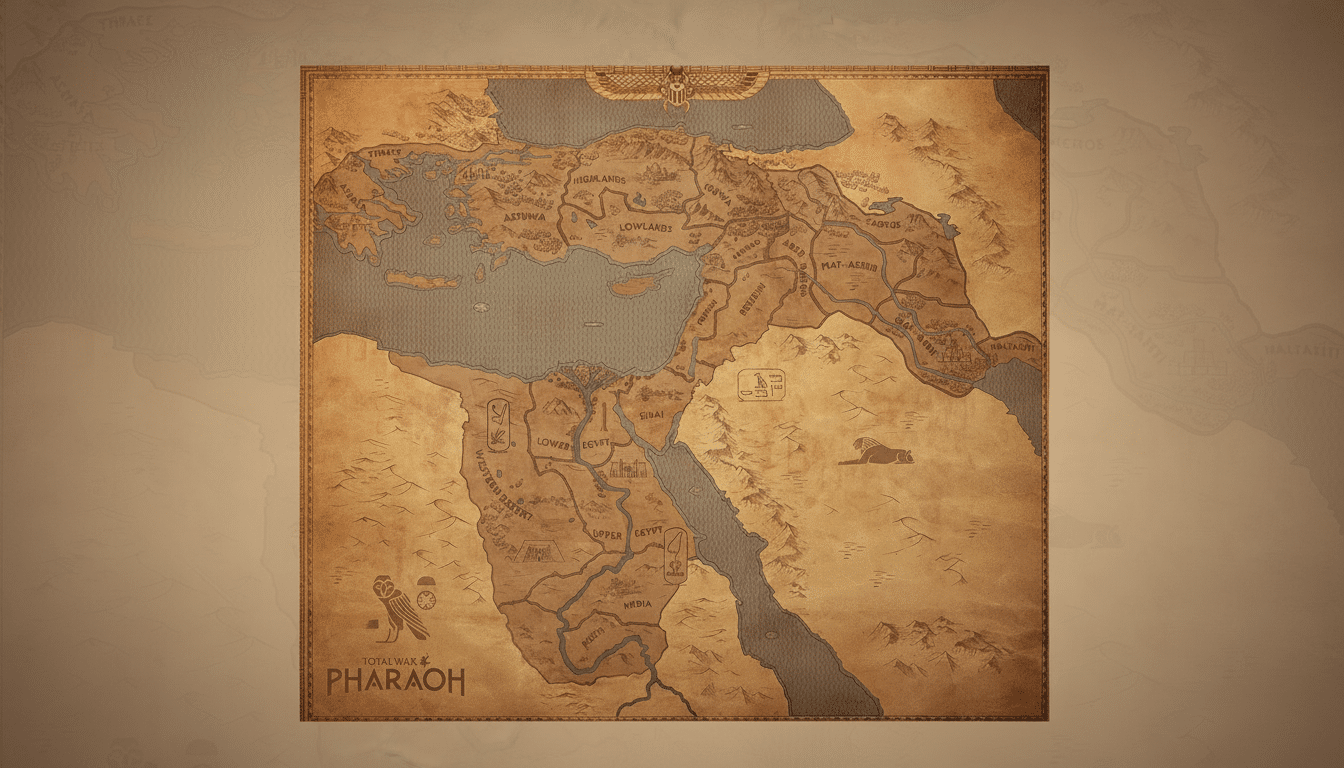
Creative Assembly presents the feature not as a difficulty slider per se, but as an accessibility and onboarding aid. The studio is also tightening the loop between your actions and their feedback, hoping you’ll spend more time making considered decisions, less time simply decoding UI elements or chasing down tiered tutorial prompts dumped across the map.
Why It Matters for Strategy Games and Player Retention
Grand strategy lives on depth, but depth is frequently a tax with steep cognitive overhead. Industry surveys have highlighted developers’ increasing interest in generative AI for testing, narrative, and support tasks—and in-game advisors are a natural development: they can help bridge the gap between sprawling systems and player intent without watering down complexity.
For players, the upside is less early drop-off driven by opaque mechanics. For studios, there’s a retention win to be had—faster understanding usually correlates with stronger initial-session engagement, a metric many publishers are paying keen attention to. It also complements train-bound community habits, where players increasingly lean on wikis and forums (not to mention content creators!) for mastery, by being that master in the moment.
There are guardrails of design to consider. Advisors that surface the known risk becoming optimization engines at the expense of discovery. Creative Assembly’s focus on working from the exact same data you’re seeing is a clear testament to that balance, maintaining that sweet payoff of learning while cutting away at the most frustrating guesswork.
What to Watch Next as AI Advisors Expand Across Games
NVIDIA has been selling ACE as a toolkit that can be either client- or cloud-facing, so this kind of assistant may become more prevalent as studios experiment with various deployment models and latency budgets. If Pharaoh’s Advisor strikes a chord, you can count on the same features crossing over to other hardcore genres—4X strategy, management sims, and hardcore RPGs make obvious next ports of call.
For now, the Total War: Pharaoh’s AI Advisor is a great example of this balance in action: a method to keep the strategic canvas rich while also making the first few hours less daunting. It’s not playing the game for you, it just explains why and how at precisely the time you need that explanation. That’s the sort of help that can convert curiosity into commitment—and more players in the march.
