


Google is bringing live, two-way translation to virtually any pair of headphones, dragging a once Pixel Buds–only perk into the mainstream. Using Gemini in the Google Translate app, available for Android, this feature brings fast and easy speech translations to more than 70 languages, while keeping text translations as an option — intensive translation around the world powers this new on-the-go offering.
Contextual Translation Over And Above Word By Word
Unlike literal, word-by-word translators, Gemini is supposed to understand the intent and idiomatic meaning of text. The product lead Rose Yao from Google said the system would consider phrases like “stealing my thunder” in context, returning a more natural equivalent and not a clunky, literal translation. That’s meaningful in the outside world, where nuance can determine the outcome of a negotiation, a visit to the doctor or even a casual encounter at a train station.
This change reflects a much bigger trend: The quality of translation now hinges on large language models across tech companies. Academic benchmarks such as WMT have demonstrated that LLM-driven systems are catching up with humans for everyday use, and companies are scrambling to put those gains into production in live scenarios where latency and accuracy trade off.
How It Works And How To Try Live Translation On Android
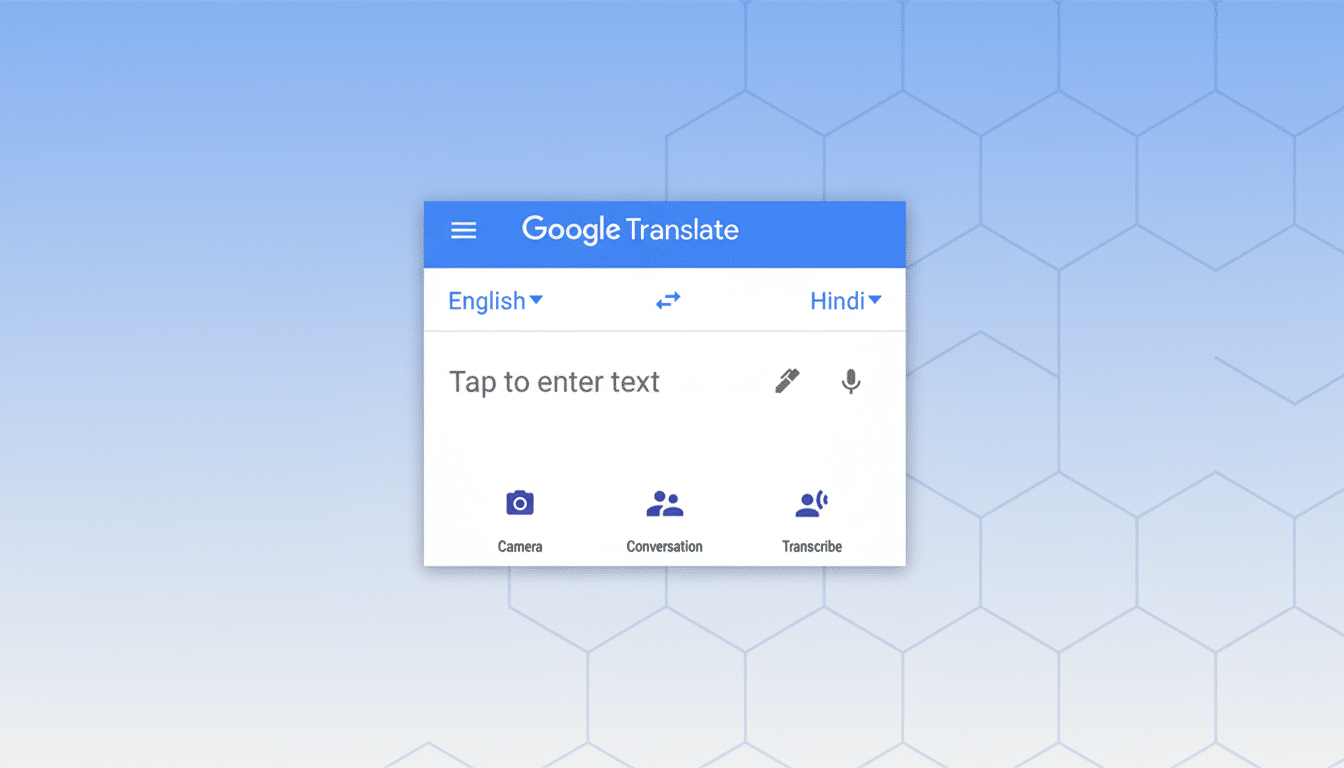
Setup is straightforward. Connect your headphones to an Android phone, launch the Google Translate app and tap Live Translate. Your headset’s microphone picks up your voice, Translate processes that through Gemini, and then playback streams to the speakers in the headphones. Since it uses a mic, this should work with true wireless earbuds, over-ear Bluetooth headphones, wired USB-C or 3.5mm models with inline mics, and most gaming headsets.
Applied uses are obvious: Travelers can find their way through check-ins and taxi rides with less friction; language learners can turn up some solid real-world practice; front-line workers at airports or hotels can aid customers across languages by not having to pass the phone back and forth. The feature joins other in-app improvements like text translation and language practice to build a cohesive experience.
Availability And Platform Limits, Regions, And iOS Timing
This is a beta with boundaries. It’s initially being launched on Android in the U.S., Mexico and India. Google is working on iOS support, which is scheduled to land in 2026. Until then, iPhone users will have to rely on Apple’s in-house live-translation feature with AirPods, which Apple teased at its iPhone announcement.
The Android-first focus makes sense: According to StatCounter, Android is hovering around 70 percent global mobile OS share, so converting “any headphones” into a translation device dramatically increases the product’s potential market. Until now, however, Google’s real-time translation feature has been Pixel Buds–bonded; for security reasons, it was only available to Pixel Buds owners.
Why It Matters For Everyday Use And Real-World Scenarios
It’s as much a hardware problem — if not more so — than software. It removes the earbud lock-in and reduces friction at the moment of need, when you’re walking down a street, hailing a cab or taking a brisk phone call. It leverages units people already have rather than being yet another expense in a price-sensitive market, or during an enterprise rollout.
Contextual translation also eliminates “frequent failure modes.” Idiomatic phrases, fill words and even regional idioms can throw literal systems off; Gemini will be meaning-first in approach to hopefully prevent as many pauses and retry failures. That’s especially true for service workers, telehealth and education, where one misread word can shift an interaction.
Early Caveats And What To Watch As The Beta Rolls Out
I am hoping that as a beta this won’t be the case, but expect spotty performance. Real-time quality can be lower due to background noise, accent variation and spotty connections. And make sure to check your account and voice data settings if you’re concerned about processing that may or may not run fully on the device for all languages. There is also no word of offline support in this early version.
The design of latency and turn-taking is crucial. The smoothest live systems behave well in the presence of interruptions and do not introduce excessive gaps between speakers. Keep an eye out for enhancements to both lines of duplex conversation, expanded real-time translation language support beyond the launch’s 70+ languages, and availability in more regions. Business features, including admin controls, compliance and call-center integrations, would speed workplace adoption.
For now, the headline is straightforward: Google has decoupled live translation from a single brand of earbuds. Between Gemini in Google Translate and the ability to work with any pair of mic-packing cans, real-time translation inches closer to a truly universal, rather than elitist, demo. If Google pulls it off at scale, people might get used to turning to their phone as a means of bridging language barriers in daily life.
