


A landmark of mobile photography has a second act. A community-built custom firmware dubbed Reborn is breathing life back into the Nokia N8, transforming the 2010 Symbian flagship into a surprisingly usable device in 2026 terms. The ROM modernizes core systems, smooths performance, restores software sources, and removes many of Symbian’s notorious app-signing headaches.
Reborn is based on Nokia Belle, the final major evolution of Symbian that never reached its full potential before official update channels went dark. By refreshing security certificates, optimizing background services, and enabling straightforward sideloading, the project addresses the exact pain points that pushed the N8 into the drawer for most owners.
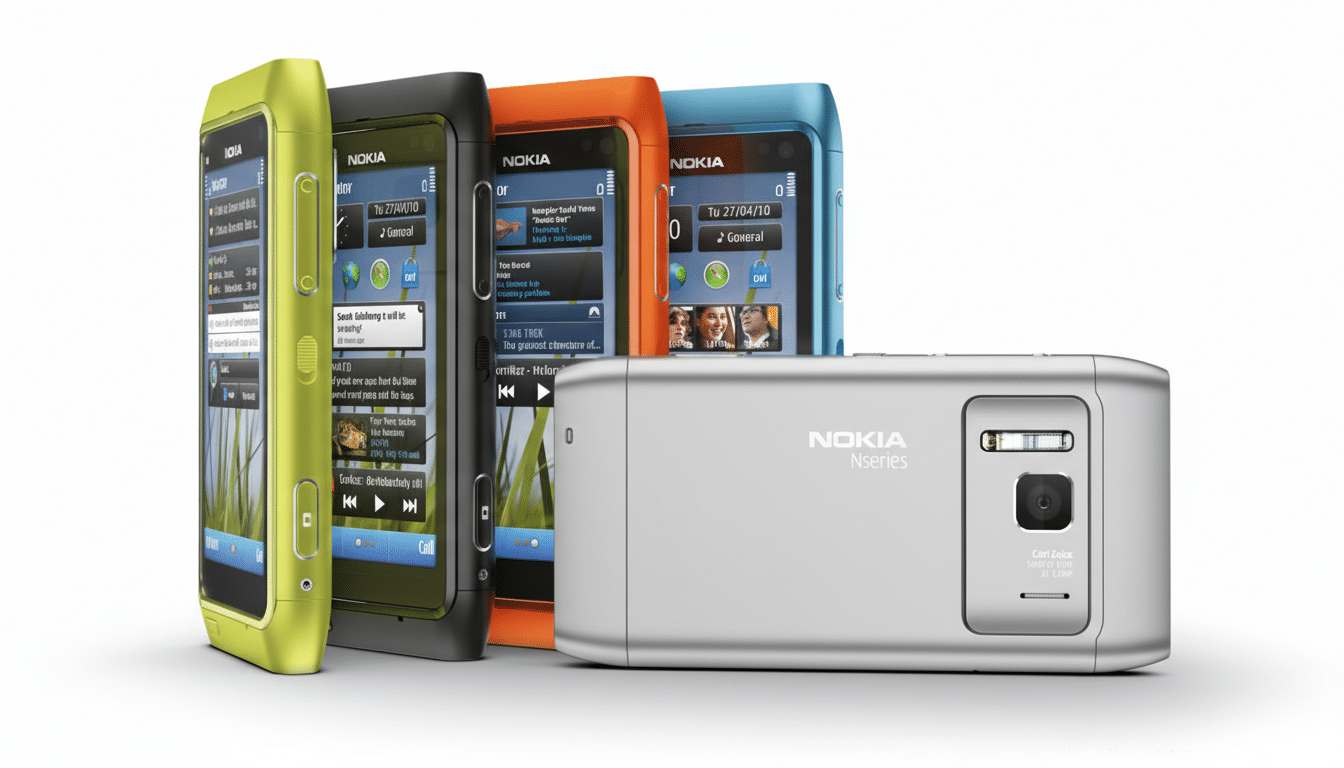
What the Reborn Firmware Delivers on the N8
The standout change is the removal of strict signing requirements, a long-standing barrier that forced users to juggle developer certificates and expired keys. With those guardrails lifted, you can install apps directly, unlocking utilities and mods that previously required arcane workarounds.
Reborn also ships with refreshed HTTPS root certificates, allowing the N8’s browsers and clients to complete modern secure handshakes where protocols and ciphers permit. That’s critical for email, lightweight browsing, and cloud-backed services that refused to connect on stock firmware after legacy certs expired.
On the app front, a curated community catalog replaces the long-gone official store, offering essential downloads like updated browsers, media players, and productivity tools tested for Belle-era compatibility. Combined with system optimizations targeting Symbian’s scheduler and memory usage, the interface feels markedly snappier on the N8’s modest 680MHz ARM11 chipset and 256MB of RAM.
Why a 2010 Camera Phone Like the Nokia N8 Still Matters
The N8 wasn’t just another slab; it was a camera-first phone that helped define the category. Its 12MP sensor measures a generous 1/1.83 inches with Carl Zeiss optics and a true Xenon flash. That hardware combination still delivers crisp detail and, crucially, motion-freezing low-light shots that LED flashes struggle to match more than a decade later.
Nokia’s imaging pipeline of the time favored low-noise processing and neutral color rendering, a look many photographers still appreciate. With Reborn eliminating software bottlenecks and restoring camera stability, the N8 becomes a credible pocket companion for events where a rapid Xenon burst outperforms multi-frame night modes. It’s a reminder that good glass and a big sensor never go out of style.
Installation Caveats and Community Tips for Reborn
Reviving an N8 isn’t as simple as dropping an update file onto a microSD card. Community projects, including tutorials by creators like Janus Cycle, note that modern Windows drivers can conflict with legacy Nokia flashing suites, occasionally triggering a BSOD mid-flash. Many modders report better reliability using a Windows 7 machine or a virtual machine, a USB 2.0 hub, and known-good cable runs.
Hardware age is another factor. Common failure points include worn camera modules, bent SIM pins, and tired batteries. The upside: the N8 was built for serviceability, with Torx screws, a replaceable battery design, and a robust magnesium frame. Donor parts from a second handset often restore a fully functional unit at low cost.
Context for Symbian and the Current Retro Revival
When the N8 launched, Symbian still led global smartphone share according to Gartner, even as touch-first platforms surged ahead. Nokia Belle arrived too late to change that trajectory, but its underlying efficiency remains compelling on constrained hardware. Reborn leverages that efficiency while stripping away the platform’s friction points.
There’s a sustainability angle, too. A United Nations-backed report on e-waste estimated the world generated more than 60 million tons in 2022. Extending the life of durable devices like the N8—whether as a compact camera, music player, or minimalist phone—keeps hardware out of drawers and landfills while preserving a piece of mobile history.
For enthusiasts, this project is less about nostalgia and more about capability. A decade-plus-old phone that boots quickly, installs apps without ceremony, browses securely, and fires a real Xenon flash on demand is a compelling niche tool. Reborn doesn’t pretend to turn the N8 into a modern flagship; it simply lets the hardware shine again, which for many is exactly the point.
