


A weekend tech deal is coming in right on time for resolution season. Normally $30, the 2025 AI-Powered Data Science & Machine Learning Bundle compiles 10 expert-led courses and over 96 hours of training designed to help students progress from Python basics to production-ready AI workflows.
The draw here is scope. Students will initially begin by learning Python and core data libraries such as Pandas and NumPy before moving on to machine learning with Scikit-learn and deep learning with TensorFlow and PyTorch. Visualization packages can aid in converting model results into straightforward charts and dashboards, a more and more door-opening ability when working to get buy-in from business stakeholders.
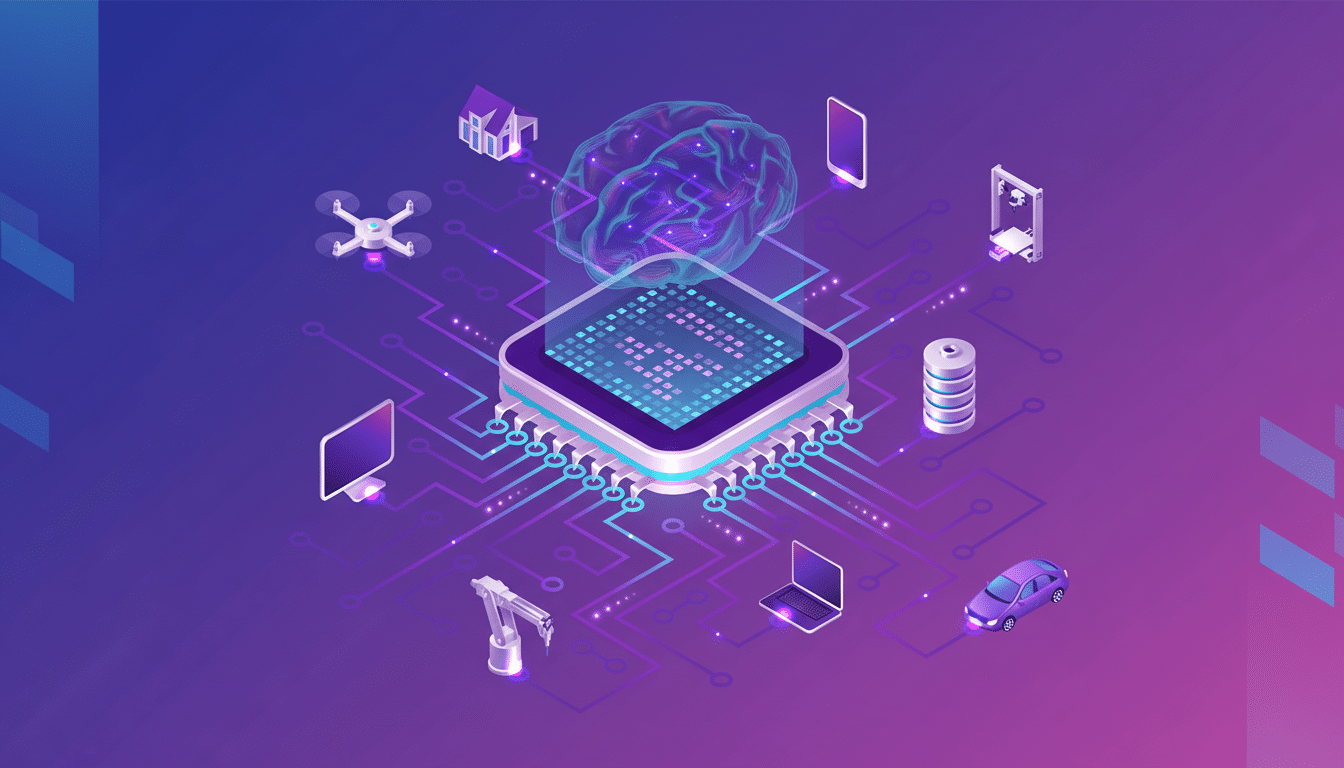
Unlike a passive video playlist, the coursework is focused on hands-on real-world projects: building predictive models, computer vision tasks and tuning pipelines which actually represent how teams ship data products.
Everything is self-paced, so you can go back over tough material or iterate on projects without a deadline looming.
The math is simple for learners who are comparatively cost-conscious. A single month with many subscription services costs around $35, and you’d be nuts to ever pay the bundle’s full $280 list price. For students, career switchers or working developers incorporating AI into their workflow, that will be a hard value proposition to resist.
What the $30 Machine Learning Bundle Includes
- Core skills: Pythonic syntax and idioms, data structures, file I/O, testing (unit tests), environment management. Build your foundation in the language before progressing on to models.
- Data wrangling: Practical workflows using Pandas and NumPy for performing data cleaning, joins, feature engineering, and vectorized operations reducing end-user compute time to a fraction.
- Machine learning: Supervised, unsupervised (Scikit-learn), pipelines, model evaluation and cross-validation, plus hyperparameter tuning.
- Deep learning: The nuts and bolts of TensorFlow and PyTorch, from creating feed-forward networks to deploying convolutional frameworks for images.
- Visualization: Making analysis beautiful using tools such as Matplotlib or Seaborn to tell a story (without jargon).
- Capstone-style projects: Workshop-level work like churn prediction or image classification, plus guidance on how to document findings for hiring managers.
Why Smart Timing Matters for A.I. Skills
There is high demand for hands-on AI literacy, and it’s only growing. The most recent McKinsey Global Survey on AI, for example, found that among organizations that use knowledge tools based on AI (including generative models), 72 percent said they now use it regularly — a significant increase over the previous year. The World Economic Forum’s Future of Jobs analysis predicts that 44% of workers’ core skills will change in the next five years, and AI and data roles are among the fastest growing.
Much closer to home for job seekers, the US Bureau of Labor Statistics predicts demand for data scientists will be up about 35% between 2022 and 2032 — a faster growth rate than average. Compensation remains strong: The median base pay for data scientists is still in the $125k range in the US, at least according to Glassdoor, with premiums given to those who can show hands-on deep learning experience.

The stack instructed here also reflects the reality of industry. Python has always featured as one of the most popular languages in the Stack Overflow Developer Survey and frameworks such as Scikit-learn, TensorFlow and PyTorch continue to underpin modern ML teams. That alignment ensures what you learn applies directly to production environments.
Who Is This Bundle For, From Novices to Pros
Novices who have tried Python and feel acclimated will find a gentle on-ramp into data science and ML. The project approach helps to bridge the “theory-to-practice” gap that many self-starters encounter on their journey.
Analytics, software and IT professionals are able to jump fast into model development, deployment basics and communicating results with the modules. When combined with your own repository and a public write-up, you’ll have a believable portfolio.
Career switchers can treat the 96 hours as a bootcamp-like alternative — though it’s a good idea to complement the courses with knowledge of SQL basics, version control, and some cloud experience using AWS, Azure or Google Cloud in order to have well-rounded professional skills.
Maximizing the Learning ROI With Practical Steps
- Switch to a 12-week pace: four weeks for Python and cleaning, four for classical ML, four for DL plus capstone. Iterate with Jupyter notebooks and log experiments to empirically compare models instead of anecdotally.
- Validate skills publicly. Enter a beginner Kaggle competition, write a short postmortem on your feature selection and error analysis decisions, add in a loom-style walk-through — something to make it tangible what you learned to recruiters or folks at your company.
- Finally, stay realistic. Ninety-six hours will not replace years on a data platform team, but it can at least accelerate how long it takes to become useful on active projects. Through thoughtful preparation and repetition, a $30 spend here ends up with tangible, marketable AI skills.
The takeaway: Pre-ordering a full-stack ML course bundle for just $30, even if it’s only available for a limited time, is a deal worth jumping on. If AI reading is on your New Year to-do list, that is precisely what this bundle offers: an affordable roadmap to the here and now.
