


Google is introducing one of its most significant Google Home updates in years that will tighten up the app’s interface, deliver all-around better performance and bring Gemini’s AI to people as part of everyday controls. The result is a smarter, quicker hub for lights, cameras, thermostats and routines that feels much more responsive than it did in older builds.
Here are the five most dramatic changes, along with specific benefits that average users will experience on day one — and some extras for advanced users behind the new Home Premium subscription.
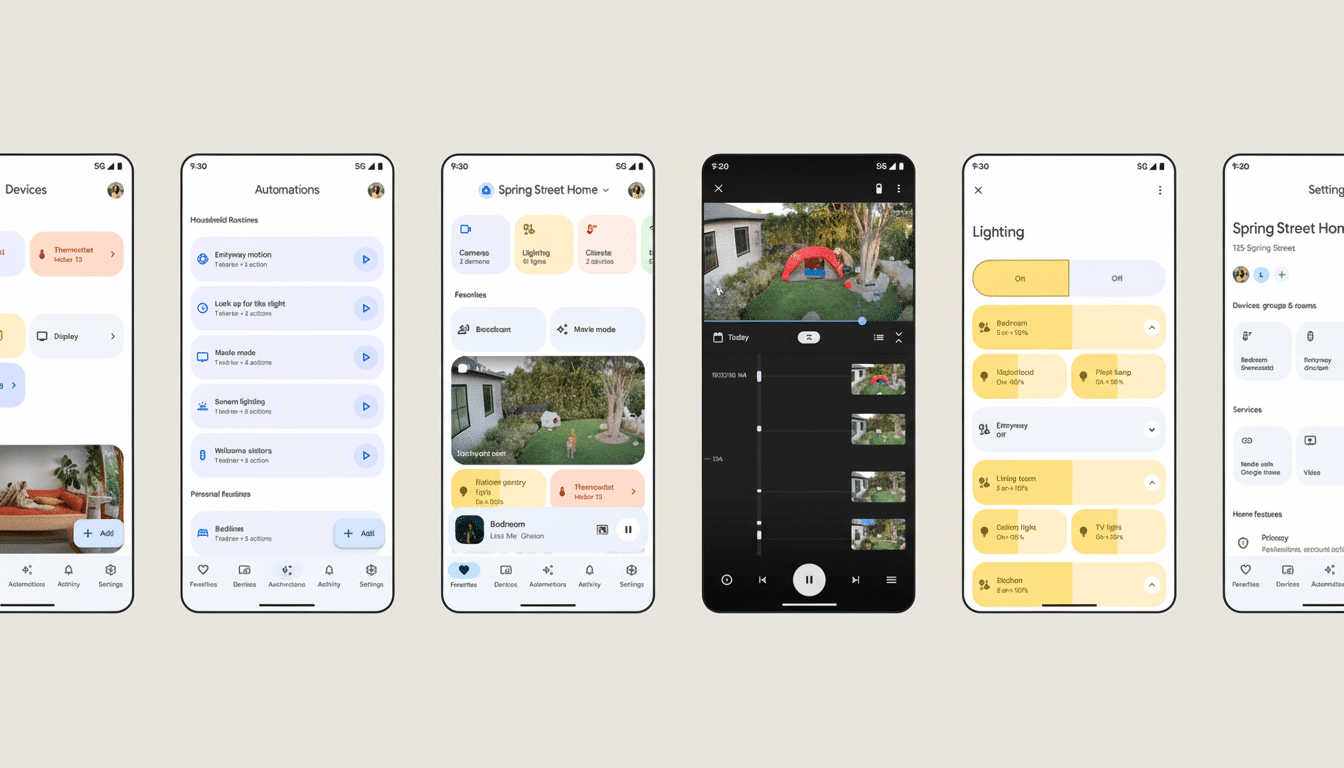
New Home Interface, Visuals Focus On The Big Things
The app centers on three streamlined tabs now: Home, Activity and Automations. Home provides a clean view of your most-used devices and scenes, while Activity pulls recent happenings around the house — from doorbell rings to thermostat tweaks — together in one spot. Automations received leveled-up attention into what comes next. This means less detective work and tapping that used to be there in the past versions of iOS 13.
A new, gesture-based layout makes navigation faster and allows us to swipe into device groups and controls in a beat or two. Google also slaps an “Ask Home” field at the top, allowing you to just type a command or jump right into useful automations instead of having to dig through menus for them. Home Premium members receive added context via shorter briefings than what you find below and a high-level overview of what’s happening in the space.
Gemini Powers Natural Language Control in Google Home
Gemini does away with its assistant’s stodgy “Assistant-speak” in favor of casual commands. No more remembering device names — you can say what you want in plain English — “I’m about to cook, turn on the lights” — and Google Home figures the kitchen. It also processes more personal media requests, such as requesting a podcast with a particular executive or a song from the soundtrack of that great scene in the movie.
The update adds 10 new, more natural-sounding voices with better pacing and intonation, and Gemini Live is here for more rich back-and-forth conversations. In practice, this means Home is “better” for multi-step, context-aware tasks, not simply toggling on and off switches. And, according to Google’s own briefings, the aim is to convert quotidian phrasing into device-level actions without requiring users to think in terms of an API.
Nest Cameras Get Speedy Smarter Playback
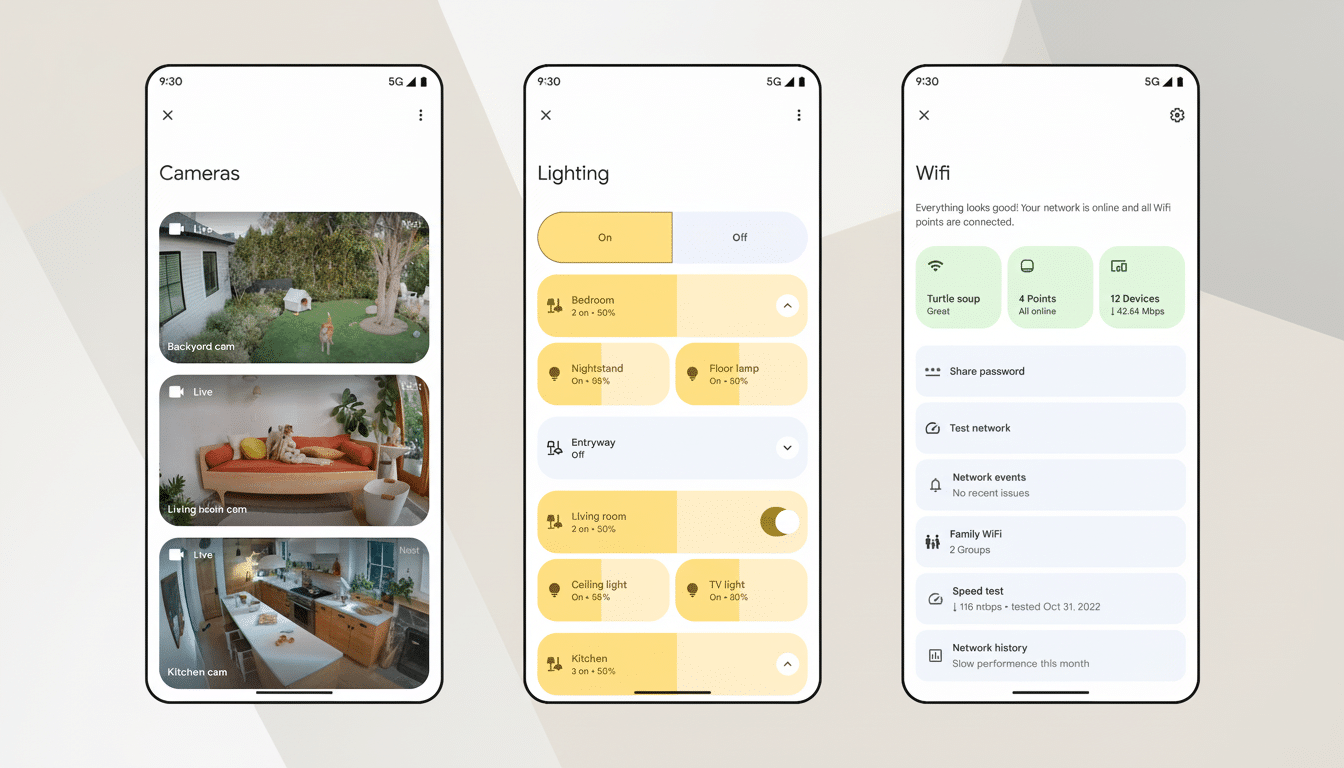
Camera control gets a complete overhaul. It’s capable of scrubbing through hours of footage (with a responsive jog control), slowing playback for minute-by-minute, and even supporting those snappy double-tap jumps you’re probably accustomed to from YouTube. Home Premium allows you to search by description — imagine “the clip where the delivery arrives” — if you know what you’re looking for. Overnight, a related video may be taken down.
Performance is notably boosted: Google says video loads up to 30% quicker and playback errors decrease by about 40% courtesy of optimized camera code. Experience rich animated previews on the lock screen without having to open the app. For households that rely on Nest cameras, these quality-of-life improvements amount to actual time saved.
Automations Get a Pro-Level Editor With More Control
Automations now include conditional logic, schedules and one-off routines so you can create rules that trigger only when it actually makes sense — like dimming lights when the TV comes on after sunset and someone is home.
The app also presents a carousel showing what’s scheduled next, giving you an at-a-glance sense of complex homes.
Type the name of a device in Ask Home, and the app instantly provides suggestions for related automations, reducing setup drag. The editor’s the kind of power user that can scale from basic “goodnight” scenes up to more nuanced, context-aware flows that will happily coexist in today’s multitaskable cross-brand Matter households. The Connectivity Standards Alliance has been advocating for cross-vendor simplicity since the dawn of time; this is Google more deeply embracing that promise with improved tooling.
Performance and Reliability: Big Gains for Users
Behind the shiny features, Google is promoting some serious under-the-hood work. On certain Android devices, Home now loads more than 70 percent faster — and the app’s crash rate has been cut by almost half. Battery life has improved, too, which is critical if you depend on always-on notifications from cameras and sensors.
Google is still folding old Nest functions into Home, for less app hopping. That will cover things like broader Nest Thermostat controls, Nest x Yale lock code management and Nest Protect emergency alerts. Consolidation isn’t attention-grabbing, but it is essential for trust; the fewer touchpoints you have to manage a security camera system, or a smoke alarm for that matter, the more coherent and reliable your experience, the quicker your response time when it counts.
All of these combined work out to be a more natural, AI-first Google Home with real speed victories. As competitors are rolling out their own assistant upgrades, this release sets Google up to compete at least as much on the breadth of device support as on how seamlessly and consistently the smart home will behave when you simply ask it to hear you.
