


NASA’s SpaceX Crew-11 returned safely to Earth with a textbook splashdown off the California coast, concluding a 167-day research expedition to the International Space Station and an unprecedented medical evacuation from orbit. The Dragon capsule touched down in calm Pacific waters near San Diego, where SpaceX recovery teams swiftly secured the vehicle and supported the crew’s immediate post-landing care.
How the splashdown and recovery unfolded off California
Recovery operations unfolded exactly as trained. After parachute-assisted descent and splashdown, fast boats approached Dragon, verified capsule integrity, and cleared the area before hoisting the spacecraft onto the deck of the recovery vessel. The four astronauts were carefully assisted out of the capsule and brought to a medical facility aboard the ship for initial checks, a standard step after long-duration spaceflight.
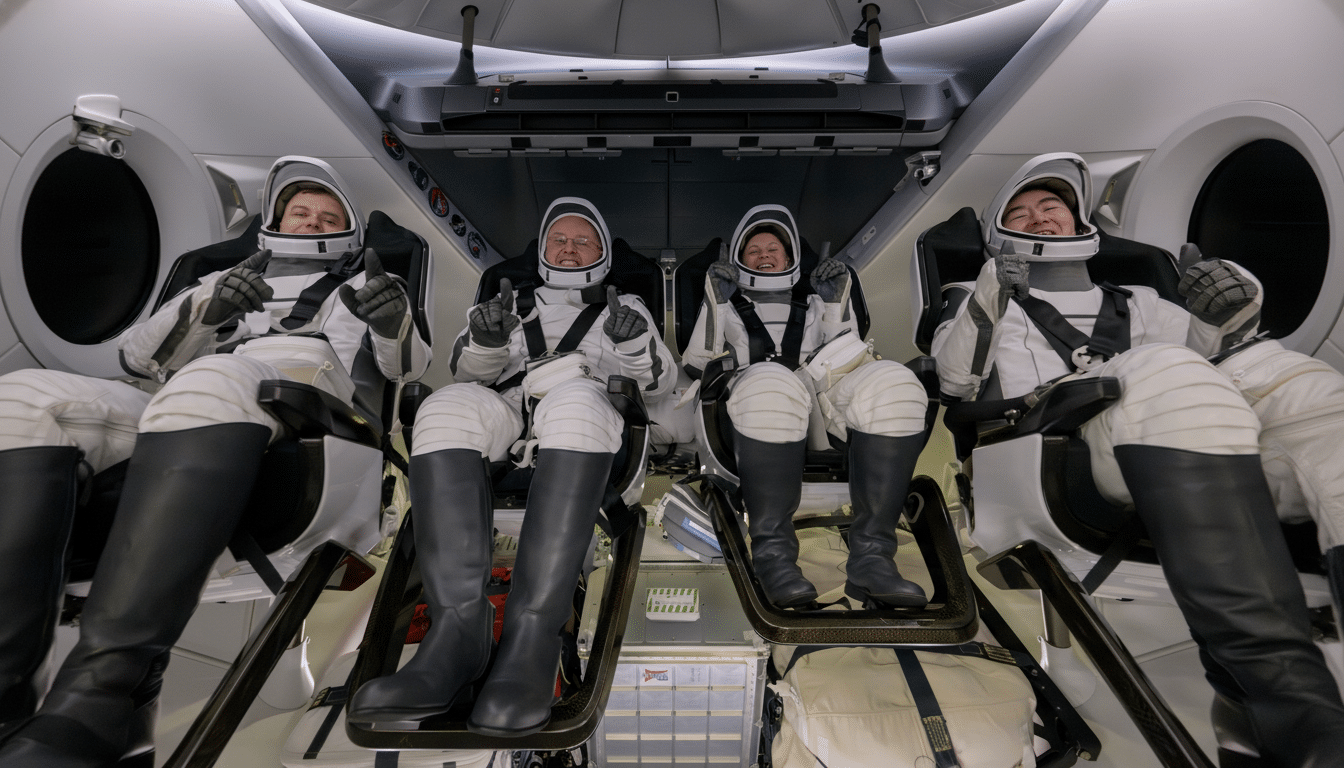
From there, the crew was set for transfer to a local hospital for overnight observation before continuing to NASA’s Johnson Space Center in Houston for comprehensive evaluation. NASA’s Human Research Program notes that returning astronauts can experience balance disruptions, cardiovascular readjustment, and fluid shifts as their bodies re-adapt to gravity—effects that typically improve over days to weeks with guided rehabilitation.
In a moment that underscored the serene conditions, viewers of NASA’s broadcast even spotted a pod of dolphins surfacing near the bobbing capsule—an unusual but welcome sight as teams finalized safing procedures prior to recovery.
Who was on board the Dragon spacecraft returning home
The Dragon spacecraft carried NASA Commander Zena Cardman and veteran astronaut Mike Fincke, joined by Japan’s Kimiya Yui of JAXA and Oleg Platonov of Roscosmos. The international crew supported hundreds of experiments in microgravity, from human physiology and life-support systems to materials science and technology demonstrations intended to reduce risk for future Artemis lunar missions and eventual Mars expeditions.
Station science emphasizes incremental progress with real-world payoffs. Crew-11 contributed to studies that refine autonomous systems, tested hardware designed for deep-space durability, and conducted biology research aimed at improving health outcomes on Earth. Their work also fed into improved cargo handling and maintenance procedures—uncelebrated but essential measures that keep the orbiting laboratory running smoothly.
A rare Pacific splashdown and why it was necessary
Most recent crewed Dragon returns have targeted the Atlantic or Gulf of Mexico near Florida, where recovery infrastructure is optimized for quick turnaround to NASA facilities. This Pacific splashdown was a notable exception, coordinated to support the medical evacuation and aligned with weather, sea state, and orbital phasing requirements. SpaceX pre-positioned assets off Southern California to ensure the same tight timelines and safety margins seen in East Coast recoveries.
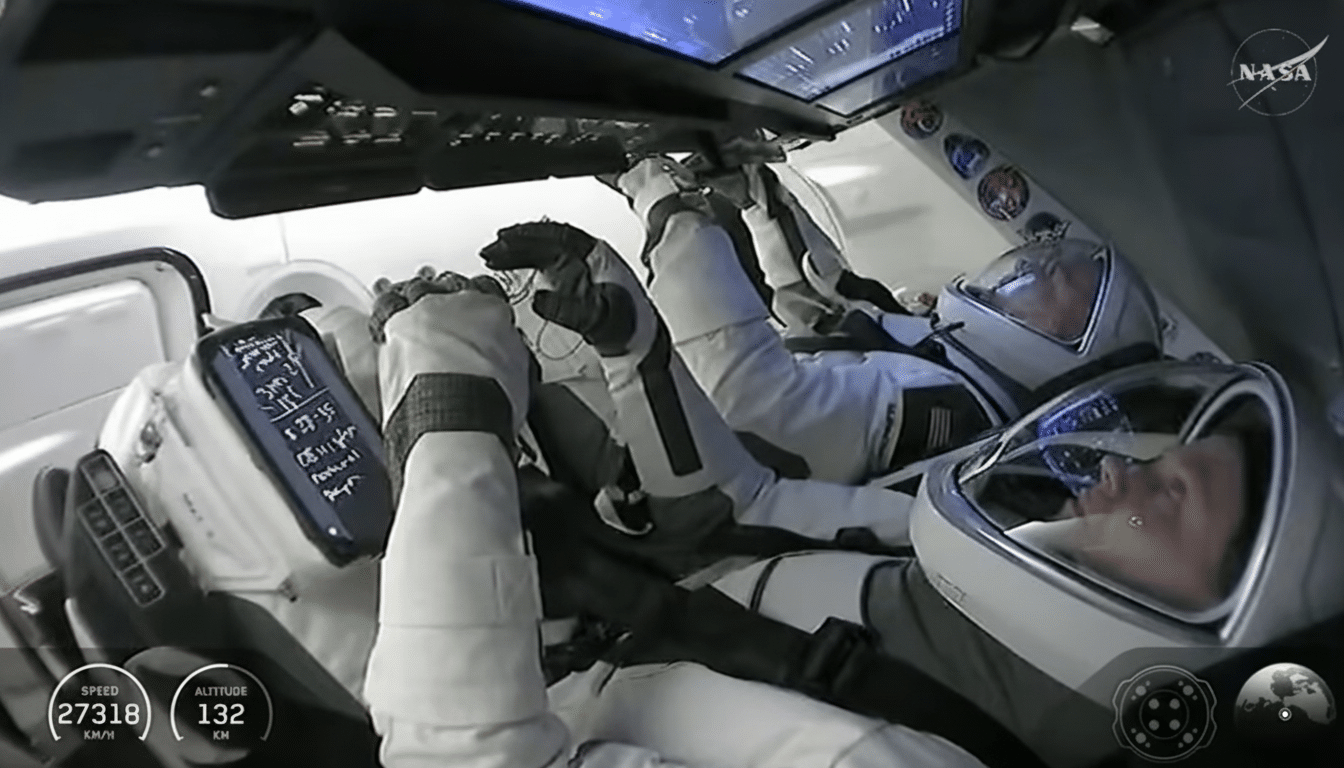
As with every crewed entry, teams analyzed winds aloft, parachute loading forecasts, and downrange weather to select the safest site. Dragon’s four-parachute system, robust heat shield, and redundant avionics are designed with conservative margins, and the post-landing inspection regimen captures data that feed back into certification and future mission planning under NASA’s Commercial Crew Program.
Why this return mattered for ISS operations and health
Executing an off-nominal medical evacuation from the ISS is rare and requires choreography across multiple agencies and countries. NASA, SpaceX, JAXA, and Roscosmos coordinated timelines, crew responsibilities, and ground support to prioritize astronaut health without compromising station operations. The rapid, orderly return underscored the maturity of commercial crew transportation and the flexibility now built into ISS logistics.
Equally important, the mission’s science portfolio supports near-term lunar goals. Insights from Crew-11’s work on crew health, environmental controls, and autonomous systems directly inform surface operations and long-duration habitation plans, where reliability and resilience are non-negotiable.
What happens next for the crew, capsule, and program
In the days ahead, engineers will review entry and landing telemetry, examine the Dragon capsule’s heat shield, parachute hardware, and structural components, and catalog mission wear for future reuse decisions. The crew will move through a tailored rehabilitation program while debriefing with flight surgeons, operations leads, and principal investigators whose experiments they carried out on orbit.
For the station, the handover to the next expedition team keeps science continuous and the orbiting complex fully operational. For commercial crew, Crew-11’s safe return—under atypical constraints and to a rare West Coast recovery zone—adds another data-rich chapter to a program that increasingly treats space travel not as an exception, but as a reliable service.
