


MSI didn’t just shave the belly off a gaming laptop. It took the playbook of Apple’s 16-inch flagship and then constructed a Windows powerhouse that borrows all the right notes. The all-new Stealth 16 AI+ team portrays a pro-facing AMR design with H-class Intel Core Ultra 300 silicon and Nvidia’s new GeForce RTX 50 GPUs for an uncommon combination of polish, portability and punch.
Hats off to MacBook Pro–inspired industrial design
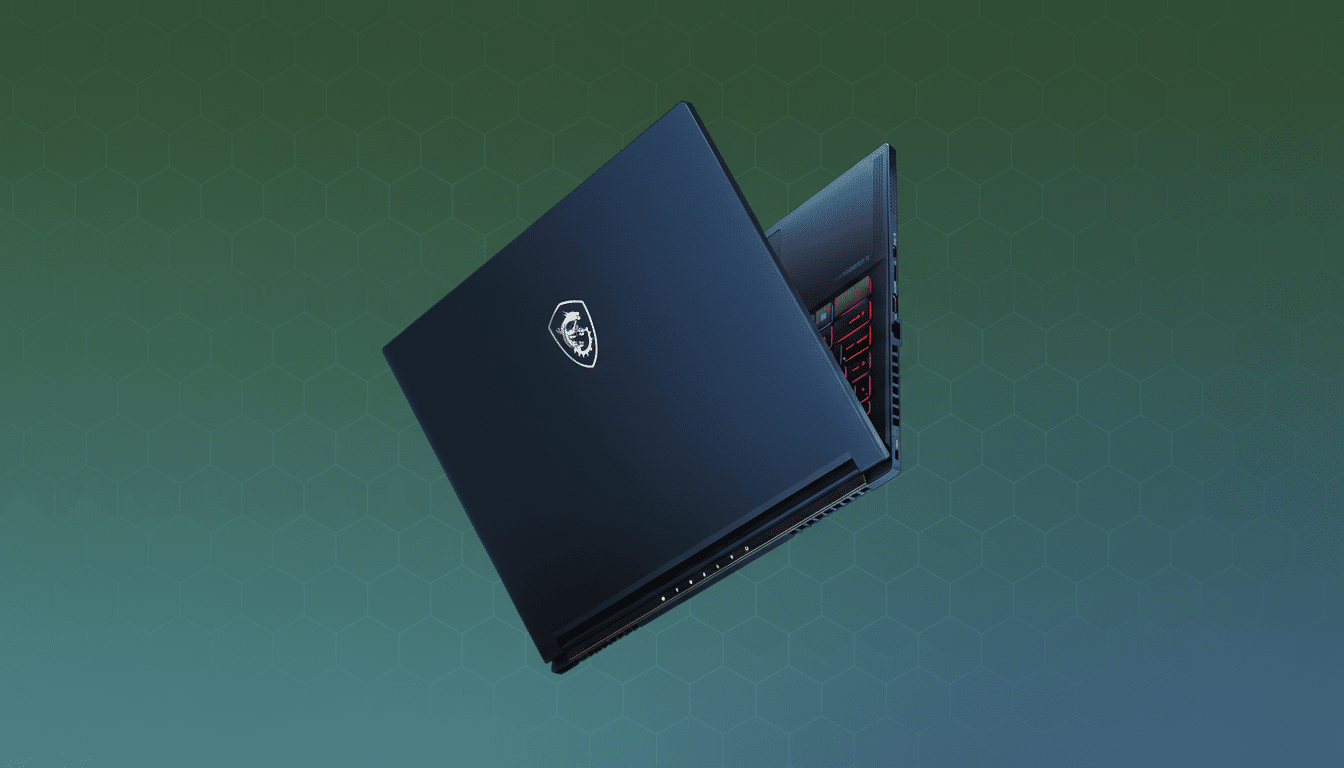
At first glance, the homage is obvious. The all-metal chassis is slim as can be—quite literally, 16.65mm at the thinnest point and 19.9mm at its thickest—tipping the scales at just under 4.4 pounds, although it exudes a low-key, studio-ready vibe. MSI’s updated lid logo tones down “gamer flash,” replacing the familiar dragon with a more subdued corner accent.
- Hats off to MacBook Pro–inspired industrial design
- New Intel and Nvidia silicon inside the Stealth 16
- OLED panel options for creators and esports players
- Cooling and power headroom in a sub-20mm chassis
- Ports and upgrades for grown-ups who need flexibility
- Why the homage works for this thin, powerful laptop
- Early take on MSI’s polished and upgradeable design
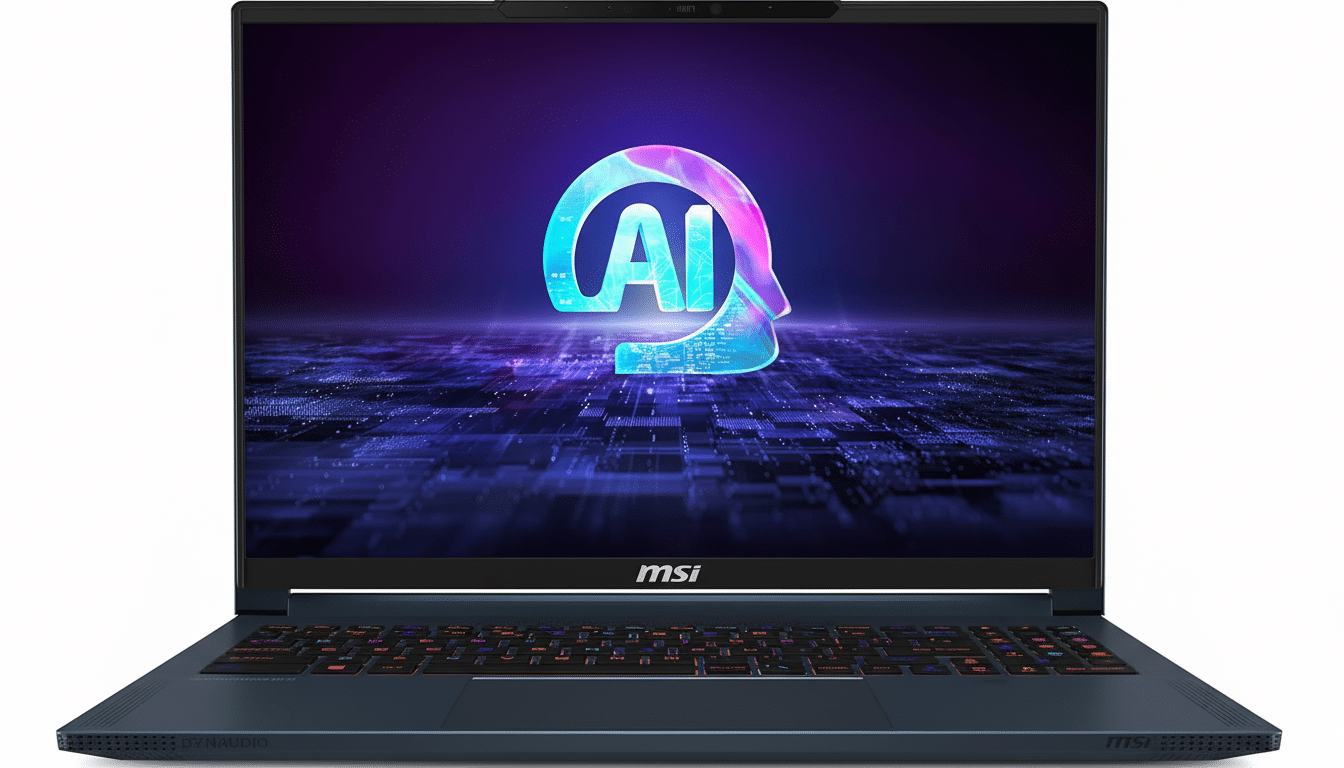
And the keyboard deck, oh boy does it sell it. Pillar-wide side margins fill with upward-firing speaker arrays, which bookend an island-style keyboard—four-zone RGB rims each key for a tasteful glow. There’s even room for a giant touchpad—160mm x 100mm—that’s as good as the best. It feels wonderfully responsive, though you’ll need to keep an eye on palm placement (it’s a large expanse).
New Intel and Nvidia silicon inside the Stealth 16
Under the hood is Intel’s Core Ultra 300H platform (Panther Lake in code parlance). MSI touts a 16-core Core Ultra 9 386H configuration boasting four Performance cores, eight Efficiency ones, and four Low-Power Efficiency ones at 45W TDP—perfect for continuous use rather than ultraportable chirps. Oh, and it’s a Copilot+ PC too, fitting into Microsoft’s push for on-device AI that has revolved around the 40+ TOPS-class NPUs.
Graphics scale up to a GeForce RTX 5090 with a 125W total graphics power limit (100W + 25W boost) this time around, rather than the previous chassis’ 110W one; that extra headroom is important if you’re eyeing high-refresh QHD+ gaming or heavy creator pipelines in apps such as DaVinci Resolve and Blender, which still rely on CUDA acceleration.
OLED panel options for creators and esports players
The 16-inch, 16:10 OLED can be had in FHD+ and QHD+ flavors; the latter is certified VESA DisplayHDR True Black 600 and boasts a retina-melting refresh rate of up to 240Hz.
That’s a rare combo—brilliant contrast for grading and photo work, esports-grade smoothness for twitchy competitive titles. The glossy surface is protected by Corning Gorilla Glass, a useful nod for the mobile machine that’ll get some traveling around.
Upward-firing speakers under those side grilles also lend to a bigger, fuller soundstage than a lot of thin-and-lights out there. If the tuning is right with the hardware, this design could potentially close in on some of the best 16-inch studio laptops.
Cooling and power headroom in a sub-20mm chassis
MSI “Boost with Intra Flow” cooling rests at the aggressive but practical intersection: a mesh-backed, perforated bottom panel for high-volume intake; an invisible hinge that opens up the rear deck; and continuous exhaust fins out back, co-working with underside venting above the function row. Bumping the TGP to 125W in a sub-20mm chassis is certainly a statement, and unless the acoustic profiles get out of line, it implies some real thermal progress over their design from last year.
Ports and upgrades for grown-ups who need flexibility
Connectivity is plentiful: two Thunderbolt 4/USB4 ports (DisplayPort and power delivery), two 10Gbps USB-A ports, full-size HDMI, and a wired Ethernet jack—that last one is rare in such a thin machine but welcome for low-latency multiplayer sessions.
A Wi‑Fi 7 radio provides Multi-Link Operation and wider channel widths; early industry tests by organizations such as the Wi‑Fi Alliance have shown significant improvements to congestion and throughput.
Inside, there’s a pair of memory slots and dual M.2 SSD bays (PCIe 4.0, 80mm). That’s real longevity for a category where soldered memory still prevails. There’s a 90Wh battery, so that bodes well for productive runtime away from the wall, and MSI is quoting fast charging up to 50% in half an hour—useful if you’re zipping between meetings. It also remains under the 99Wh airline carry-on limit for travel.
Why the homage works for this thin, powerful laptop
Apple’s 16-inch pro laptop is about 16.8mm thick and weighs around 4.7 pounds, with a giant trackpad and prominent speaker grilles. MSI’s Stealth 16 AI+ model looks to nearly match that footprint, but this time adds some discrete GPU muscle up to GeForce RTX 5090 as well as upgradeable internals—two areas where creators and gamers don’t usually want their options limited. It’s a practical merge: the discipline of a studio tool, the expansiveness of a gaming rig.
Context helps here. IDC’s tracking of premium notebooks has indefinitely ticked upwards for thin, all-powerful 15- to 16-inch machines, while the Windows side of the fence seems to be going in a direction (cleaner looking and ever quieter) that also makes it viable. The Stealth 16 AI+ isn’t simply a looker, either; on paper, it backs up those good looks with quantifiable improvements in power budget, display performance and AI-ready silicon.
Early take on MSI’s polished and upgradeable design
The Stealth 16 AI+ is one such Windows laptop, where it earns its MacBook comparisons without giving up the GPU muscle or upgradability. If MSI’s cooling comes through under heavy load, and the OLED calibration holds true for color-critical work, this could well be the best balanced Stealth yet—an elegant daily driver as comfortable in Premiere timelines as it is in 240Hz arenas. Benchmarks will decide, but a blueprint appears dialed in.
