


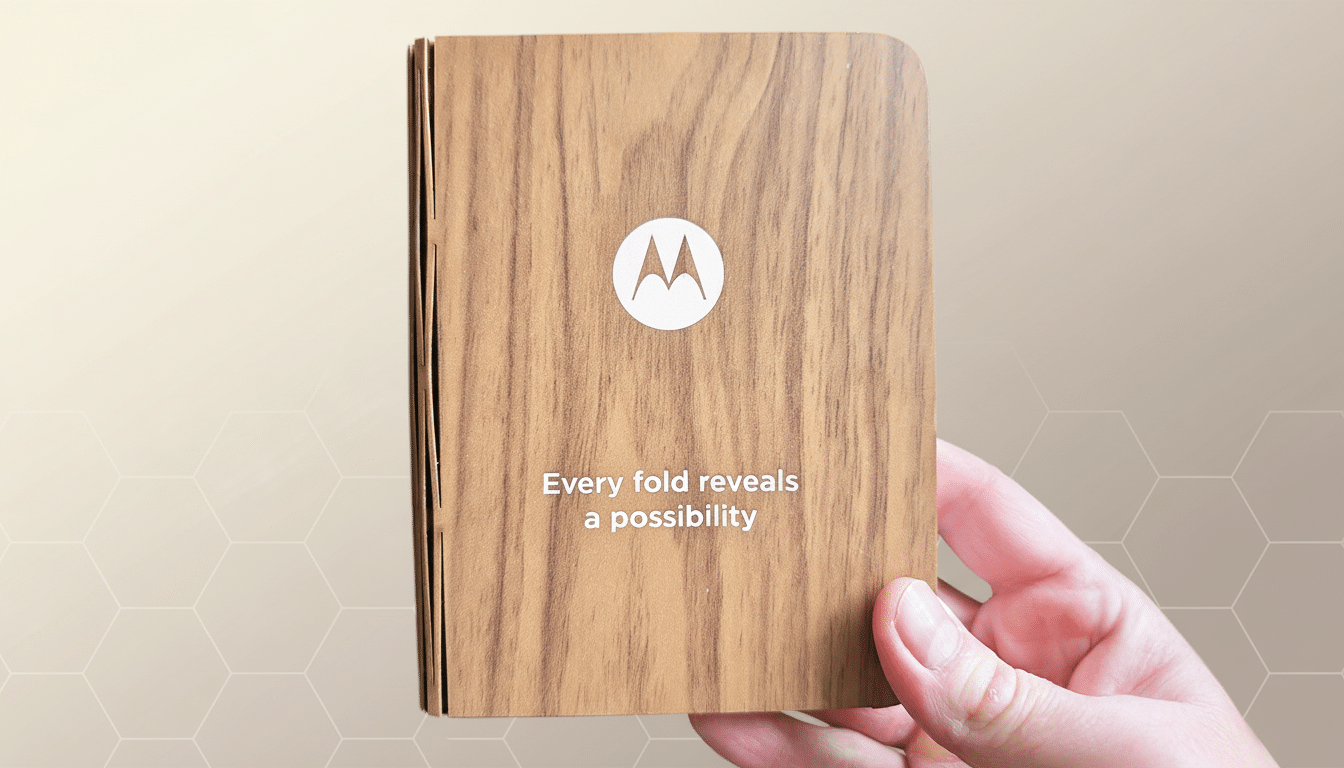
Motorola looks ready to wade into the book-style foldable ring at CES, marking a significant expansion beyond its razr clamshells and a full-frontal fight with Samsung, Google, and OnePlus. A physical invite that was sent out to Android Central alludes to a more inward-folding device and makes reference to the company’s plans to “unfold new perspectives” during Lenovo’s showing at CES in Las Vegas.
A Clear Signal From Motorola Ahead of CES
Inside the mailed package was said to be a small, wooden-finish booklet that opens up—making clear reference to a book-style design. The message makes specific reference to Lenovo Tech World, Motorola’s own splash during the CES news cycle that has showcased concept hardware and teased future form factors from the brand in the past. It’s the strongest sign yet that Motorola is ready to graduate past flip-style foldables and tackle the “tablet-in-your-pocket” category head-on.
Motorola has been gaining traction with its Razr line of phones that increasingly perfect hinge engineering, cover displays, and durability. A bigger, Z Fold–grade device would enable the company to have a say in the productivity-first segment where using multiple apps at once and stylus input matter more than pocketability.
Why a Book-Style Foldable Makes Sense Right Now
Analysts have been clear about the trajectory: foldables were on course to go from a novelty to a growth driver. Counterpoint Research has estimated global foldable shipments to near the 20-million-unit mark and IDC said double-digit growth continues with gradual price declines and slimmer, more durable designs. In a word, the category is getting big enough that a second Motorola form factor is strategically warranted.
Competition has accelerated. Samsung is still the pacesetter with its entire Galaxy Z Fold line, but that hasn’t been enough to go it alone. The OnePlus Open received plaudits for its weight and camera system, Google’s Pixel Fold added new Pixel-exclusive software features, and Honor’s Magic V2 took thinness to laptop-like levels. In China, Huawei and Xiaomi have embraced narrow and thinner designs as well as larger aspect ratios, putting even more pressure on the rest of them to do better.
What to Look For in Motorola’s First Book-Style Design
With the book-style, it’s all about the hinge. You can expect scrutiny on crease visibility, opening torque, and dust resistance — a realm where only a handful of foldables have been out in front. If Motorola brings this teardrop hinge know-how over from the Razr to a larger canvas, it might alleviate panel stress and increase flatness when opened.
Display choices will be critical. The cover screen at traditional smartphone proportions allows everything to be done one-handed, while another inner display in the 7–8-inch scale serves split-screen productivity. High refresh rates on both panels are pretty much par for the course now. The little-known step up to the industry standard of ultra-thin glass and better protective coatings has done wonders for perceived quality — if, that is, Motorola turns to top-end panel suppliers themselves, the company should have no problem clearing it.
On the hardware side, it’s also straightforward: Thin and light builds, thicker batteries that don’t explode on impact, and cameras that don’t cower before those powered by slab flagships.
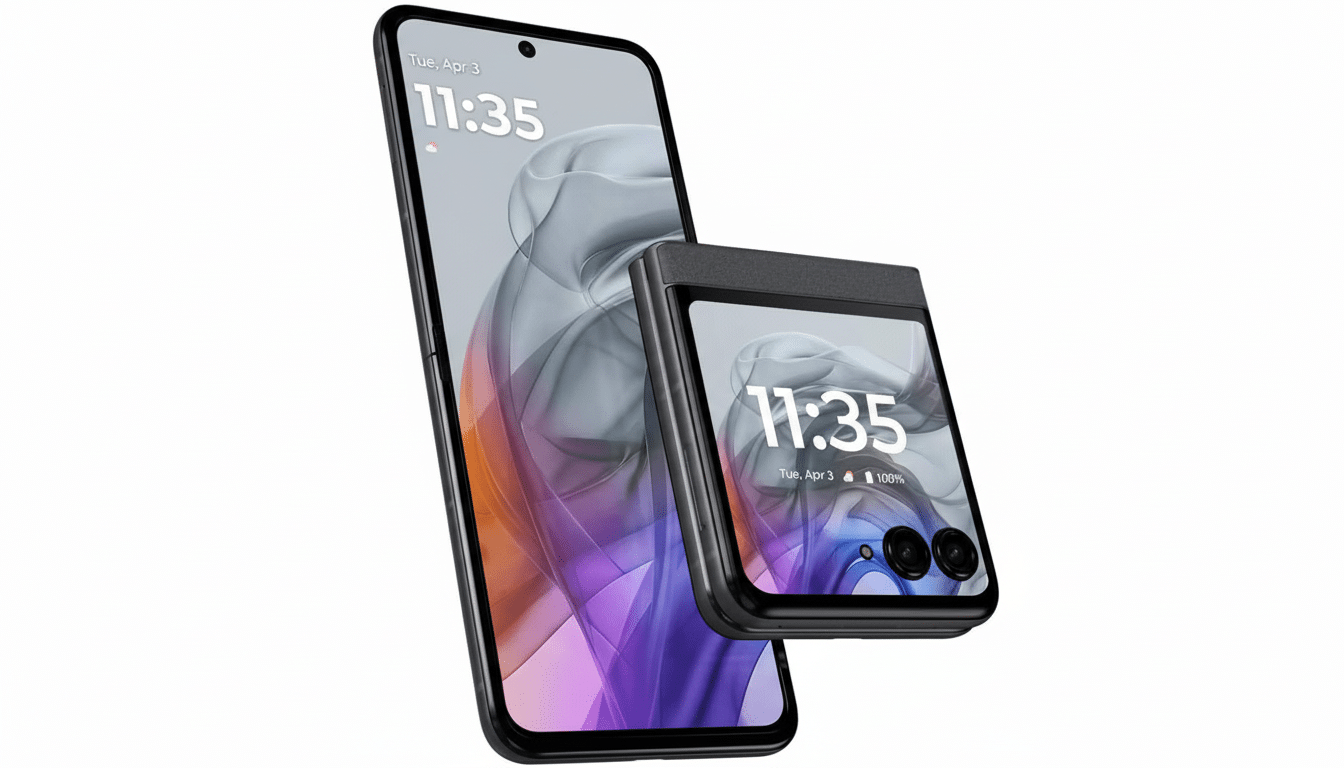
Motorola has upped its camera game in recent devices; parity with competitors, too, on low-light/telephoto performance would make a bigger foldable much more compelling. Stylus compatibility and a more taskbar-like multitasking experience would also further set the productivity-first system apart.
Today, software longevity is a headline feature.
And with competition offering long, multi-year support windows—Samsung alongside Google’s own extended OS and security update policy eagerly come to mind—it’ll be interesting to monitor the situation with Motorola. For a premium foldable, buyers can reasonably expect long-term performance, fewer bugs, and timely fixes to foldable-specific quirks.
Lenovo’s Foldable DNA Matters for Motorola’s Plans
This is not unfamiliar territory for the parent company. Lenovo already brought flexible display hardware to market on the PC side with its ThinkPad X1 Fold and has shown off concepts for rollable smartphones at previous Lenovo Tech World events. That experience — in optimizing hinges, certifying durability, and tuning software for adaptive layouts — could mean the first book-style phone from Motorola is a little shinier out of the gate than most new arrivals manage.
The Stakes at CES for Motorola’s Book-Style Foldable
CES is a world stage, where a big splash can reset brand image in America.
Pricing, carrier partnerships, and availability will play just as big a part in the story as specs. If Motorola is able to undercut existing incumbents or offer compelling trade-in offers, it can pick up market share quickly; if it ends too near the lower end of ultra-premium pricing with no clear differentiator, it risks getting lost in the shuffle.
In either case, a Motorola book-style foldable would be a significant step for the category. It would present Android users another serious alternative in a maturing category and force incumbents to continue pressing on durability, cameras, and software support. Now, all eyes are on the CES press cycle — and Lenovo itself — to see if Motorola’s teaser amounts to a headline-making moment.
