


Motional is reimagining its robotaxi approach around artificial intelligence, pressing pause on near-term commercial plans as it redoes its self-driving stack to scale and become more cost-effective.
The company, a $4 billion joint venture of Hyundai Motor Group and Aptiv, says the pivot will both hasten its entry onto public thoroughfares without a driver, and clear a path to expand more rapidly in other geographies.
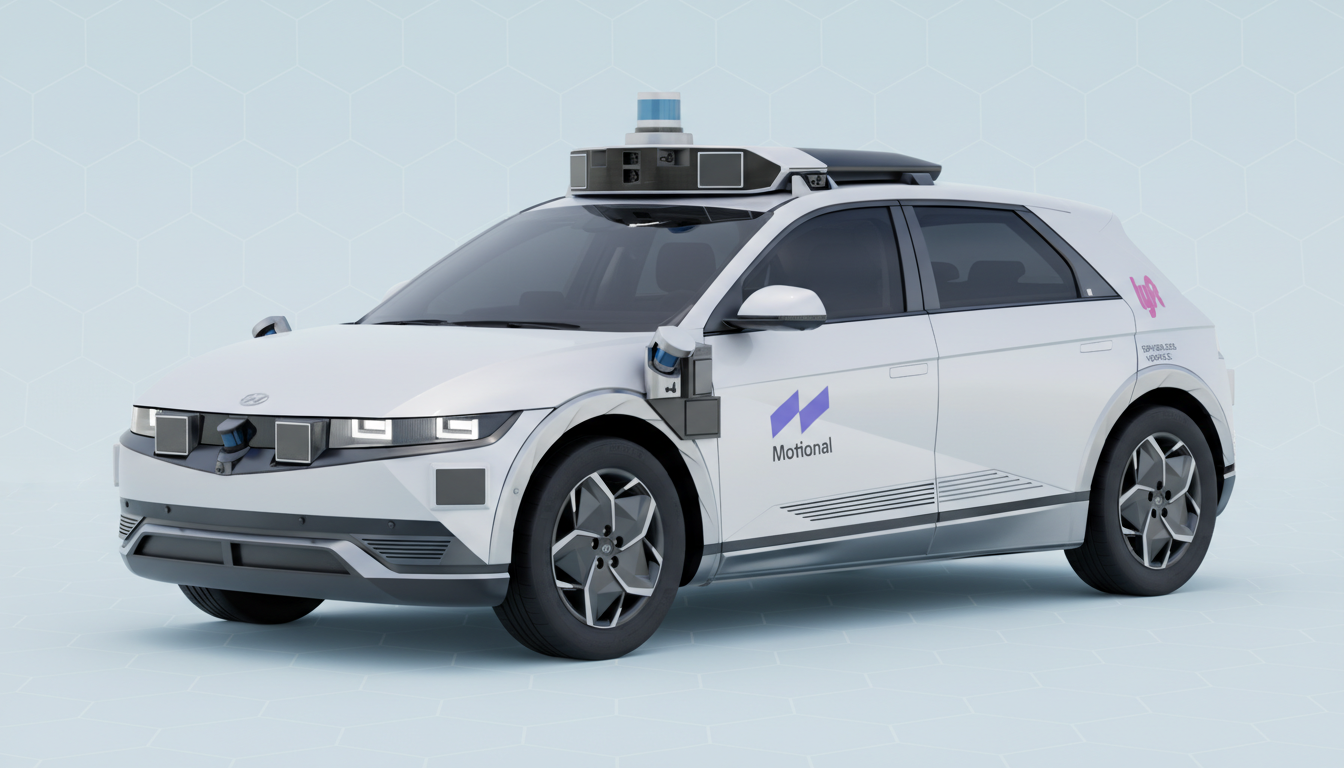
The reset comes after a rocky period punctuated by missed launch deadlines, the departure of Aptiv as a financial backer and mass layoffs. Hyundai has since added more backing and a long-term commitment that begins with robotaxis but could ultimately insert high-automation abilities in consumer cars.
From Modular AV Stack To A Unified Primary Model
“Historically, Motional worked with a traditional robotics stack: we had disparate machine-learning models for perception, tracking and semantic understanding tied together with rules-based logic. That approach is costly but safe, if you can stomach the complexity and mind-numbing retuning for each new city and every corner case.”
The company is now working to consolidate those components into a single, large “backbone” model, depending on transformer architectures that have revolutionized AI. The aim is for an end-to-end system that learns to perceive, predict and plan jointly (which may improve sharing of representations and efficiency), while maintaining modular tools for debugging/safety. In pragmatic terms, this translates to faster convergence of new traffic norms — gather data, tweak, validate — without redesigning the stack.
It’s a playbook that is playing out across advanced mobility. Companies like Wayve and NVIDIA have released research indicating that foundation models can generalize better when trained on diverse, multi-city data sets. Combining a unified model with strong simulation and careful gathering of real-world data, Motional is working to significantly reduce the number of human-engineering hours required per-mile/ODD expansion.
Cost And Scale Inform The Robotaxi Strategy
So far, robotaxi economics have been the Achilles’ heel of the sector. Motional’s move is very much about cost: fewer hand-tuned rules, less bespoke city-by-city engineering and more of that precious mileage extracted from every hour of labeling and validation. The new stack, the company says, is one that scales not only in capability but in unit economics.
The participation of Hyundai is an advantage in many ways. It provides the Ioniq 5 robotaxi platform, as well as the manufacturing discipline to ramp up fleets at automotive quality and cost. Motional is losing about 40%, or to fewer than 600 employees, in a painful but focused reorg designed to focus resources behind the core AI program and system safety case.
The longer-term aspiration goes beyond the ride-hailing service. Executives have consistently presented the capabilities of SAE Level 4 as something that automakers would like to bake into a personal vehicle once concerns about liability, safety and cost all intersect. Robotaxis are the first battleground, where the economics of high use can justify the upfront sensor, compute and operations investment.
On-Road Headway In Las Vegas Robotaxi Operations
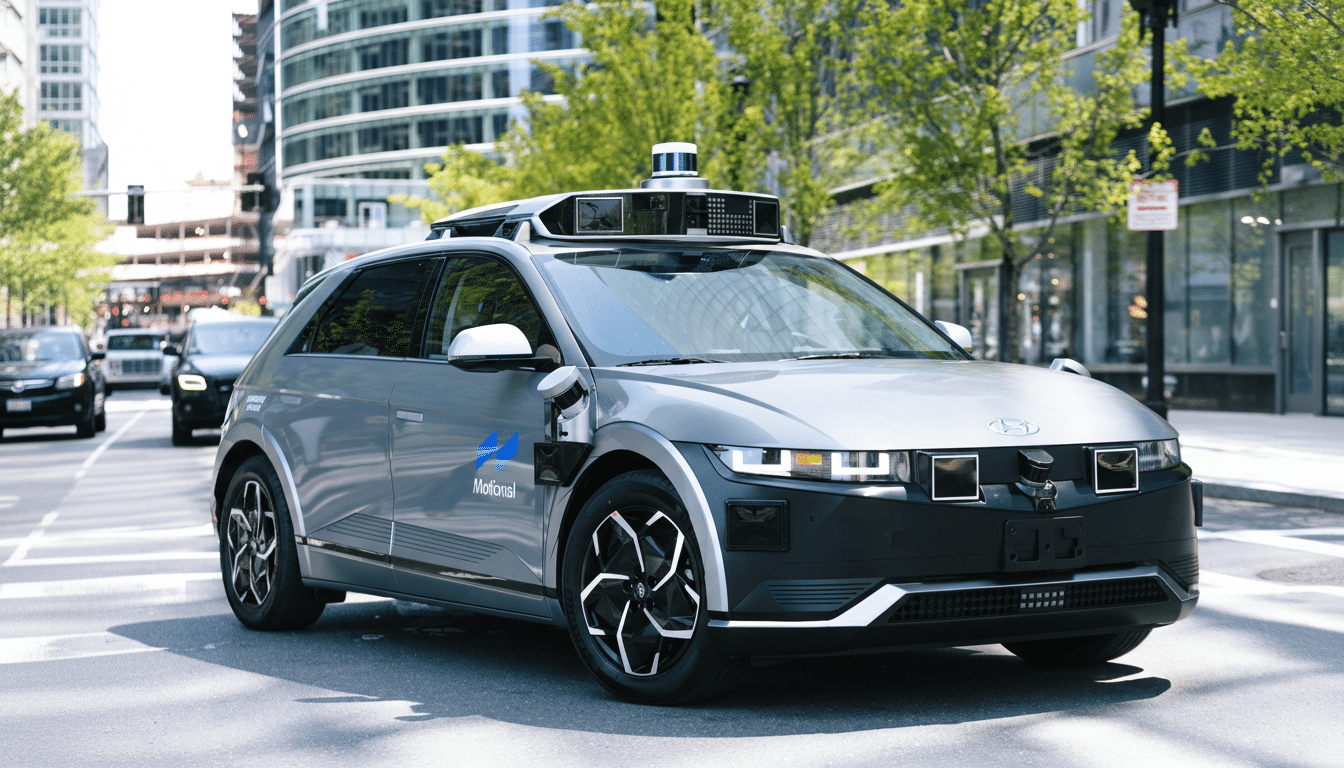
Recent demos in Las Vegas illustrate the point of the pivot: to manage the messy, human-thick curb spaces that confounded early generations of AV stacks. Motional’s Ioniq 5 traversed hotel pickup zones, valet areas and weaved around stopped taxis and rolling pedestrians — conditions that required a safety driver to take control in the past.
The ride went without any interventions by a safety driver, but the vehicle hesitated before nudging around a double-parked delivery van. That caution is by design; curbside choreography — merging, yielding, signaling intent — is one of the trickiest “long-tail” domains in autonomy. The in-cabin rider interface is still in the process of being fine-tuned, a tepid reminder that product polish needs to be able to stand on par with driving capability.
The company claims a single AI backbone should simplify the task of supporting these challenging micro-environments for cities. Rather than hand-designing rules for each hotel portico, the model can learn more generalizable patterns about human behavior, occlusions and right-of-way exchanges and get fine-tuned for targeted variation.
Regulatory And Competitive Context For AVs
Motional’s reboot comes as the industry adjusts. Waymo has put millions of driverless miles on its odometer in more than one city and is expanding its service area. By comparison, Cruise has been forced to press pause for an extended period as it sorts out safety and regulatory matters following prominent mishaps, underscoring how fast the tide can turn in the world of autonomy.
Regulators are sharpening their frameworks. NHTSA has ramped up defects investigations and recalls on automated driving, with states like California DMV and Nevada DMV holding stiff permits for driverless operations. Against this backdrop, the (clearly stated) safety case and scaled validation that Motional is targeting here are going to be key for sign-offs.
What To Watch Next As Motional Reboots Robotaxis
Motional will focus its short-term objectives on confirming the base model across weather and traffic conditions, showcasing a robust remote assistance capability, and showing low intervention rates in the most complex curb-scapes. Expect those to be the markets where Hyundai’s fleet support and city partners can streamline wait time till service.
Signs of readiness will seem quantifiable: sustained driverless operations in busy pickup zones; consistent remote-assist requests per 1,000 miles driven; a cost-per-mile that’s approaching consumer ride-hail levels. If Motional’s AI-first approach bears fruit, it could reset the economics of robotaxis — and establish a foundation for higher-automation features in ordinary cars.
For the moment, the message is clear: AI isn’t an add-on to Motional’s stack; it is the stack. The company is wagering that a single, spoon-fed model — supported by Hyundai’s manufacturing and runway for R&D — is the most viable way to bring safe, scalable, driverless service to market.
