


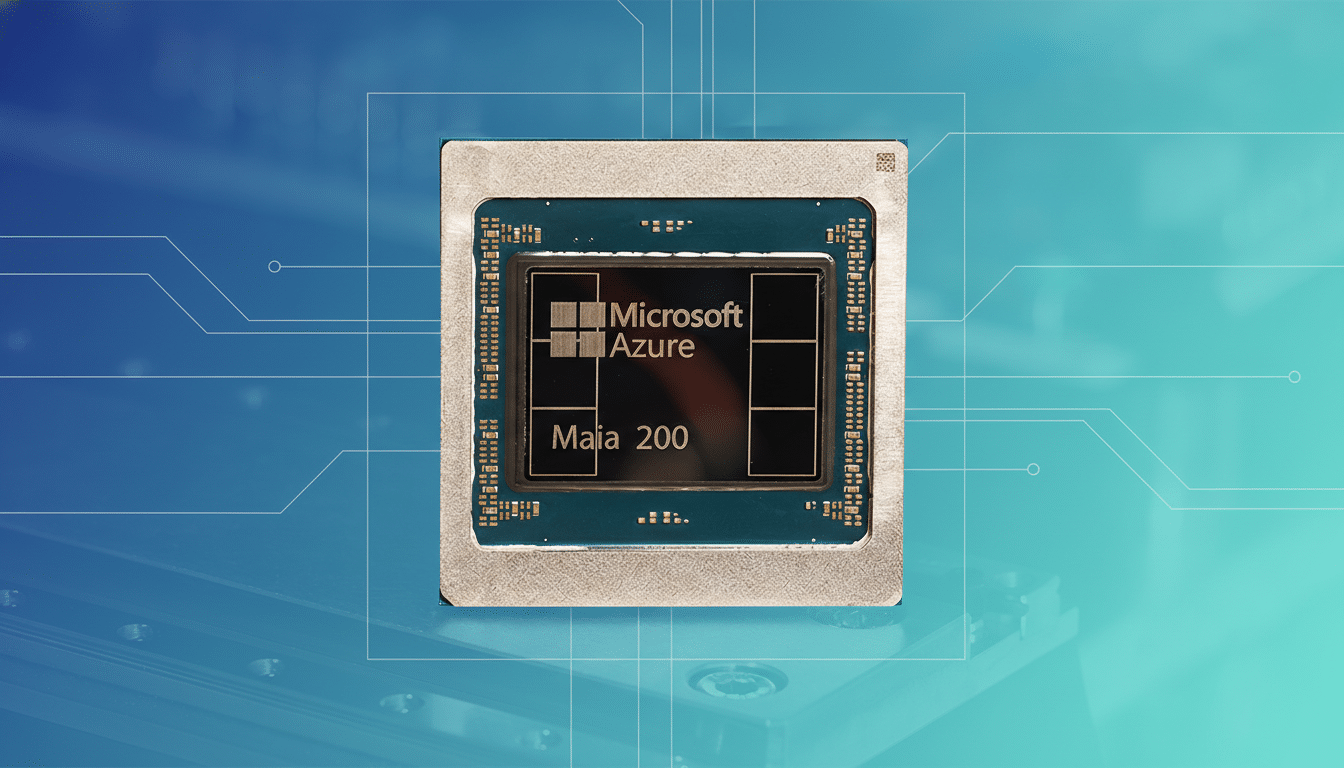
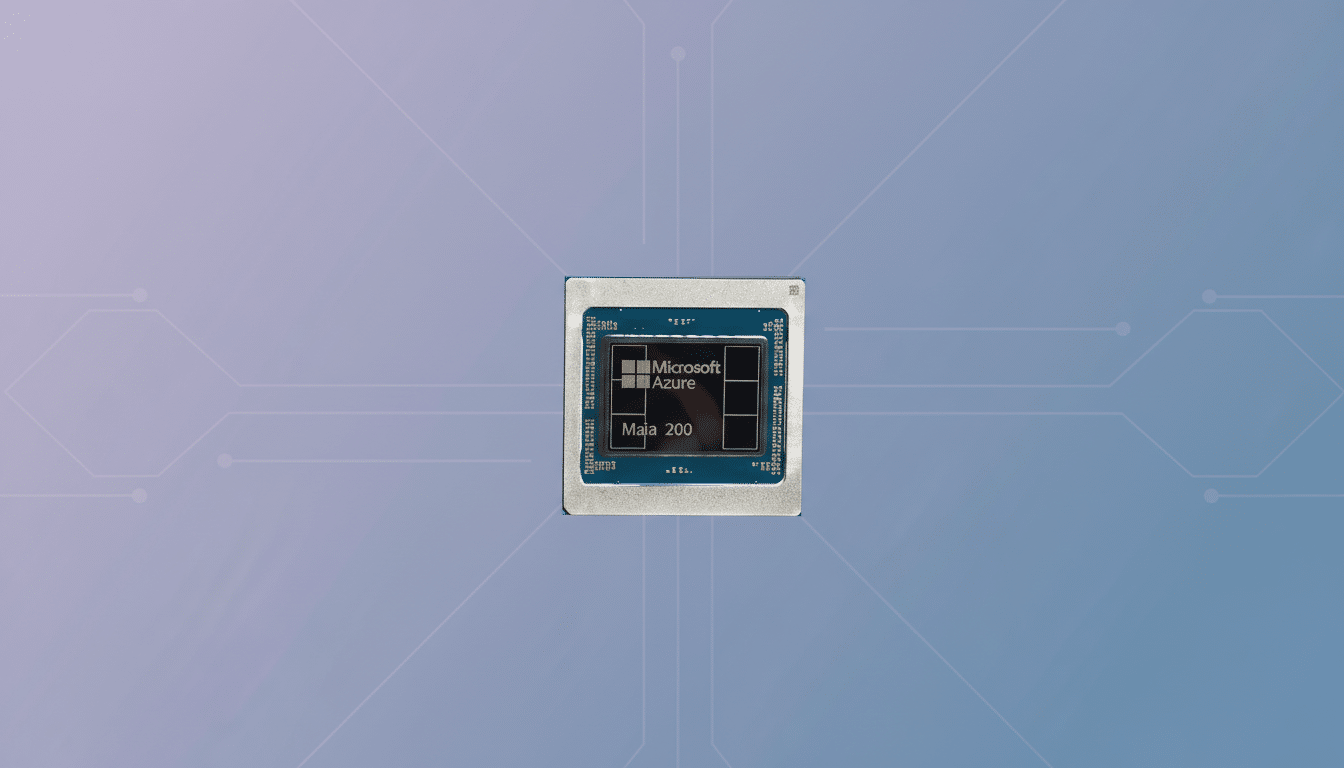
Microsoft has introduced Maia 200, a custom accelerator purpose-built to run large AI models faster and more efficiently, marking a decisive push to lower the cost and power footprint of inference at cloud scale. The chip follows the Maia 100 and targets the increasingly dominant operational phase of AI—serving models in production—rather than training them.
Why Inference Needs New Silicon for Cost Efficiency
As AI workloads mature, inference has become the budget line item that keeps CFOs up at night. Training captures the headlines, but the long tail of serving billions of prompts, search queries, and API calls is where real costs accrue. The Stanford AI Index has noted that ongoing inference spend can surpass initial training over a product’s lifetime, and enterprise buyers are prioritizing total cost of ownership over peak benchmark scores.
Lower-precision math is a key lever. Running models in FP8 or even FP4, paired with software techniques like quantization-aware calibration, can preserve accuracy for many tasks while dramatically increasing throughput. That’s the design center Maia 200 is built around.
Inside Maia 200: Architecture and Low-Precision Design
Microsoft says Maia 200 integrates more than 100 billion transistors and delivers over 10 petaflops of 4‑bit performance, with roughly 5 petaflops at 8‑bit precision. In practical terms, that’s tuned for the way modern LLMs and multimodal models are increasingly served—leaning on low‑precision arithmetic to accelerate tokens per second without sacrificing output quality for common workloads.
The company positions a single Maia 200 node as capable of running today’s largest models with room to grow, suggesting an emphasis not just on raw compute but on memory bandwidth and interconnect—critical for fast attention layers and high batch throughput. While detailed memory specs weren’t disclosed, the architecture appears optimized to keep activations on chip and minimize energy-hungry data movement, a dominant factor in inference efficiency.
Performance Claims And Competitive Context
Microsoft’s headline claim is that Maia 200 delivers 3x the FP4 performance of Amazon’s third‑generation Trainium, unveiled in December, and FP8 performance above Google’s seventh‑generation TPU. If borne out in independent testing, that puts Maia squarely in contention among hyperscaler‑designed AI accelerators.
The strategic subtext is unmistakable: reduce dependence on Nvidia’s GPUs for inference while co‑designing hardware with the Azure software stack. Google set the template with TPUs, and Amazon followed with Inferentia and Trainium. Microsoft’s move consolidates the industry trend—own your inference path, trim latency, and control supply.
Early Uses and Developer Access to Maia 200
Microsoft says Maia 200 is already powering internal workloads, including systems from its Superintelligence team and Copilot services. For external users, the company is opening a Maia 200 software development kit and inviting developers, academics, and frontier labs to begin porting and tuning models.
Expect tight integration with Azure’s inference toolchain—compilers, graph optimizers, and runtime layers that target low‑precision execution. The quality of that software stack will determine how quickly existing PyTorch and ONNX models can realize Maia’s peak numbers in production environments.
Power and Cost Implications for AI Inference at Scale
For enterprises, the most consequential metric is cost per million tokens served, not just theoretical FLOPs. Better energy efficiency directly translates into lower unit economics. The International Energy Agency has reported that global data center electricity use is already in the hundreds of terawatt‑hours annually and climbing; even single‑digit % efficiency gains scale dramatically across hyperscale fleets.
If Maia 200 can sustain high throughput at FP4 and FP8 with minimal accuracy drift—and keep more of the model’s working set on chip—it could shave both latency and power draw for everything from retrieval‑augmented chat to real-time meeting assistants.
What to Watch Next as Maia 200 Rolls Out on Azure
Independent benchmarks will be pivotal. Results from MLCommons’ MLPerf Inference, third‑party power tests, and real‑world latency measurements will validate how Maia 200 performs beyond Microsoft’s own numbers. Another key signal will be breadth of model support—LLMs, vision transformers, and multimodal pipelines—and how easily teams can migrate from Nvidia‑optimized kernels.
Availability across Azure regions and pricing will dictate how quickly customers adopt the new silicon. If Microsoft pairs aggressive economics with a smooth toolchain, Maia 200 could become the default target for high‑volume inference on Azure and reset competitive dynamics across cloud AI services.
