


Meta is closing the book on Horizon Workrooms, the company’s virtual office app that once promised to reinvent meetings inside a headset. The software is being retired as a standalone product, with Meta positioning Horizon as a broader social platform that will host third-party productivity tools instead of a single, monolithic workplace experience.
The move underlines a hard lesson from the metaverse era: people will experiment with VR meetings, but most don’t want to live in them. Even generous hardware distribution and deep platform investment couldn’t turn virtual conference rooms into an everyday habit.
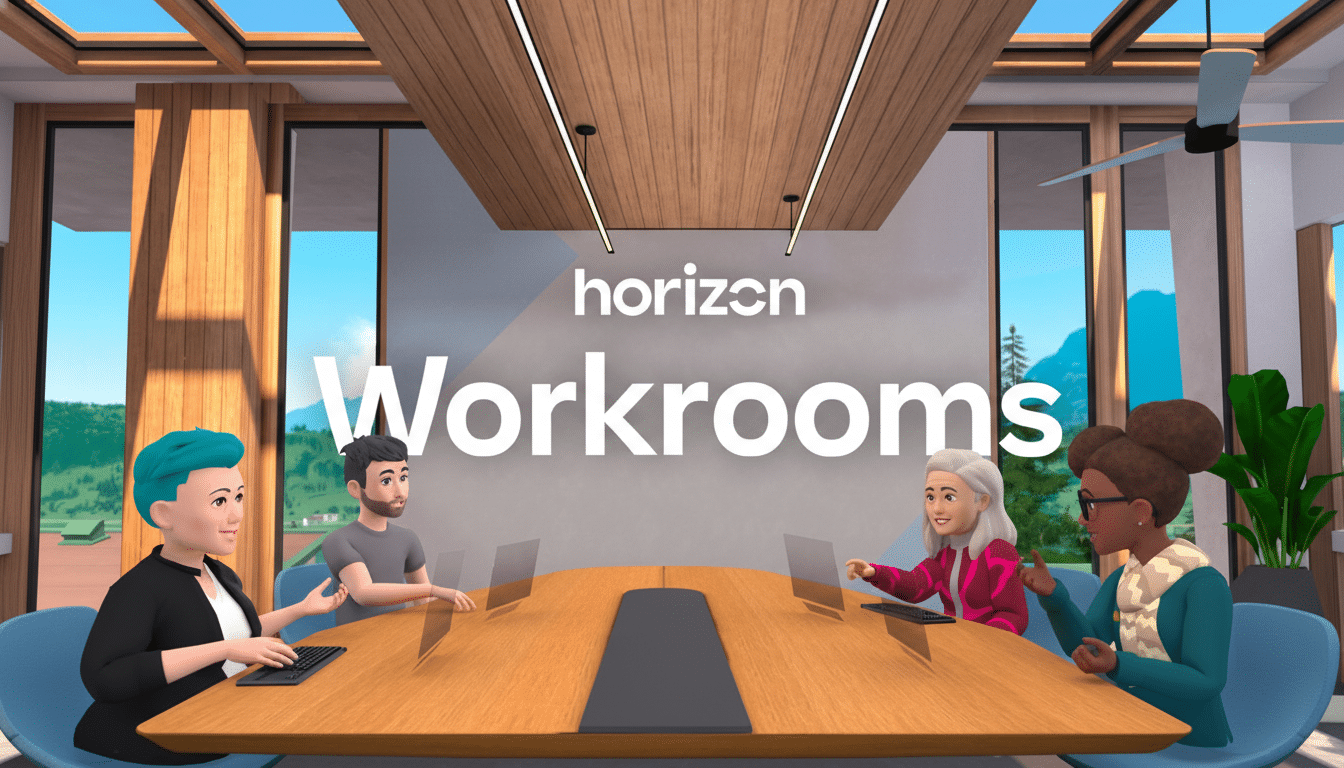
Why Meta Is Walking Away from a Standalone VR Office App
Workrooms launched as a showcase for collaboration on Quest headsets, with spatial audio, whiteboards, and customizable avatars. In practice, it ran headlong into classic adoption friction. Wearing a headset for hours is fatiguing, device setup and IT management add complexity, and early avatars — famously legless at first — struggled to convey nuance and presence in high-stakes meetings.
Internal enthusiasm never matched the marketing. Reporting over the past two years from industry outlets has described tepid employee usage of Meta’s own immersive apps despite widespread headset access. In enterprise pilots, IT leaders routinely cite the same blockers: comfort, motion sensitivity, battery life, compliance, and the social dynamics of showing up to a staff meeting as a cartoon persona.
There’s also a strategic shift at play. Meta has reframed Horizon as an OS-level social layer and marketplace rather than a single “virtual office.” That aligns with its push to open Horizon OS to partners and to lean on third-party developers for specialized productivity tools rather than building and maintaining a full-stack workplace suite in-house.
Enterprise VR Still Has a Narrow Use Case
VR’s most durable wins at work are not meetings but training, simulation, and design review. Retailers and logistics firms have used immersive modules to cut onboarding time and improve safety, while manufacturers use mixed reality to visualize prototypes and guide complex assembly. Strivr, a leading training platform, has said its programs have reached more than 1M workers, reflecting where return on investment tends to show up first.
By contrast, calendar-driven collaboration remains stubbornly conventional. IDC estimates that global AR/VR headset shipments are still in the single-digit millions annually — a tiny base compared with PCs or phones — which limits network effects. Even high-profile initiatives, such as large-scale headset rollouts at consulting firms for onboarding, have not translated into day-to-day VR staff meetings.
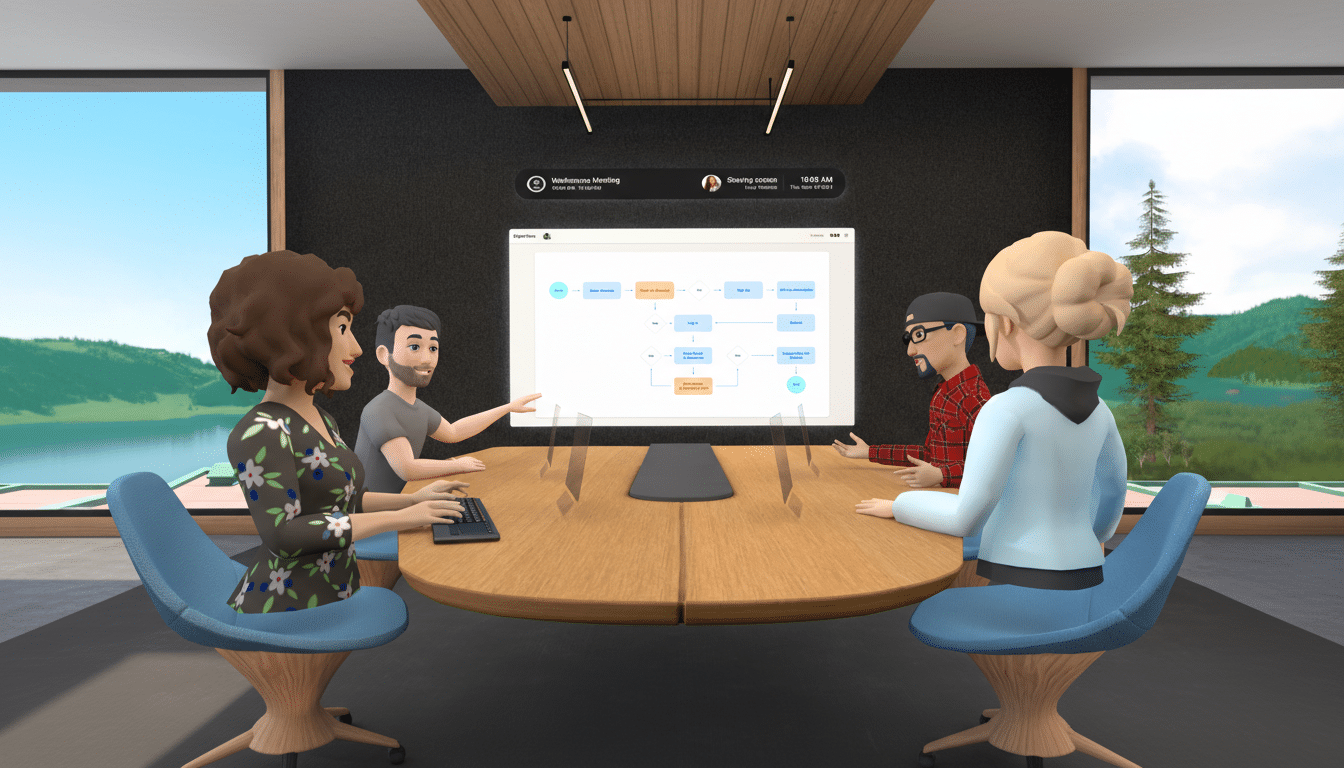
Competitors have also recalibrated. Microsoft shuttered AltspaceVR and refocused on Mesh as a Teams feature for occasional immersive sessions, not a wholesale replacement for video calls. That pragmatic stance mirrors what many CIOs report: immersive tools are valuable in moments, not as a default meeting room.
What Changes for Users After Horizon Workrooms Ends
Workrooms’ retirement means teams that relied on its specific features will need to migrate. Meta says Horizon will continue to support productivity through partner apps and system-level features, including multi-window 2D apps, pass-through mixed reality for desk work, and integrations with services like Microsoft 365 and Teams that already run on Quest devices.
On the hardware and services side, Meta has been consolidating its enterprise offerings, signaling that dedicated “virtual office” bundles and managed services will give way to a more general platform approach. That strategy lines up with the broader Horizon OS plan to let third-party device makers build headsets while developers fill in specialized workplace needs.
The Bigger Metaverse Reality Check Behind Meta’s Shift
Workrooms’ end is also a financial and organizational story. Reality Labs has carried heavy operating losses for years — Meta’s financial filings show the division posted roughly $16B in losses in 2023 alone — prompting tighter portfolio focus. Recent restructuring across immersive teams, alongside an accelerated push into AI models and infrastructure, makes it clearer where Meta sees near-term growth and influence.
This is not a eulogy for VR at work so much as a right-sizing. Training, visualization, and field support keep delivering measurable gains, while avatar-first meeting rooms have struggled to justify the cost and culture shift. Meta stepping back from a branded virtual office acknowledges that reality and hands the baton to a broader ecosystem to build targeted tools on top of Horizon.
The takeaway for enterprises is simple: keep using immersive tech where it already proves its value, experiment where ergonomics and workflow fit, and expect the platform to matter more than any single app. For Meta, fewer virtual conference rooms could mean more focus — and a better chance that the metaverse finds the jobs it does best.
