


When you are eyeballing Meta’s two consumer headsets, the question is as simple as an instinctive reach: Should you save a couple hundred bucks and grab the Meta Quest 3S or extend for a crisper, broader look with the Meta Quest 3? Although I’ve tested both, the answer is clear: what matters most to you — display clarity and field of view or sheer value and battery life.
On paper, the Quest 3S matches the Quest 3 for processing power and mixed reality oomph. Its lower-res Fresnel optics are the primary trade-off in actual use, though. If you’re in those visually dense games or reading small UI text for hours, you’ll feel it. And if you’re new to VR, or need a cool family headset? The 3S is a good, savvy buy.
- Price and configurations for Meta Quest 3S and Quest 3
- Display and optics compared between Quest 3 and 3S
- Mixed reality and tracking on Quest 3 and 3S
- Performance, battery life, and comfort for Quest 3 and 3S
- Storage, ecosystem, and PC Link options for both headsets
- So which one should you buy right now: Quest 3 or 3S?
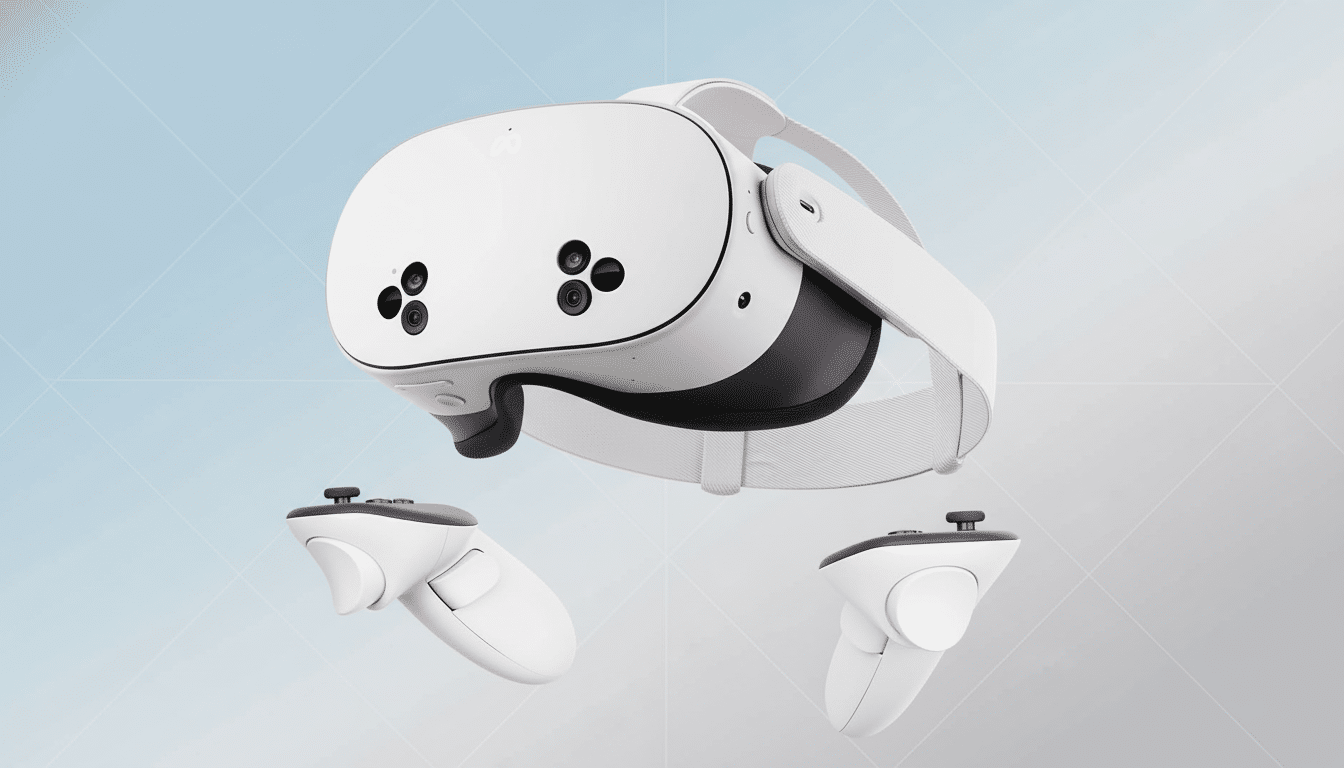
Price and configurations for Meta Quest 3S and Quest 3
The Meta Quest 3S begins at $299 for 128 gigabytes of storage, up from the standard model’s 64 gigabytes, or $399 for 256 gigabytes. The Quest 3 is $499 and comes with 512 GB. That base difference isn’t just sticker shock — bigger games and MR experiences add up fast; flagship titles weigh in at north of 20 GB apiece, so storage headroom matters if you plan to outfit the PC with a rich library.
Display and optics compared between Quest 3 and 3S
That’s the deal breaker for fanatics. Inside each eye, the Quest 3 houses pancake lenses with 2,064 by 2,208 pixels packed into them, providing around 1,218 pixels per inch and a wider field of view of about 110 by 96 degrees (horizontal by vertical). The Quest 3S is scaled back to 1,832 by 1,920 per eye with Fresnel lenses, an estimated 773 pixels per inch, and approximately 96 by 90 degrees FOV.
In practice, that means sharper-looking text, more detailed textures, and a greater field of view for the Quest 3. The pancake optics also mean a clearer “sweet spot” with less glare than Fresnel. The 3S isn’t muddy — not by a long shot — but side by side the Quest 3’s extra detail is immediately apparent in games with dense geometry or busy HUDs.
Both also support 72 Hz, 90 Hz, and 120 Hz modes. The Quest 3 includes IPD adjustment that’s continuous to match your exact eye position, while the 3S has a three-position setup that will be fine for most people but won’t be as precise at the extremes.
Mixed reality and tracking on Quest 3 and 3S
No compromises here. Both versions offer color pass-through via 4 MP sensors for real-world blending and, impressively, the results are astronomically useful for room-aware gameplay and reality checks at a glance. It’s not the almost-lifelike pass-through you get with Apple’s Vision Pro, but for a fraction of the price it’s more than good enough.
Both headsets use the same Meta Quest Touch controllers for inside-out tracking. Hand tracking is still a handy feature, especially when navigating menus and casual apps, though the precision of controller input still wins out for any kind of fast-paced gaming.
Performance, battery life, and comfort for Quest 3 and 3S
Under the hood, both run Qualcomm’s Snapdragon XR2 Gen 2 with 8 GB of RAM — the platform Meta relies on to deliver more complex scenes, realistic lighting, and full MR overlays. Qualcomm’s guidance itself references significant GPU gains over XR2 Gen 1, and you feel those on day two in the form of snappier load times and steadier frame pacing in modern games.
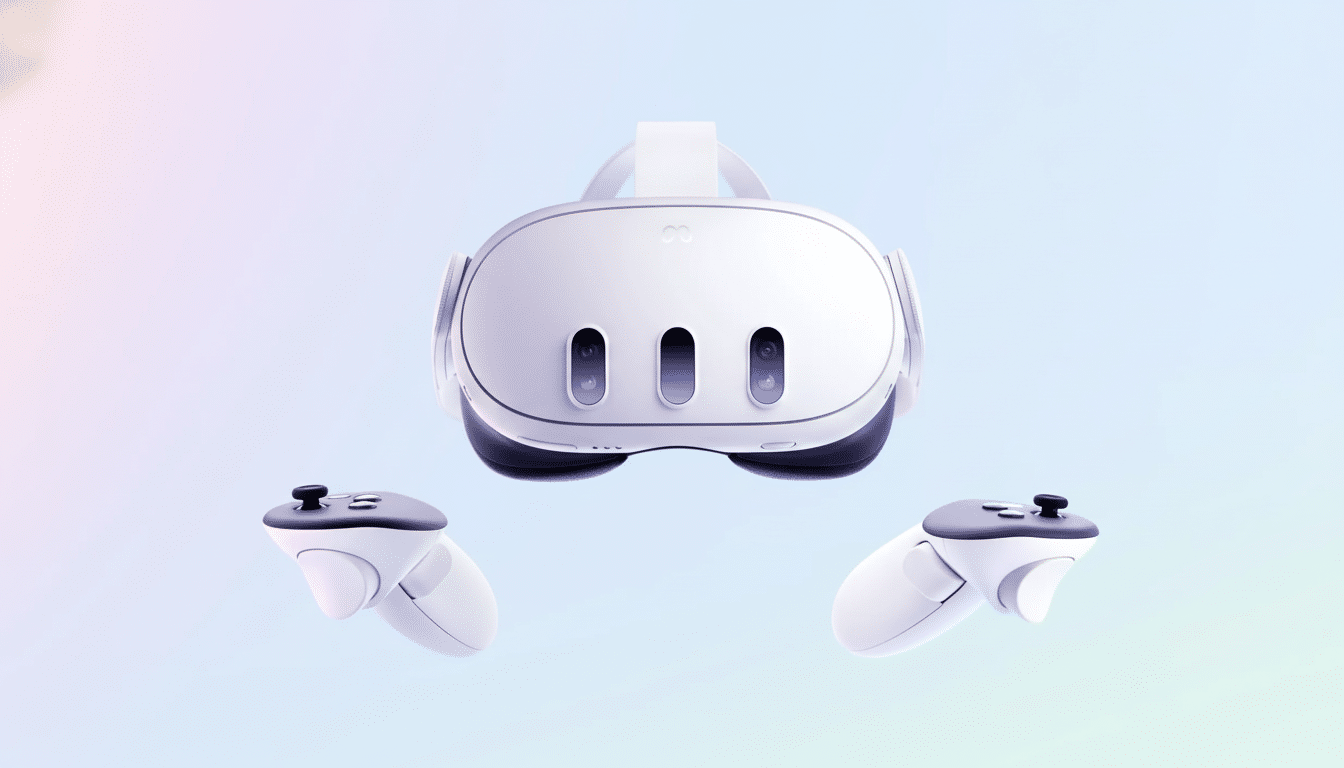
Battery is the surprise twist. Although the 3S has a smaller 4,324 mAh cell compared to the Quest 3’s 5,060 mAh — and identical silicone pad face cushions for consumers as on Oculus’ latest headset — the 3S will generally run longer per charge (around 2.5 hours versus around 2.2 hours), presumably thanks to its less demanding screen panel design too. They also both work with an optional Elite Strap with Battery for lengthier sessions.
Fit and finish is nearly identical with interchangeable straps. In practice, neither the Quest 3’s slightly curved front plate nor the 3S’s flatter face and differently positioned camera clusters meaningfully change tracking or comfort.
Storage, ecosystem, and PC Link options for both headsets
The Quest 3’s default of 512 GB is a quality-of-life win if you cycle through large games, MR apps, and media. You can start to fill up the 3S quickly in the 128 GB or 256 GB models, especially if you record gameplay or start downloading PC-quality ports.
Both headsets draw on the same Meta ecosystem with hundreds of native apps and can tether to a gaming PC using a Link Cable or Wi-Fi streaming for SteamVR libraries. That parity is key: your app purchases and cross-buy titles carry over, and developers can potentially hit one performance profile for both devices.
So which one should you buy right now: Quest 3 or 3S?
Opt for the Meta Quest 3 if you value the cleanest image, a larger field of view, and more storage. Power users, VR fitness regulars, flight and racing sim enthusiasts, and Quest 2 upgraders who want a “wow” jump in visual fidelity will appreciate the difference every minute they’re in the headset.
Prioritize the Meta Quest 3S for budget reasons — or if you’re buying a first headset for family and friends. You’ll still receive the excellent modern processor, responsive tracking, full-color pass-through, and longer battery life — everything you need to enjoy flagship games and mixed reality without paying a premium.
Bottom line: The 3S is Meta’s best value right now, but the Quest 3 is still the better experience. If you’ll be spending dozens of hours each month in VR, the Quest 3’s sharper optics are worth the extra cash. And you know what? If you’re just dipping your toes into the water, save some cash — the 3S gets the core Quest experience right with little compromise in all the places that count.
