


A rising-budget player in portable gaming returned with a higher swing. Mangmi has teased the Pocket Max, a 7-inch Android handheld centered around a 144Hz OLED screen and what leaks imply is Qualcomm’s Snapdragon 865. If all that holds and its price remains low, this can be the rare big-screened handheld that won’t also blow up your budget.
Big OLED ambitions in the budget handheld segment
Big OLEDs are rare in cheap Android handhelds. Offering to-the-minute equivalent specs, devices of similar display pedigree — think AYN Odin 2, AYANEO Pocket EVO, or the Razer Edge — usually start off in the midrange and edge deep into premium territory. Many budget alternatives have LCD panels, which save costs while producing washed-out blacks and colors and motion blur.
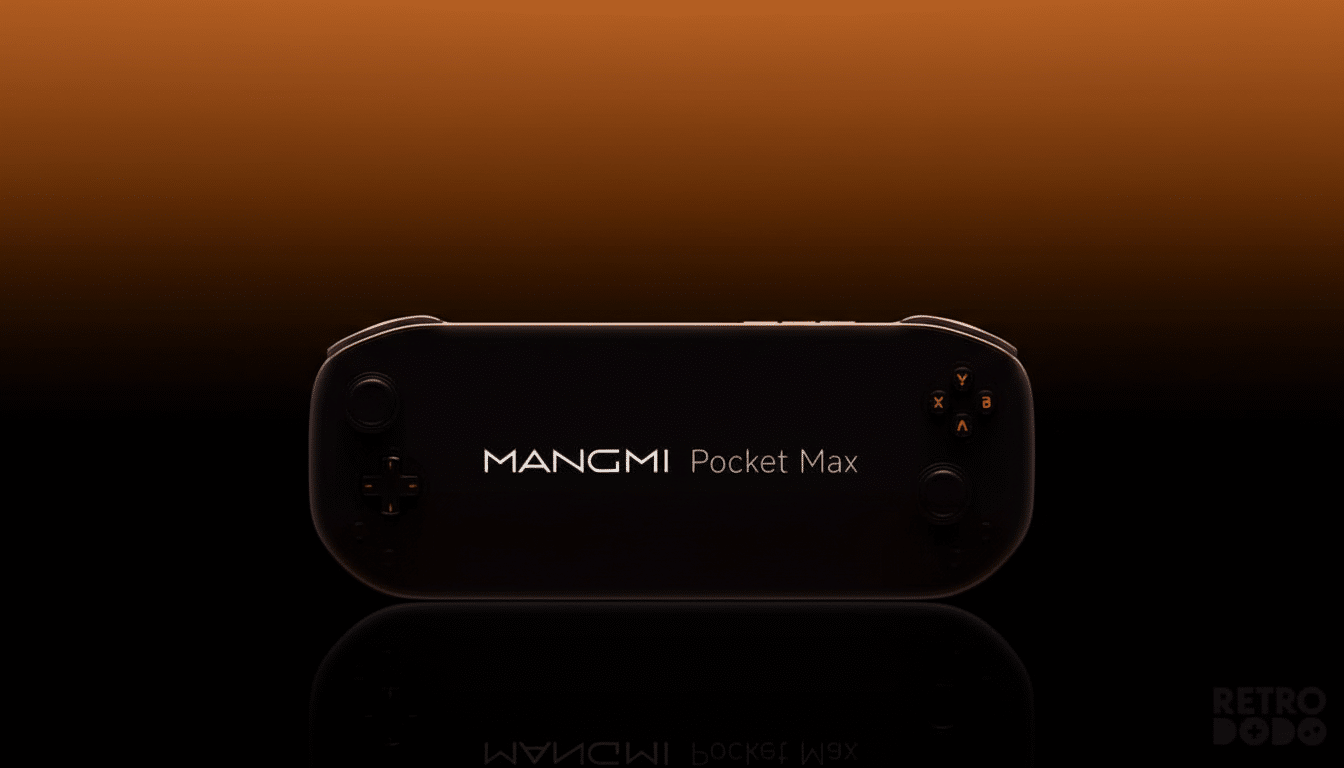
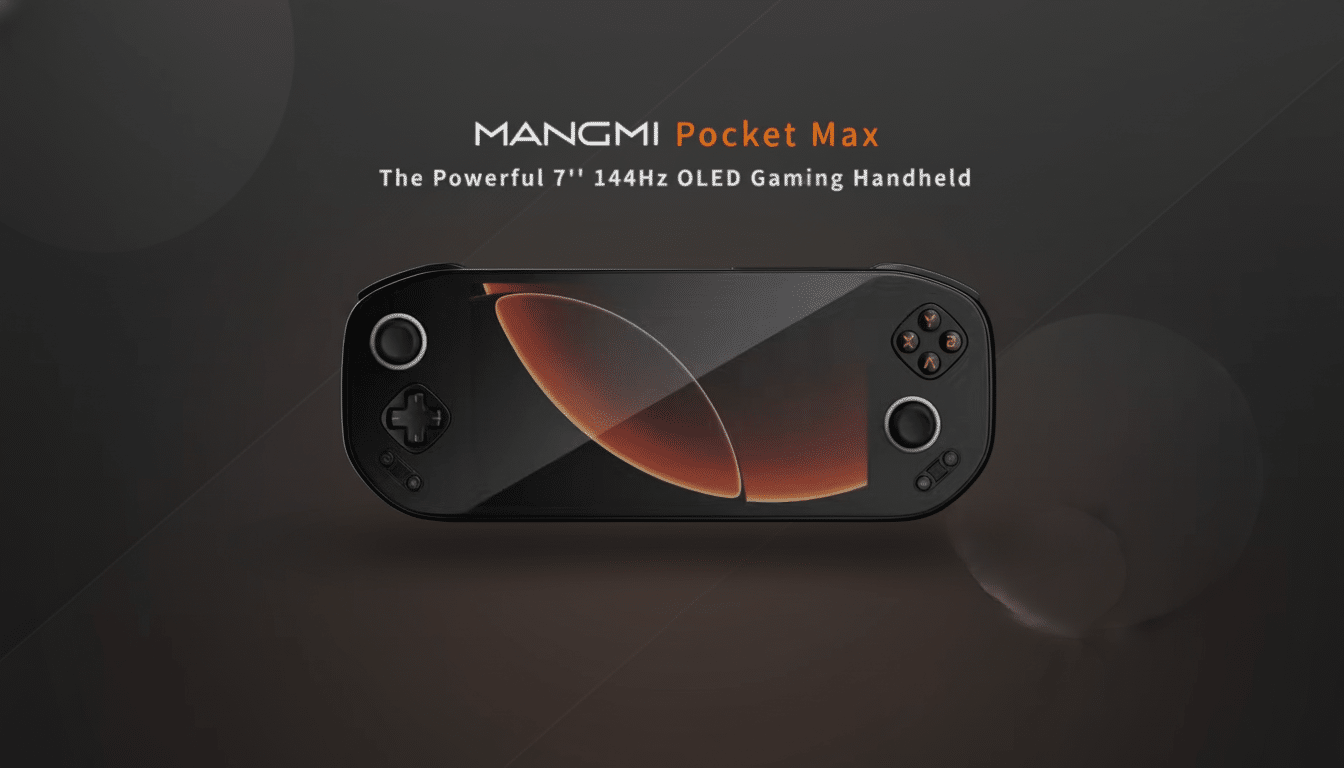
The Pocket Max’s 7-inch OLED at a refresh rate of 144Hz is remarkable enough on its own. And OLED’s per-pixel lighting means deep blacks in the deepest space games, plus retro titles look stunning and modern releases feel lush compared to entry-level LCDs. A 144Hz refresh can’t make every game more responsive, but it does speed up menus, emulators, and Android’s UI, and future-proofs the device for services that are increasingly supporting faster frame rates.
Snapdragon 865 Might Be The Perfect Balance Of Power
Early benchmark listings passing through community forums suggest the Snapdragon 865, a 7nm processor with an Adreno 650 GPU under the hood. It’s no longer flagship-grade, but it remains a significant step above the aging mid-tier chips that burden most budget handhelds. The 865 from Qualcomm, for example, can quite comfortably hit steady 60 frames-per-second in demanding Android titles plus Genshin Impact when everything is dialed back a bit and combines nicely with high-refresh displays.
When it comes to emulation, an 865-powered device is going to run 8- and 16-bit consoles through PlayStation, N64, Dreamcast, and GameCube/Wii (in most games) without breaking a sweat. I would say PlayStation 2 is manageable for a large library with tuning. Android Switch emulation is still a bit of a crapshoot across devices, but with that GPU headroom, the Pocket Max starts to enter the conversation for some games. The platform also supports Wi‑Fi 6 and Bluetooth 5.1, which would be enabled if a manufacturer chooses to, and both are helpful features for low-latency controllers and cloud play.
Design signals serious intent for gaming ergonomics
Mangmi’s teaser reveals full-sized analogue sticks in an asymmetrical configuration, underpinned by small front-firing speakers. That’s a peach combination for a travel device: decent-sized sticks for precision aim, but not crimping; and outward-projection speakers that don’t rattle your palms. The shell features some decently sized triggers, rear-side function buttons, and some well-sculpted grips — all of which should add to comfort during more extended play sessions.
If Mangmi gets the basics right — responsive sticks and triggers, clean haptics, low input latency — then the Pocket Max could dodge the common pratfalls that have brought down similarly promising budget handhelds.
Small touches, like proper button travel and consistent dead zones, matter as much as or more to players than raw numbers.
The price and delivery problem for Mangmi’s rollout
Mangmi had won attention with an earlier ultra-low-cost handheld that sold for under $100, but it too ran into fulfillment delays as demand far outpaced supply. That’s not uncommon in this space — smaller brands sometimes have a hard time scaling logistics — but it does reinforce the importance of having a clearly defined plan for shipping and clear delivery estimates.
And only via pricing will we find out if the Pocket Max becomes a budget champion or simply an interesting footnote. The inclusion of OLED panels and bigger chassis usually drives the BOM cost higher. If Mangmi can come in meaningfully under the $400 level that so far rules other OLED Android handhelds, it would be staking out a rare value position for gamers who seek a larger, better screen at modest prices.
What to watch before you buy this 7‑inch OLED handheld
All the key details that are still missing — the battery capacity, storage options, cooling design, and software polish — will make or break things. A 7-inch OLED at 144Hz requires a large battery and excellent thermals to prevent throttling, not to mention short runtimes. And, as far as software is concerned, a clean Android build with reliable controller mapping, appropriate emulator profiles, and fast updates are usually more valuable for most of the audience than another +10% in synthetic scores.
If the leaks are correct, the Pocket Max comes with a high-end-looking screen on a mid-high-tier chip and gamer-centric ergonomics. The formula’s worked before for bigger brands — Qualcomm 865-era devices continue to punch above their slotted weight — and it could again here if Mangmi sticks the landing on price and delivery. For budget-conscious gamers looking for a big OLED handheld that doesn’t require flagship cash, this is one to keep an eye on.
