


Much as season 1 did, season 2 of Fallout begins with a sly nod that’ll have fans murmuring the same name in between sips of coffee: David Lynch. It’s not a direct quote, and it sure as hell isn’t quite enough of a wink to break the fourth wall, but if you play the moment just right, it feels like a lovingly steeped nod at Twin Peaks done‑in‑one fashion, starring the man who made “damn fine coffee” a pop‑culture rallying cry, Kyle MacLachlan.
In the opening scene, Hank MacLean stumbles into an empty, immaculate Vault‑Tec tower following a slog across the Nevada wastes in T‑60 power armor and surveys 400,000‑plus unopened messages before deciding to do the most human thing possible: make coffee.
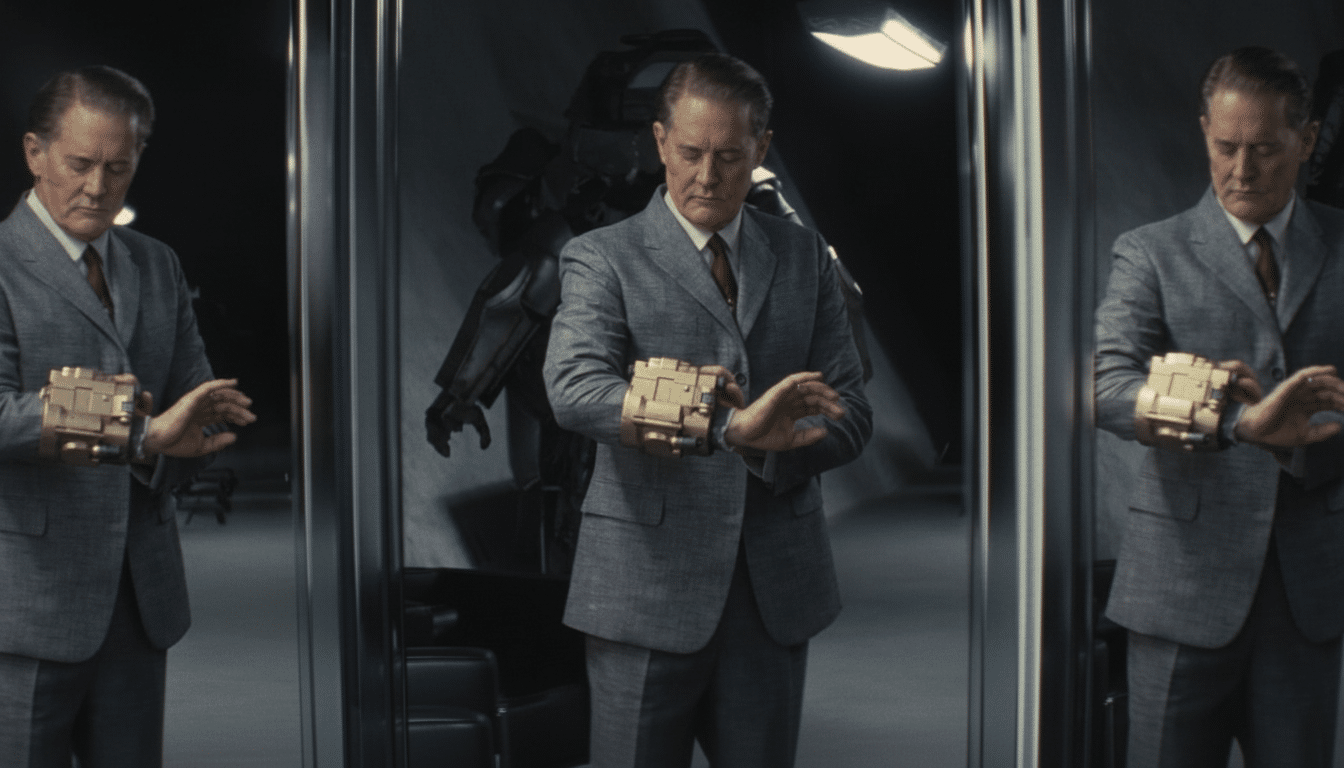
The pause, the grin, the unspoken line: it’s all there for viewers who speak Lynchian.
A Quiet Scene With Noisy Echoes Across Vault‑Tec Halls
The series is a system of lack: empty corridors, buzzing fluorescence, corporate perfection in human absence. But that tonal mix of antiseptic calm and dread is heavily Lynch‑coded. Fallout has always balanced pulp with paranoia, but this is different: it sticks around. It lets the room breathe and trusts the audience to figure things out for themselves.
Setting matters here, too. Vault‑Tec’s glassy monument to control could be the evil twin of a government office in Twin Peaks: The Return; an institutional maze where all its innocuous rituals carry some obscure, oppressive weight. Even blocking MacLachlan in the middle of a wide, sterile frame and making him do nothing more than perform some kind of humble countertop routine feels like an echo of the simple coffee‑and‑donut exchanges that defined time‑halting moments at the Sheriff’s Department when stripped to their essence.
The show doesn’t run down an obvious payoff. There is no catchphrase, no musical sting, just a held beat that gives time to the implication. It’s a decision that treats fetishization as texture, not punchline, homage rather than a joke.
Why the Coffee Moment Hits So Much Like Twin Peaks
There’s Kyle MacLachlan—half the work is being done by his screen history. As the fussy, chatty coffee rhapsodist Agent Dale Cooper, he made glugging a cup of it seem like a ritual of grace in a world gone to seed—and also repeatedly demonstrated that good manners can be universal daily gifts in a world full of injury. That metaphor translates nicely to Fallout, where small comforts are currency and civility is in short supply. Witnessing MacLachlan adjust to such a similar, meditative reverence, surrounded by unholiness in a legal and moral wasteland, conditions the audience to read this as calculated.
And it’s in keeping with Fallout’s longstanding practice of intertext. The franchise revels in vault‑door reveals, retrofuturist jingles, and deep‑cut callbacks. Inviting some of Twin Peaks’ soul into a Vault‑Tec sanctuary isn’t just a gag; it recontextualizes Hank’s path as that of a man who still knows ritual, even after the world ends.
Most important, the show won’t be easily memed. Not speaking the line is exactly the point; restraint glows and sharpens the tribute, keeping Hank rooted in his own narrative rather than turning him into a conduit of fan service.
How Smart Nods Power Buzz, Conversation, and Retention
Strategic homages can be incendiary that way, and Fallout already moves in that slipstream. Season 1 was a hit and landed as the leading show on Nielsen’s streaming rankings, generating conversation for weeks about its confident world‑building and tonal balance. Aggregators like Rotten Tomatoes put the first season in the mid‑90s with both audiences and critics, a rarity for a crossover game adaptation.
Easter eggs that pay dividends to the viewers’ intelligence ride that wave. Social analytics firms frequently report spikes in mentions when shows stick the landing with smart cultural callbacks; more crucially, these beats enhance rewatch value by providing fans something to hunt. Fallout’s season 2 premiere doesn’t shy away from that behavior, but without hijacking the story it’s a smart bet for a franchise building itself on discovery.
And let us not forget the MacLachlan effect. The melding of prestige cinema and cult TV casting draws in multigenerational audiences—the gamers with “Scream,” the Peakies with everything Lynch, say—to meet in the middle. It’s brand‑safe, but it’s also storytelling‑smart because the nod has as much to do with deepening a character’s psychology as working in a detached cameo.
What This Subtle Moment Says About Fallout Season 2
Hank’s coffee break isn’t merely a nod; it’s a thesis statement. The unread avalanche of Vault‑Tec messages communicates institutional decay; the silence implies secrets fossilized by time; the coffee represents a refusal to let change come as quickly as it does, even when the ground has submitted. Season 2 looks like it’s going to hone the apocalypse‑corporate‑conspiracy blade of Fallout while also giving its characters quiet, human moments in which to breathe.
Some sleuthing has revealed there’s no official confirmation of an intentional homage to Lynch, and really, they didn’t need it. The scene functions well on its own, with some added nuance if you’re familiar with MacLachlan’s work in Twin Peaks, Blue Velvet, and Dune. That’s the sweet spot—homage as the subtext that makes the world richer without demanding coddling.
So did Fallout season 2 pay homage to David Lynch? It’s never explicitly stated by the show. But in a world of Nuka‑Cola and nuclear fallout, a simple smile over a fresh craft brew says much. Call it a damn fine choice.
