


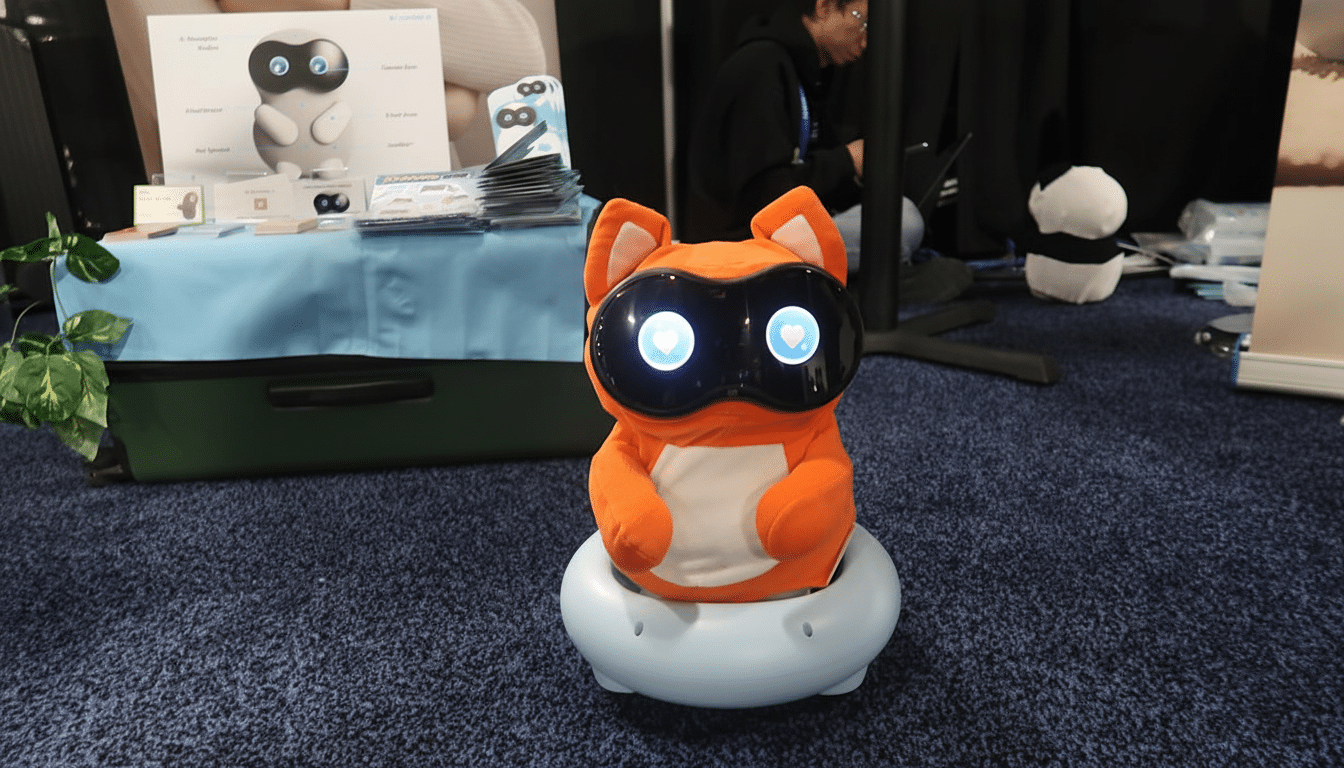
At CES, where every device is racing to be your new assistant, Ludens AI is making a contrarian bet. Its new companions Cocomo and INU are not created to run errands or triage email, but rather just hang out with you. The pitch is a slyly radical one for 2026: AI companions don’t need jobs to have value.
Prioritizing Presence Over Productivity in AI Companions
Ludens AI’s positioning counters the mandate within the industry that everything new must first be useful. Rather than promising calendar-based wrangling or better home control, it emphasizes presence, routine and emotional cadences. That matches an emerging, research-backed belief that life partnership itself has a measurable benefit, beyond getting the practical tasks of daily living done.
Public health leaders emphasize what is at stake. The U.S. Surgeon General has argued weak social connection is as harmful to long-term health as smoking, and several systematic reviews report odds ratios for early death thought to be between 26% and 32%. That context helps to explain why ambient AI that’s designed for company, not chores, keeps reappearing in consumer tech.
What Cocomo and INU Do: Features of Ludens AI Companions
Cocomo is the fancier concept. The desktop robot features emotive digital eyes, 10 degrees of freedom for smooth, dexterous motion and multi-sensory interaction across touch, sound, movement and proximity. Cocomo forms a bond, in fact, by learning the rhythms of its owner — morning coffee, late-night reading — and adjusting over time so no two owner experiences are ever the same, says Ludens AI.
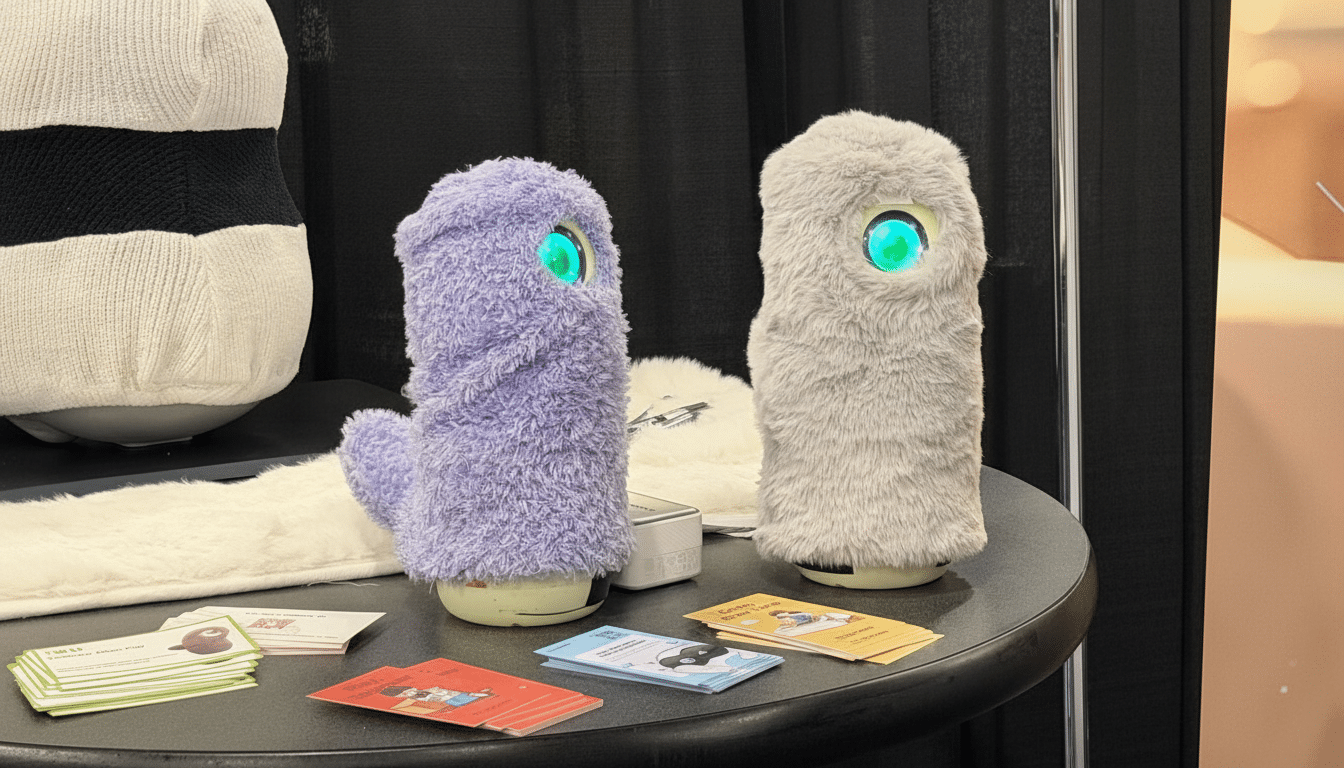
INU makes a more modest swing with a sharper promise. Sold as a “desktop alien dog,” it sits next to your keyboard and responds with playful noises and gestures when you talk or approach. It’s deliberately limited: INU doesn’t pretend to run your house. On the show floor, some journalists, such as Engadget’s Karissa Bell, reported that the lack is actually a feature more than a bug.
Both devices rely on the sort of micro-interaction that sustained Tamagotchi, and later Sony’s Aibo, as characterful: direct eye contact, slight movement and repeatable rituals. Their measure isn’t how many tasks are done; it’s time spent in their presence and the sensation of being “seen” by the robot.
Why a ‘Jobless’ Social Robot Could Succeed with Users
There are plenty of social robots in history that underdelivered on reliability and promised more than they delivered. Jibo won a cult following but could not maintain a service business. Anki’s Vector got a second life with an enthusiastic base after its creator folded. All-purpose assistants are outlasted by companions that concentrate on delight, consistency and low-friction engagement.
There is demand, if it’s nuanced. A 2023 Pew Research Center survey noted that a majority of Americans felt more worried than excited about AI, even as they were willing to accept AI-driven affordances that reduced friction or provided small levels of comfort in everyday life. Social robots such as Intuition Robotics’ ElliQ have been used by state agencies to combat loneliness in the elderly, with users reporting increased engagement and well-being. And crowdfunded projects such as KEYi Tech’s Loona, which drew in millions from backers, indicate continued appetite for expressive, pet-like machines.
The difference with Ludens AI is as philosophical as it is technical. By not trying to compete with smart speakers or phones, Cocomo and INU sidestep the latency and accuracy expectations that hobble many utility bots. If they are emotionally reliable — waking, glancing, responding on cue — they still have a shot at becoming habit-forgers without impersonating butlers.
Risks, Privacy, and Design Choices for Social AI
Presence-first does not mean impact-free. And companions that watch, listen and learn naturally raise concerns about privacy, data retention and child safety. The AI Act by the European Union, implemented in stages, will force affective or social AI developers to be transparent about what they can and cannot do — especially with respect to inferred or evolutionary emotions.
The more personal the device, the more critical the guardrails. On-device processing, clear signals when sensors are on and easy controls for memory and data deletion will be as important as the cute animations. For long-term trust, Ludens AI will need to share thorough policies and third-party safety audits, not demos alone.
Do AIs Need Jobs, or Is Companionship Enough Today?
In the already assistant-laden homes — phones, smart displays and more — a run at another task-doer is superfluous. Cocomo and INU make a distinct promise: the quiet, consistent social presence that grows with you. And if they do succeed, it will be because they provide predictable, low-stress companionship — not because they book flights or troubleshoot Wi-Fi.
That’s the quiet bet Ludens AI is putting down at CES. If it’s companionship that’s for sale, and not a side effect of using the product, then retention is best improved not by shipping more features but by driving better moments. For a category that had long been cursed by mission creep, perhaps the smartest job out there was to keep the job description intentionally empty.
