


LLVision’s new Leion Hey 2 smart glasses go for a bold, single-purpose approach: automatic, real-time translations and on-lens captions — no cameras or speakers required. Instead, the company is working on a pair of lightweight AR specs that do live subtitles in your field of view while helping keep conversations quiet and eyes forward.
A Translation-First Approach for Everyday Communication
Designed for work and your everyday life, such as a chat, the Leion Hey 2 has the ability to translate more than 100 languages and dialects. LLVision promises less than 500 ms processing for speech-to-text-to-translation — a speed meant to keep the natural momentum of discussions up, by preventing stilted pauses while language is computed.
- A Translation-First Approach for Everyday Communication
- How On-Lens Captions Work to Support Conversations
- Directional Listening Without Noise in Busy Spaces
- Why Ditching Cameras and Speakers Matters for Privacy
- Latency Claims in Real Conversations and Networking
- Battery Life and Everyday Use for Long Workdays
- Cloud Processing and Data Controls on Microsoft Azure
- Two-Way Chats and the Companion App for Translations
- Who These Glasses Are For in Workplaces and Travel
- Price and Early Perks for Leion Hey 2 Preorders in US
- AR’s Quiet Countertrend Favors Privacy and Simplicity
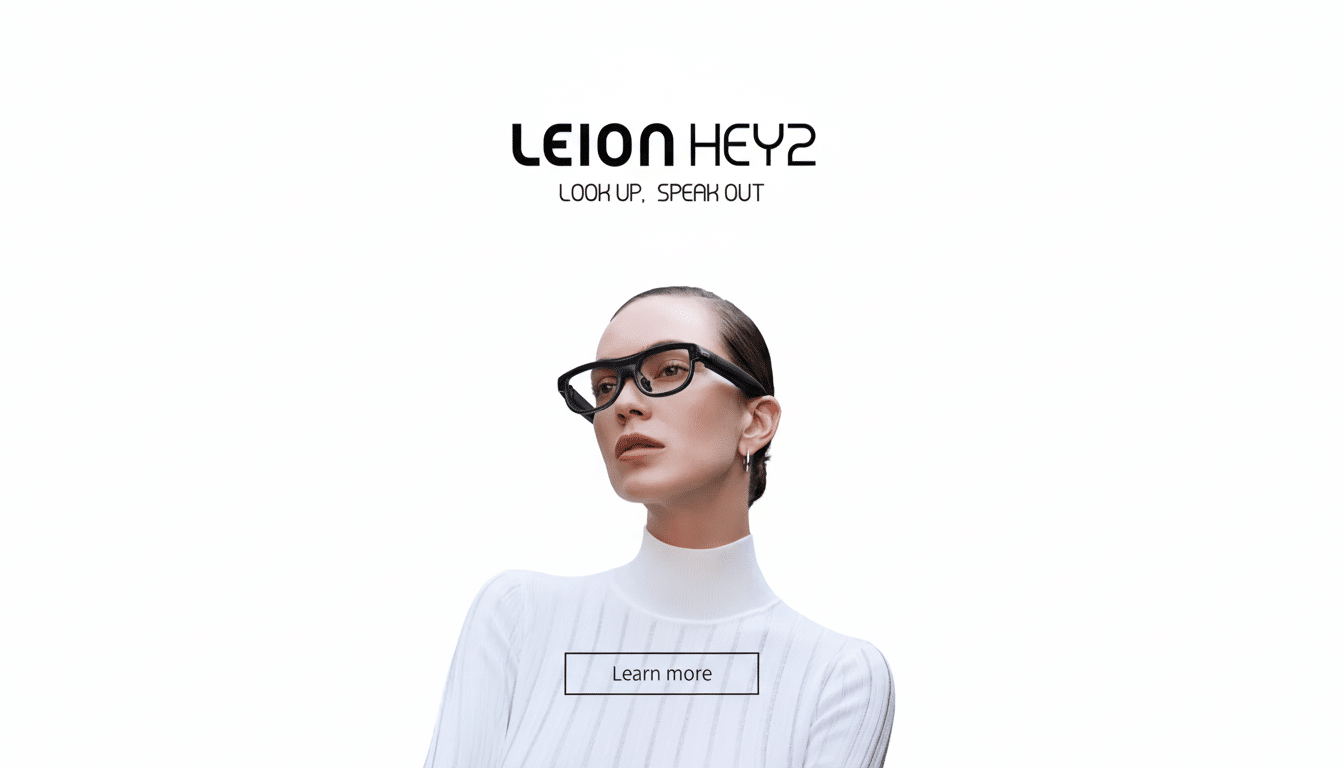
How On-Lens Captions Work to Support Conversations
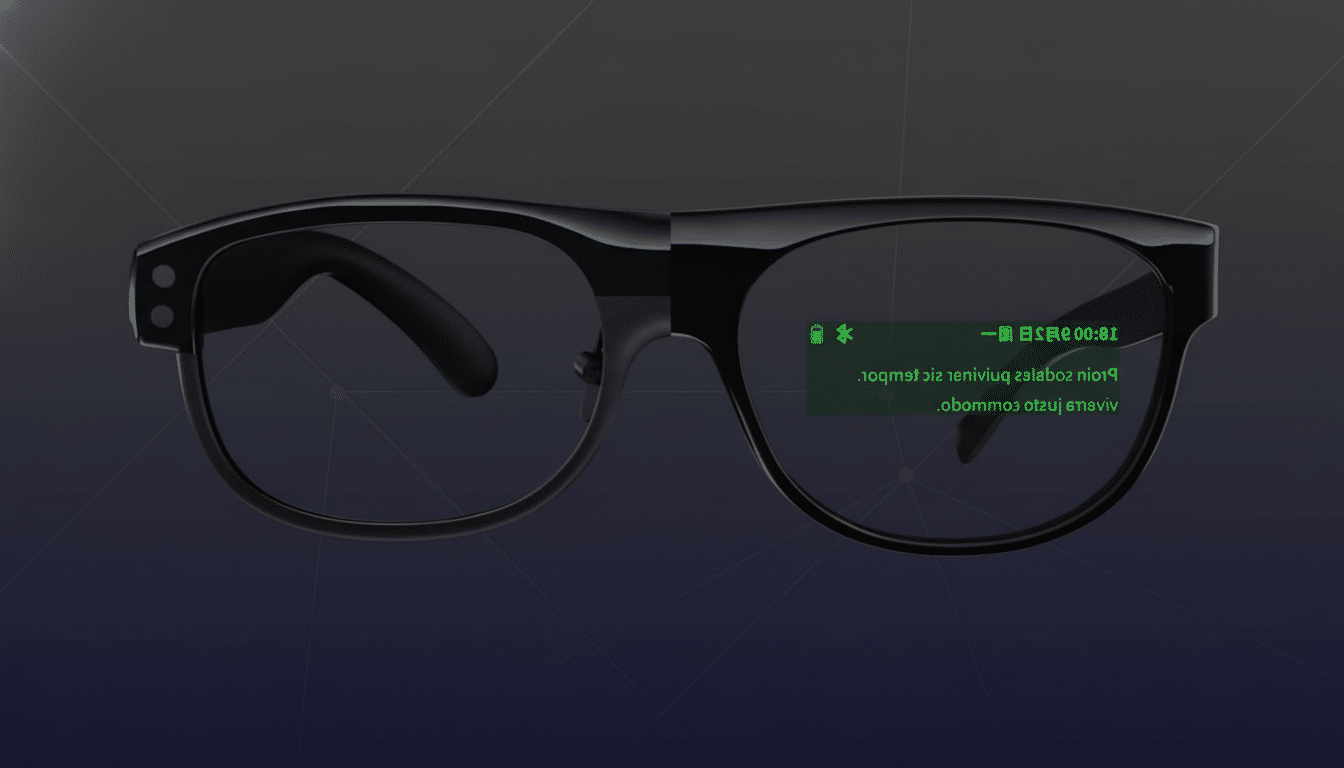
As opposed to having sound piped into your ears, text is projected directly onto subtly designed heads-up displays integrated into each lens. Transcripts and translations are displayed in captions so that you can read along while still looking at the speaker. An AI assistant can respond to prompts and display answers on-screen, and a teleprompter mode can cue up scripted remarks for presentations and video recordings.
Directional Listening Without Noise in Busy Spaces
The bigger challenge is accurately capturing speech in noisy environments. The Leion Hey 2 features a four-microphone array that listens in 360 degrees and uses AI noise reduction to cut out background babble. The system highlights voices in a roughly 60° field of view so front-of-room participants can easily hear loud-and-clear audio from the source. It is optimized for voice and prioritizes the speaker’s voice while simultaneously attenuating sounds from people or objects located farther away in cluttered environments such as large meeting rooms, airports, factories, etc.
Why Ditching Cameras and Speakers Matters for Privacy
Omitting cameras also gets right at the privacy worries that plague most AR wearables, and can clear the Hey 2 as acceptable where recording is forbidden.
Omitting speakers keeps interactions quiet and discreet, and trims weight to around 49 grams — light enough for long shifts and approximately in line with many fashion frames. Less power-hungry components also make thermals easier and provide efficiency benefits.
Latency Claims in Real Conversations and Networking
LLVision’s under-500 ms target is ambitious. Conversation research at the Max Planck Institute for Psycholinguistics has suggested that humans tend to leave only a few hundred milliseconds of silence between speakers, so sub-second translation is important for understanding speech quickly enough to not talk over one another. Latency in the real world will be subject to network quality and complexity of speech, but the claim promises significantly improved speed beyond most app-based translation that can lag by a second or more.
Battery Life and Everyday Use for Long Workdays
LLVision boasts up to 96 hours of use in total with the charging case, with as many as 8 hours on a single charge of continuous translation with the glasses themselves.
That same endurance accommodates shift work and travel days, reducing the stress of juggling chargers and battery packs. For a device that’s all about text over audio, these are sensible stats — and they might give it a practical edge against speaker-equipped rivals.
Cloud Processing and Data Controls on Microsoft Azure
Processing is done on Microsoft Azure infrastructure, which means it brings server rooms’ worth of AI horsepower in the cloud and entails a reliance on connectivity. The system complies with GDPR principles, LLVision says, permits users to see and delete translation histories, and is designed to avoid continuous camera scanning. The trade-off is the typical cloud math: greater accuracy and updates versus reliance on secure, reliable networks.
Two-Way Chats and the Companion App for Translations
In back-and-forth talks, the remote party’s audio is managed by the companion mobile app; both sides’ words are displayed on the lenses as captions. That routine keeps the glasses discreet enough to attend meetings, serve customers and travel with them. It also forms an accessible on-ramp for first-time AR users disinclined to bother with audio routing or the social signaling of visible cameras.
Who These Glasses Are For in Workplaces and Travel
Healthcare intake desks, hotel front lines, logistics hubs, clothing, and global sales forces would all benefit. On-lens captioning might also serve double duty as accessible transcription in live situations for people who are deaf or hard of hearing. Against camera-laden eyewear or translator earbuds, the Hey 2 forges a category that’s quiet, eyes-up communication that is considerate of the privacy of personal and headset-adjacent bystanders.
Price and Early Perks for Leion Hey 2 Preorders in US
Leion Hey 2 is available for preorder now in the US for $549. Early buyers are being given perks such as a $50 discount, a clip-on sunshade and 1,200 minutes of “Pro” translation credits. The company has not yet revealed pricing for ongoing subscription fees, a potential dealbreaker for frequent users doing the total cost of ownership math.
AR’s Quiet Countertrend Favors Privacy and Simplicity
While some AR wearables aim to do it all — incorporating cameras, speakers, navigation and more — LLVision is betting on restraint. By stripping the hardware to what translation actually needs — and writing everything else in text across the lenses of the Hey 2, Leion is offering a clear proposition: faster understanding, less friction. If the performance stands up in the wild and not just at demos, then this translation-first model could be a template for practical, privacy-minded AR that enterprises can use at scale.
