


LinkedIn is rolling out a new way to prove your AI fluency on your profile, partnering with app makers to issue verified skills certificates based on what you actually do inside their tools. It’s a concrete push to validate the kind of hands-on “vibe coding” and prompt-driven work that hiring managers increasingly want to see.
How LinkedIn’s AI skills certificates work
Instead of a multiple-choice test, the program taps participating apps to evaluate real usage and outcomes. Early partners include Descript for video and podcast editing, developer platforms Lovable and Replit, and AI agent builder Relay.app. As you build, edit, and ship inside these products, the platforms assess proficiency signals and generate a credential that surfaces on your LinkedIn profile.
- How LinkedIn’s AI skills certificates work
- Why recruiters will care about verified AI skills badges
- Who is included in LinkedIn’s first wave of partners
- Trust, privacy, and gaming risks for usage-based badges
- What verified AI skills certificates mean for candidates
- The road ahead for LinkedIn’s verified AI skills program
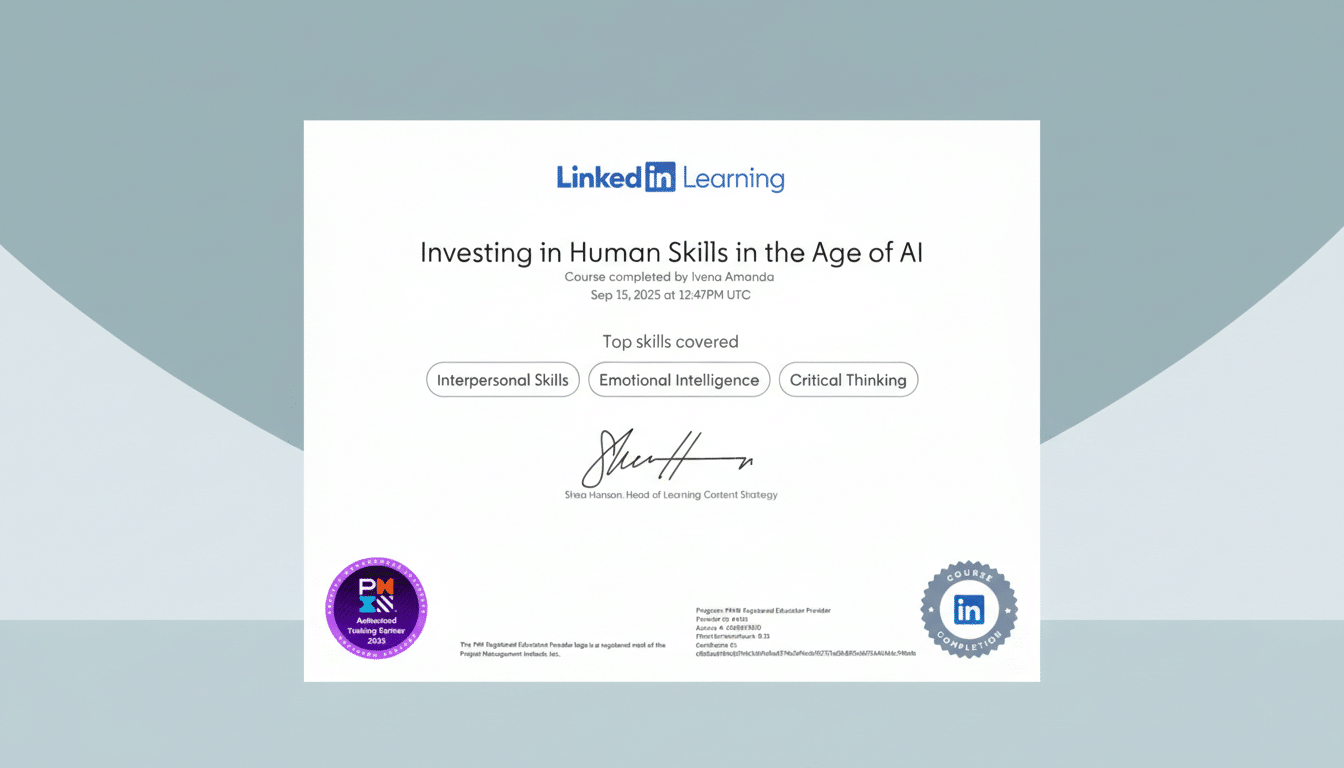
LinkedIn hasn’t disclosed specific thresholds or rubrics, but the gist is straightforward: demonstrate capability through actual work. In practice, that could mean factors like the complexity of projects created in Replit, the quality and publish readiness of a Descript edit, or successful automation flows assembled in Relay.app. The emphasis is on outcomes and consistent mastery, not just sporadic tool use.
Certificates appear alongside existing profile sections, giving recruiters a verified signal tied to real products. LinkedIn says more partners are on the way, with names like Gamma, GitHub, and Zapier on the roadmap—an expansion that would cover everything from AI-first presentations to code collaboration and workflow automation.
Why recruiters will care about verified AI skills badges
Hiring is shifting from pedigree to proof. According to edX research, job postings requiring AI skills roughly doubled over a recent 12-month window. Indeed’s Hiring Lab has reported that U.S. listings mentioning AI-related keywords climbed to 4.2%, with demand spreading beyond tech into banking and marketing. Recruiters increasingly want evidence that candidates can apply AI tools to ship usable outputs—quickly and reliably.
LinkedIn already leans into signals of trust: the company says more than 100 million members have verified their identity. Layering verified skills on top of identity checks is a logical next step, providing a stronger link between a candidate’s stated abilities and demonstrable performance in widely used applications.
Who is included in LinkedIn’s first wave of partners
The initial lineup spans content creation and coding—Descript for media workflows, Lovable and Replit for building software with AI, and Relay.app for assembling multi-step agents that connect tools and data. Upcoming collaborations with GitHub and Zapier would extend verification into the developer mainstream and no-code automation, aligning tightly with the Microsoft ecosystem while staying open to third-party platforms.
This mix matters: it recognizes that modern AI proficiency is interdisciplinary. A marketer stitching together an AI agent to handle leads, a developer shipping a production-ready service with model-assisted code, and a creator publishing polished episodes with AI editing all demonstrate applied skill—distinct, but equally valuable.
Trust, privacy, and gaming risks for usage-based badges
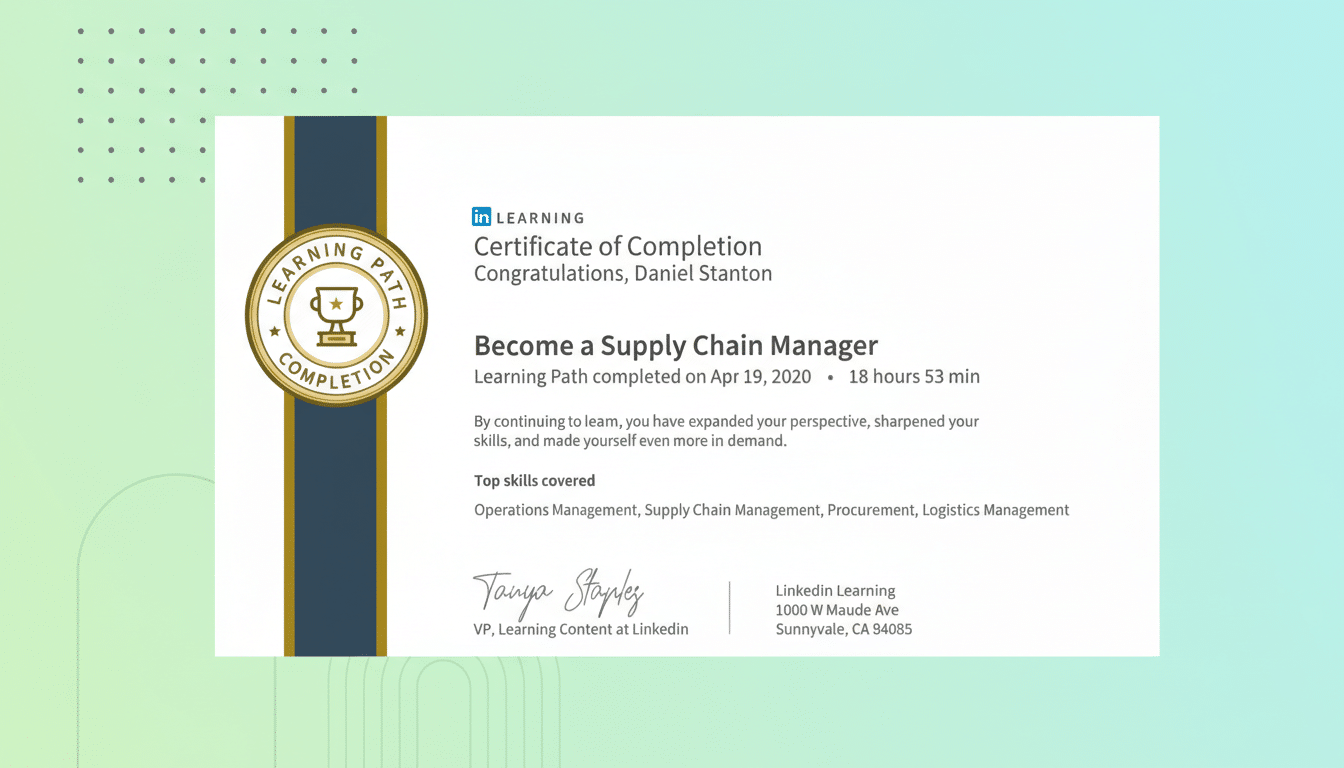
Usage-based credentials raise predictable questions. Candidates will want clarity on what activity data leaves partner apps, how it is aggregated, and how consent is handled. For credibility, partners will need transparent criteria and the ability to revoke or refresh certificates as tools evolve. Expect scrutiny around safeguards that discourage superficial “farming” of credentials, such as weighting meaningful outcomes over raw time-on-tool and validating project quality.
The bigger test is market acceptance. Recruiters and hiring platforms will need to recognize these credentials alongside portfolios and code samples. If LinkedIn integrates certificates into search filters or Talent Solutions workflows, they could quickly become a default screening signal for roles where AI productivity is central.
What verified AI skills certificates mean for candidates
For self-taught developers, creators, and operators living in AI-first tools, this is a chance to formalize what you already do every day. It complements portfolios: show the work, then back it with a badge that says a third party verified you can reproduce results. It also helps career switchers who learn by shipping—your proficiency is measured in outcomes, not lecture hours.
Practical playbook: pick a partner tool tied to your role, build a production-quality project, and keep iterating. Pair the certificate with links to live work, document impact in your profile, and update as new partners land. The World Economic Forum has projected that roughly 44% of workers’ core skills could shift due to tech adoption; stackable, applied credentials make reskilling more tangible.
The road ahead for LinkedIn’s verified AI skills program
If LinkedIn scales the partner network and bakes certificates into discovery for both candidates and recruiters, verified skills could become a meaningful hiring currency. The nuance will be in calibration—balancing ease of earning with real rigor, and ensuring privacy guardrails keep candidate trust intact.
For now, the signal is clear: AI proficiency is moving from buzzword to verifiable output. If you’ve been “vibe coding” your way to real results, LinkedIn just handed you a way to put it on the record.
