


AdGuard is one of the favorite free and paid apps to block ads on websites or in other apps.
$20 price for a lifetime family plan is nice if you want to keep an app on your iOS device like this for the life of your iPhone.
- Why This $16 AdGuard Lifetime Deal Truly Matters
- What AdGuard’s Lifetime Family Plan Actually Includes
- Real-world examples of using AdGuard on nine devices
- How AdGuard compares with browser and network blockers
- Privacy and safety considerations when using AdGuard
- The bottom line on this lifetime AdGuard family deal
For roughly $16, you receive protection for as many as nine devices, ongoing updates and system-wide filtering that cuts out user-hostile ads, throttles trackers and puts kid-friendly safeguards in the mix without the recurring fees of premium tools.
Why This $16 AdGuard Lifetime Deal Truly Matters
Advertising is not simply visual clutter — it burns bandwidth, eats battery life and feeds data profiles. More than a full 40% of internet users use some kind of ad blocking, according to Statista, indicating that there’s a widespread demand for a cleaner, faster browsing experience. Independent research conducted in university web transparency labs has repeatedly found that most of the most popular sites load multiple third-party trackers on every page — slowing down the page loads, while also doing more data collection than users commonly suppose.
Trimming those extras can have a real impact. Real-life tests from privacy advocates and browser-makers confirm that blocking ads and trackers will substantially speed up page-loading times, reduce the dreaded data usage, and save phone batteries. The bottom line: Even if a single household license is indeed available for about $16, the time and data savings alone can justify a purchase in fairly short order.
What AdGuard’s Lifetime Family Plan Actually Includes
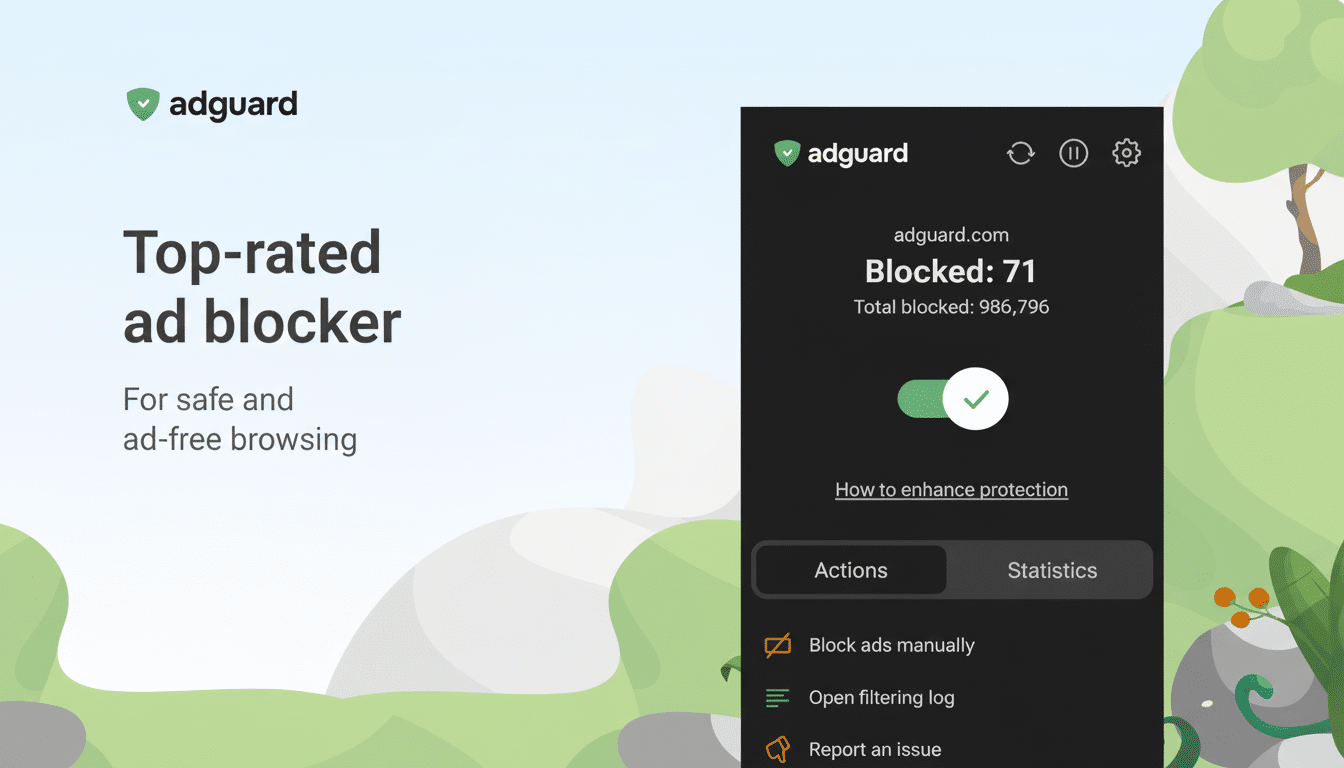
- System-wide filtering: Unlike a basic browser extension, AdGuard filters ads and trackers across apps and browsers, not just inside one tab. That’s especially important for native apps, in-app web views and streaming interfaces that extensions can’t get to.
- Advanced rules and HTTPS filtering: AdGuard is powered by a unique, comprehensive blocking mechanism that blocks ads throughout the whole system, which includes video ads even in apps and on websites not developed or maintained by AdGuard. On desktop, it can check encrypted traffic directly (with a user-installed certificate) to snare the ads and trackers that hide behind HTTPS.
- DNS-level options: AdGuard’s DNS settings make it possible to block ads on the IP address level for any device or platform where deep filtering isn’t an option. That is especially useful on iOS and with devices that can’t use extensions, and it also can expand protection to cover a home network.
- Parental controls and safe search: Family control tools in the operating systems or network router settings can limit sites allowed to be accessed by a client (such as adult material) to those only containing what is acceptable for children (examples include Comcast’s Xfinity). That cuts down on the number of kids stumbling into inappropriate sites or deceptive links.
- Coverage for multiple platforms: From Windows to macOS to Android, iOS and even Linux, one plan covers up to nine devices. That limit of nine devices is generous enough for the typical household.
- Reputation and updates: AdGuard receives high user ratings on Trustpilot, G2 and Capterra, and more overall positive scores on Google Search than competing products; the company also regularly releases filter updates that are responsive to evolving ad tech and anti-ad-block tactics.
Real-world examples of using AdGuard on nine devices
Let’s say there are four members of a family who own: two laptops, two cellphones and a tablet; at home they have a desktop computer. AdGuard is able to work system-wide on their computer, using ad blocking in applications and filters for Android. Toss in DNS-level blocking (for other devices and guests on the home Wi‑Fi, say), and the plan’s nine-device limit starts to seem well-proportioned.
The immediate effect is cleaner pages and fewer autoplay videos; the longer-term value is resilience to privacy damage. So-called tracking pixels and cross-site scripts recede into the shadows, retargeting is less aggressive, and that household’s digital trail becomes harder to piece back together.
How AdGuard compares with browser and network blockers
Browser-only blockers such as uBlock Origin are still excellent and free, but they can’t filter inside native apps or some system components. Network-wide solutions such as Pi-hole can protect all devices on a LAN, but they need hardware and configuration, which many families do not want to do. AdGuard occupies the middle of a pragmatic Venn diagram: simple to install, effective outside the browser, and flexible enough to use both app-level and DNS-level protection.
And it’s important to note what AdGuard is not. This isn’t a VPN; it doesn’t hide your IP address or tunnel traffic. Think of it as a power tool for ad blocking, anti-tracking and parental controls. Location shifting or tunneling will be a separate purchase if you need that kind of protection.
Privacy and safety considerations when using AdGuard
Some use anti-ad-block walls or depend on ad revenue to support journalism and services. AdGuard’s whitelisting and per-site settings ensure the big problem of overzealous ad blocking is easy to avoid: block ads from the sites you distrust, while allowing them on those you consider reputable. For safety, turning on phishing and malware filters provides an extra layer against fraudulent domains and malicious scripts alongside your existing antivirus suite.
The bottom line on this lifetime AdGuard family deal
A lifetime family license of a tested ad blocker for roughly $16 is one heck of a deal.
Featuring system-wide filtering, DNS options, parental controls and support for a wide variety of devices, AdGuard provides an easy way to speed up pages, reduce distractions and tighten privacy — without the subscription treadmill.
