


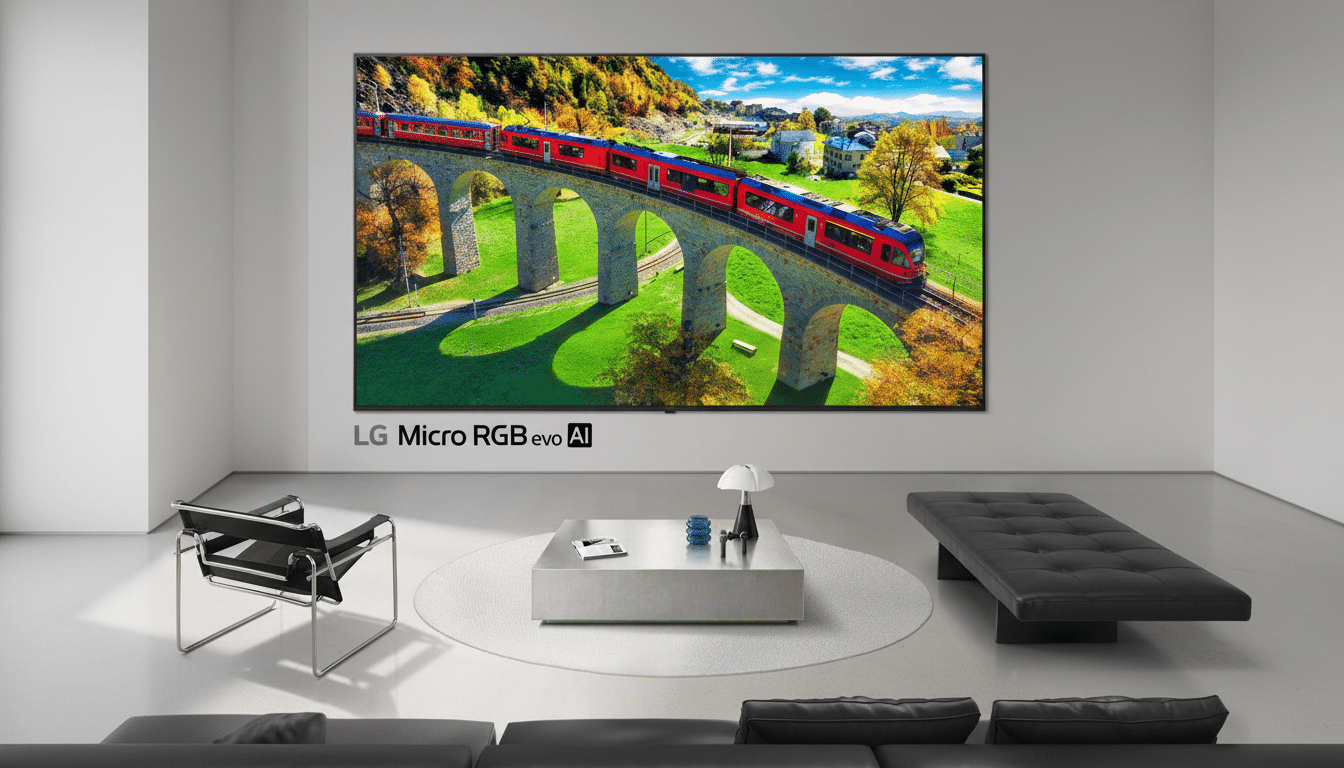
LG has offered up a sneak peek of the Micro RGB evo television before CES — and it represents the company’s big push into RGB-LED backlighting, something that should represent a color performance game changer. The firm claims the new flagship can stretch toward one end of the BT.2020 color space, a goal that is sometimes referred to as the holy grail of consumer displays. It’s LG’s first RGB-LED LCD, and it will come in 75, 85, and 100 inches, so it puts the set firmly into the premium home-cinema playing field.
How RGB backlights alter the image on LCD TVs
To light the panel, conventional LCD TVs rely on white or blue LEDs with color-conversion layers — leaving it to the LCD and its filters to determine color. RGB-LED backlights go a different way; they use groups of red, green, and blue emitters that both supply brightness and color. In practical terms, that means the backlight can selectively tune not just how bright a particular zone is, but also which hue it tilts toward, reducing dependence on color filters and improving spectral purity.
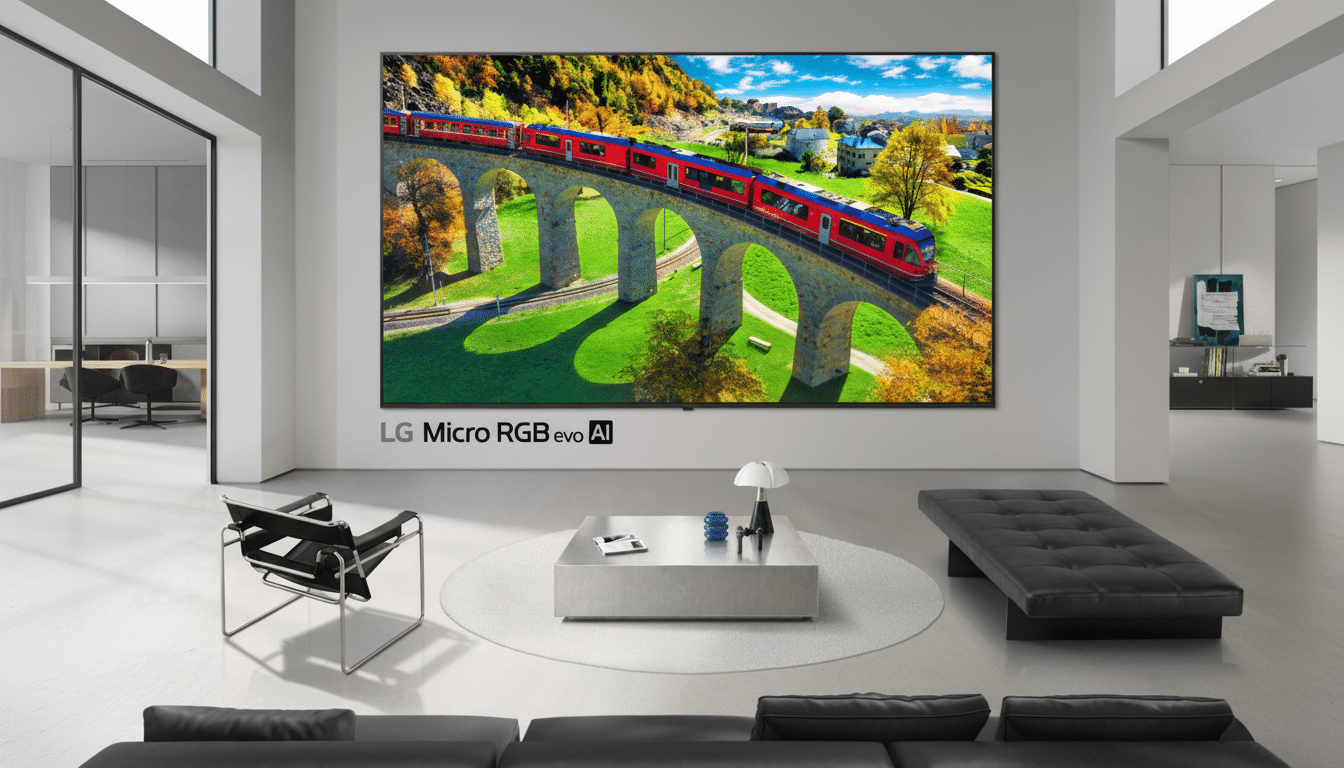
LG’s “Micro” designation means that it uses even smaller LEDs than the more common mini-LED ones, which in turn can mean more emitters behind the panel and finer control over local dimming. Fewer halos and less blooming around bright objects are generally the result of more, smaller emitters. It will not equal OLED’s per-pixel shutoff, but it narrows the gap while maintaining LCD’s edge in sustained brightness.
The BT.2020 promise and the reality for consumers
The ITU’s BT.2020 standard establishes a color gamut that’s much larger than DCI-P3 and Adobe RGB. Most high-end TVs today hit ~100% DCI-P3 and 75–85% BT.2020, depending on technology and measurement method. Claiming 100% of BT.2020 is difficult: the primaries defined by BT.2020 are very demanding; targets for all but LED-based systems in these bands require very narrow-band emitters and careful optical design.
That’s why third-party validation will count. Calibrators are usually left to confirm coverage with a spectroradiometer and check color volume — how much of that gamut is preserved at higher brightness levels. Standards organizations such as SMPTE and the UHD Alliance focus on not only coverage but also accuracy and stability of luminance. If the Micro RGB evo can maintain color at 1,000-plus-nit highlights without clipping or unwanted hue shift, that would be a significant milestone for LCD-based displays.
Rivals and market signals for RGB-LED LCD flagships
LG isn’t the only one going all in on an RGB-LED backlight. The 100-inch and even larger prototype models of this television have been part of Hisense sightings in recent years, although the 116UX — an ultra-bright set — turned in some of the biggest color measurements seen during lab testing (though it didn’t lay claim to full BT.2020). Samsung, however, has announced a Micro RGB TV with BT.2020 coverage. On price, high-end is the field: the Hisense 116UX has been priced at $24,999, with a smaller 100-inch 100UX model selling for $9,999 and a 115-inch Samsung Micro RGB set listing at $29,999. With those markers, it would be a surprise if the LG Micro RGB evo lands below $10,000 for larger sizes.
(This isn’t to be confused with the term “micro-LED” as it has come to be used in public-facing marketing materials; here, that is meant to describe the size of a backlight component, not a panel made up of microLED walls in commercial installations.) Those all-LED modules provide RGB emitters for each pixel and can run well into six figures for home-sized screens. RGB-LED LCDs represent a compromise, taking spectral benefits but tapping into mass-market LCD manufacturing.
The brightness, blooming, and OLED trade-offs
Where LCD still takes the lead is in both sustained and peak brightness. High-end mini-LED LCDs routinely get above 2,000–3,000 nits, and some push even higher in small highlights; the best OLED or QD-OLED screens usually top out around 1,000–1,500 nits. More brightness means more color volume — more fully saturated reds and greens stay vivid at a higher luminance level. RGB-LED backlights are trying to take that wide-luminance advantage in the image and also combine it with narrower peaks in the spectral response, which can cut down on the washout effect you sometimes see when white-centric backlight systems push really intense highlights through color filters.
The trade-off, of course, is local dimming granularity. Even with microlens-based emitters, there are a lot fewer backlight zones than pixels, so some haloing is inevitable in high-contrast content. Whether or not it will stand up will be evident with the handling of complex HDR scenes, such as starfields, subtitles over dark frames, and bright UI elements, without crushing shadow detail or lifting blacks.
Specs that matter for buyers comparing flagship TVs
Outside of color gamut, today’s buyers should look for independent measurements of color accuracy (Delta E), Rec.2020 coverage sweeps, and color volume values. Zone and dimming counts are important, though so are panel uniformity, viewing angles, and ABL behavior. HDR10, HLG, and Dolby Vision support are table stakes at this tier, as is 4K120Hz or higher refresh with HDMI 2.1 accoutrements like VRR and ALLM for gaming.
Thermal and power management will be on the agenda too. RGB emitters demand caution: high-output, small light sources can easily put out a lot of heat, and if you want to retain your color while running them for hours on end, you’ll need a smart system that balances power and cooling. Supply-side researchers have observed progress with LED packaging and phosphor-free designs that will both assist in efficiency and longevity; however, longer-term stability is the big question mark for first-generation RGB-LED flagships.
Bottom line on LG’s Micro RGB evo and what comes next
If true, LG is no less ahead of the game: full BT.2020 coverage would be a watershed for consumer television and a significant step beyond quantum-dot white or blue LED systems. Micro RGB evo is looking like something of a demonstration piece for what RGB-LED backlights have to offer when partnered with aggressive local dimming and high-output drivers. Thanks to competition from Hisense and Samsung, this won’t be a one-off — RGB backlights are cropping up as a new exclusive tier. Now it’s on third-party tests to verify color, volume, and real-world performance.
