


Lenovo’s wager is simply that one AI assistant should follow you, not the other way around. Qira, a prospective new cross-device “super agent,” was crafted as an engine to take your context from phone to PC to the soft glow of tomorrow’s wearables—managing what’s computed locally and what hums in the cloud. In a briefing, Lenovo Intelligent Devices Group president Luca Rossi explained why Qira wants to be the only AI you require, and how it aspires to complement existing assistants rather than supplant them.
Why Qira Thinks Bigger Than Single Devices
Most assistants live and exist on a single device, and lose the thread when you’re mobile.
- Why Qira Thinks Bigger Than Single Devices
- How It Works: Hybrid AI and Orchestration
- Rollout Plan: What Ships First and How It Expands
- Wearables and Ambient Sensors Plug Into the Network
- Privacy Controls Sit at the Center of Qira’s Design
- Why This Might Be the Only AI You’ll Ever Need
- What to Watch Next as Qira Rolls Out Across Devices
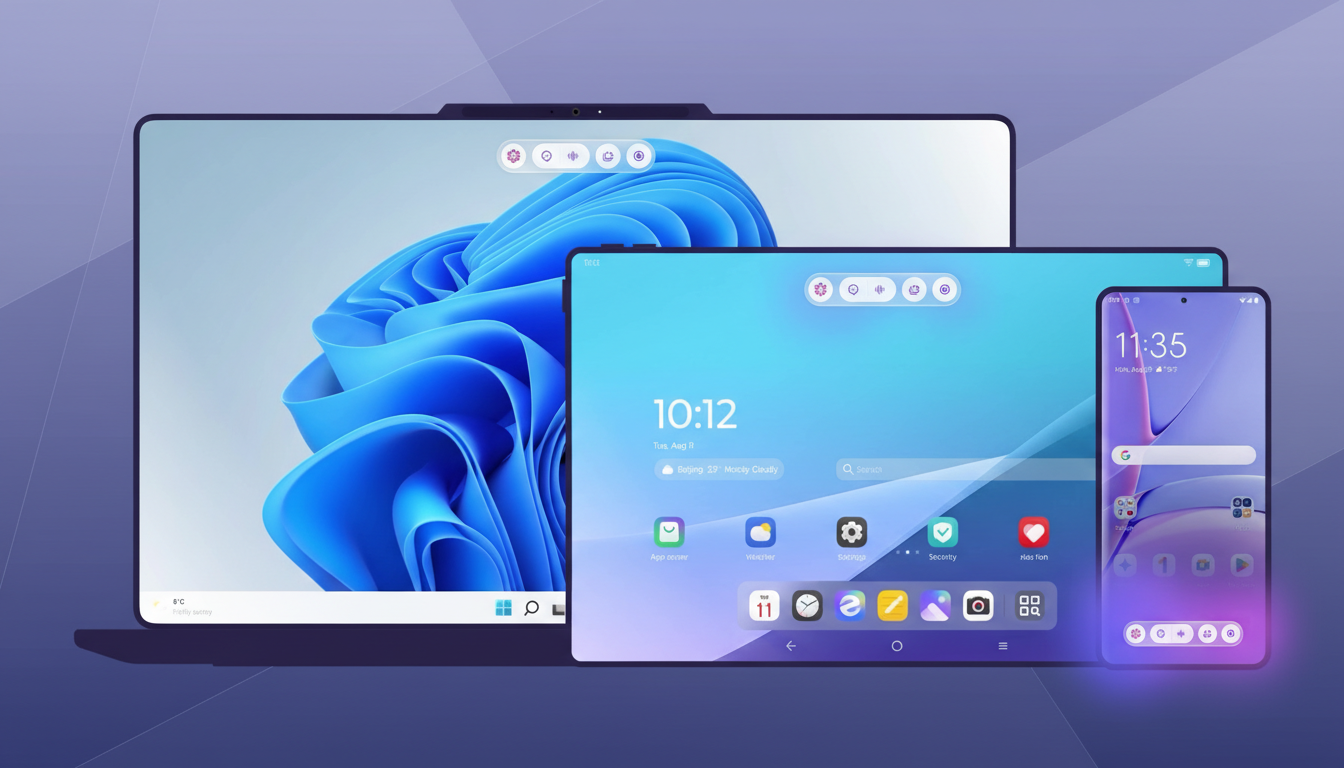
Qira flips that model. It records what you are doing across platforms—research on a Motorola phone during your morning commute, draft notes on a Lenovo laptop at your desk—and maintains that context so you can pick up exactly where you left off. Lenovo calls it your “Next Move,” showing you the right files, links, and actions when you switch screens based on what’s in your smartphone’s clipboard.
Most importantly, Qira is designed to stitch ecosystems together. It’s available for Android phones and tablets and Windows PCs, with support for iOS around the corner. Lenovo is starting out on its own hardware and doesn’t want Qira to be pegged—nor will it remain—as a Lenovo–Motorola special. That cross-brand stance is a subtle challenge to single-vendor ecosystems, positing Qira as the connective tissue of a multi-device, multi-OS existence.
How It Works: Hybrid AI and Orchestration
Qira is an orchestration layer, not just another chatbot. It decides where compute should occur—on-device for speed and privacy, or in the cloud for heavier lifts—and collaborates with existing assistants. Microsoft Copilot will play nice with Qira rather than challenge it directly, and the reason comes down to context: information can be handed over from Qira, and Copilot can then delegate tasks while keeping a single, ongoing picture of who the user is.
Hardware matters. We’ve seen a general improvement in NPU performance in the PC market over the past two years: performance has grown from roughly 10–11 TOPS on year‑old products to something closer to 40, with even higher‑power, 100+ TOPS‑class parts coming down the pike. That headroom is critical as increasingly more apps rely on local inferencing. Lenovo is not alone in taking a platform-agnostic approach—supporting modern silicon from Intel, AMD, and Qualcomm—and is leaning on chipmakers for more than just better TOPS, but better power efficiency so AI can run continuously without draining your device’s battery.
Rollout Plan: What Ships First and How It Expands
Qira won’t debut on every Lenovo device right out of the gate. It is slated for new higher-performance laptops and tablets with adequate memory and NPU capacity—and recent Motorola phones—first. Lenovo hopes to support over-the-air updates—around monthly if not every quarter—that will add more features and bring the hardware requirements down over time, thus increasing the number of supported devices.
Wearables and Ambient Sensors Plug Into the Network
Lenovo’s plans take Qira all the way into wearables and ambient devices. Project Maxwell is a proof of concept for now; the pendant-style AI pin, Lenovo says, is technically possible at scale and affordable to produce. Smart indoor glasses were also demonstrated, and the company is in early exploration of non-wearable “ambient AI” sensors for desks, walls, and even outdoor areas that would feed Qira more context.
The largest challenge of wearables is power: shoving enough compute into minuscule, comfortable form factors while maintaining all-day battery life. This is why there are challenges with rings today; however, Lenovo is predicting fast-fix cycles. On connectivity: at first blush, existing Bluetooth and Wi‑Fi standards—along with the roadmaps released by their respective governing bodies (Bluetooth SIG and Wi‑Fi Alliance)—appear sufficient for the near future.
Privacy Controls Sit at the Center of Qira’s Design
Qira’s pledge only holds if its users have faith in it. For its part, Lenovo says that, when sharing, data will be shared only “with your permission,” and you’ll see exactly what stays on-device and what gets sent to the cloud. Granular controls and numerous filters are planned so people can dial things in to their comfort level. There’s also the broader social issue at play here: bystander privacy. This will ultimately require conventions and perhaps regulation, especially as wearable and ambient sensors are unleashed everywhere.
Why This Might Be the Only AI You’ll Ever Need
The vision for Qira is continuity: mobile context carried from brand to operating system would eliminate the friction of having multiple assistants and apps. Instead, Qira has a lane through Microsoft Copilot on Windows (and its Android lane comes via Motorola). Lenovo’s reach across PCs, tablets, and phones offers a sizable launchpad, and its business bona fides—backing professional, data‑heavy partners like global sports groups—suggest it can handle scale and reliability.
Market timing helps. Analyst agencies like Canalys expect AI-capable PCs to be on more than half of shipments in a few years, and increased NPU capacity could drive even more inference tasks out to the edge. If Qira can consistently determine what should run where, maintain the context perfectly, and be introduced with respect for your privacy boundaries, then it has a reasonable chance of becoming the layer that most people use day to day.
What to Watch Next as Qira Rolls Out Across Devices
Early signs will be the seamlessness of handoff between Motorola phones and Lenovo laptops, how rapidly battery drain occurs during heavy use, and whether third-party apps surface Qira-aware actions quickly. Look out for future Yoga-class systems and flagship phones to serve as homes for first-wave deployments, incremental OTA upgrades, and any possible expansion to non‑Lenovo‑branded devices. Wearables are part of the roadmap but not imminent; ambient sensors could be along sooner. The sum of its parts is straightforward: if Qira can tie your digital world together without trapping you, it may actually be the cross-device AI that sticks.
