


A Samsung executive seems to have shown off an unannounced version of the Galaxy Z TriFold that includes four rear cameras, a departure from the production model’s triple-camera system. The images, posted to a professional networking account and likely showing a device that is only a prototype or dummy designed never to see the light of day, indicate that Samsung may have had bigger camera plans than it eventually used.
What the leaked images reveal about the TriFold design
The unit shown houses four rear lenses in a formation not seen on the consumer TriFold. Then there’s the plain back of the panel. Samsung’s official trailer for the production TriFold makes mention of a ceramic-glass fiber-reinforced polymer rear, so the blank outline tells us this is either an enclosure or prototype hardware. The Samsung regional VP who posted the images did not mention whether it was a prototype, design mock-up, or engineering sample.
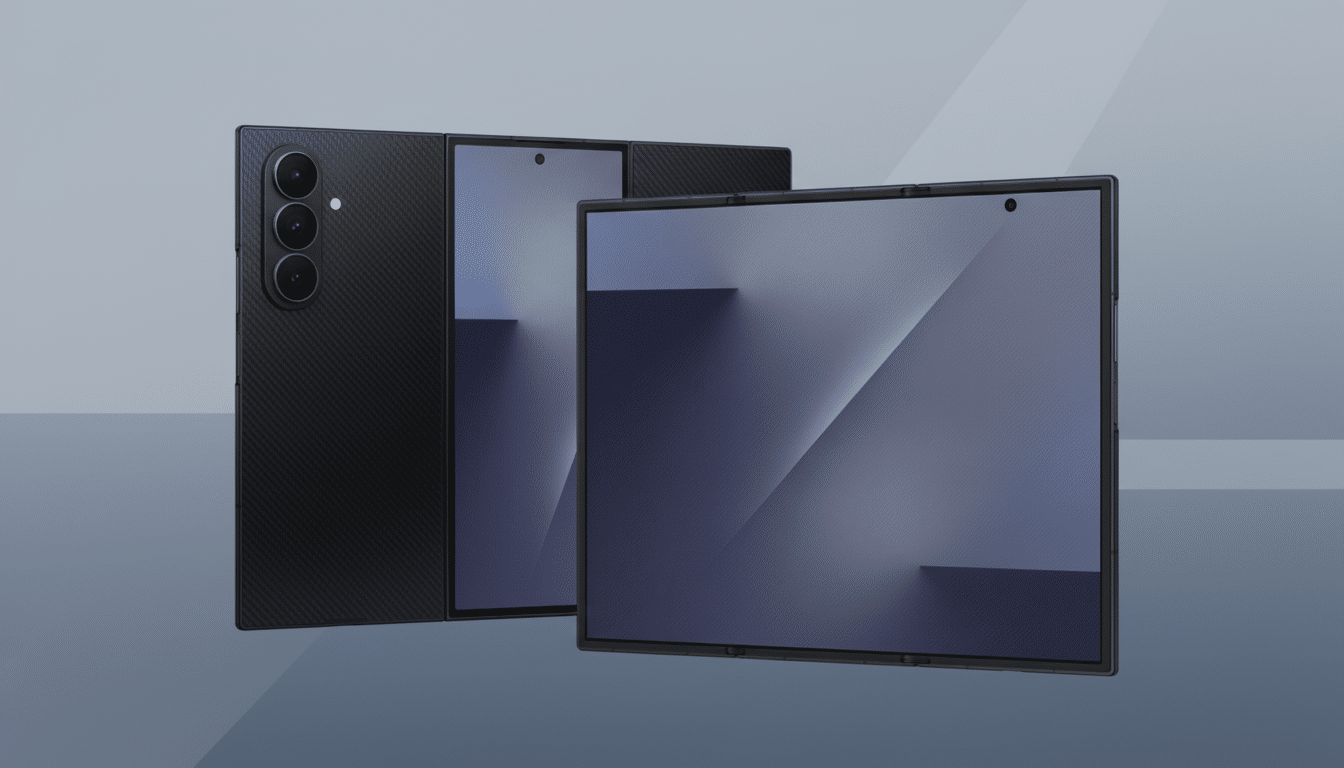
It is not uncommon to see sightings like this in the smartphone world. Firms often pass around decoy shells or test mules in-house, and executives sometimes accidentally show them off. Industry observers first called attention to the photos after identifying the surprising number of lenses and the finish, typical for pre-production hardware.
The production TriFold only works with three cameras
Samsung’s retail Galaxy Z TriFold comes with three rear cameras (the same number showed up in the previous Galaxy Z Fold 7 leak) on the back, led by a whopping 200MP primary sensor. Though the company added a second hinge, Samsung prioritized thinness and utility: The TriFold tapers down to an ultra-skinny 3.9mm at its thinnest point, and the extra panel real estate helped the company sneak in a larger battery without entirely rethinking the camera system.
Long before its unveiling, files found in software related to Samsung’s interface revealed a TriFold that carried three cameras on the back. This early sign now lines up with the commercial product, diminishing the possibility that the four-camera unit is a near-term successor.
Why Samsung may have excised a four-camera layout
Tri-fold hardware squeezes design margins from every angle: hinges require additional space, the display stack needs to be able to bend predictably, and the frame must remain rigid without adding a bunch of bulk.
Camera modules (particularly those with OIS and periscope optics) bring a lot in Z-height. On super-thin devices, that makes for a bigger camera island, imbalance, and potential folding tolerances.
Analysts including DSCC and other display supply chain firms have long complained that foldable thinness is largely determined by mechanical assemblies and camera stacks. With a device like this that’s aiming for sub-4mm thickness at the narrowest point, every extra lens element, coil, and spacer shows in terms of both depth and weight. A four-camera system also adds more cost, more demands for yield, and more heat to cool when computational imaging is engaged.
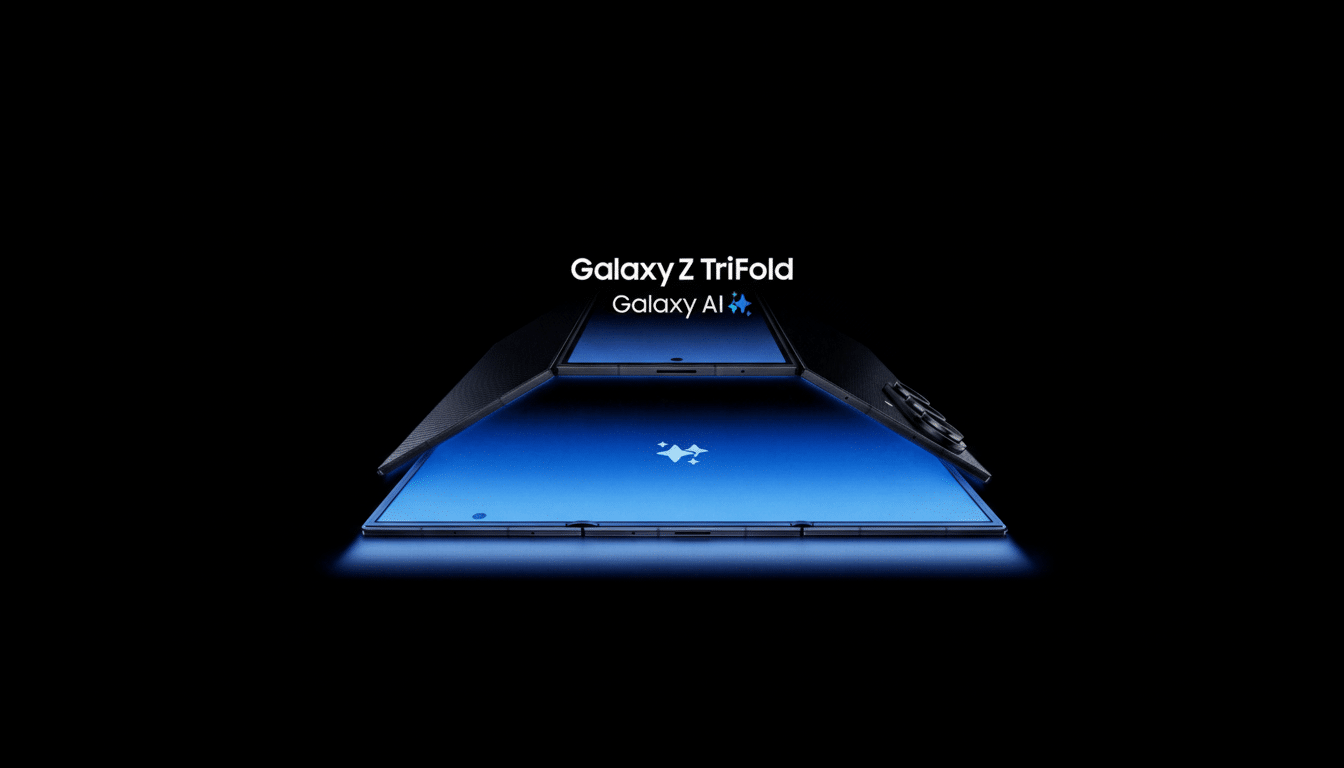
There’s also a strategic angle. By matching the positions of TriFold’s cameras to those on Z Fold 7, Samsung could streamline parts sourcing and tuning. Common sensors and optics help mitigate risk in a completely new form factor, in which the hinge, display, and battery are already adding to manufacturing complexity.
Why this likely isn’t a next-generation TriFold leak
And could the four-camera contraption be an early look at a subsequent installment? Unlikely. Supply chains for foldables firm up months before release, and internal software references continue to depict a three-camera TriFold. More likely, this was one of several directions that Samsung considered pursuing but either exited because of engineering trade-offs or cost. The nondescript back panel is a reminder that this isn’t off-the-shelf hardware.
What the prototype leak really means for TriFold buyers
We can expect shoppers of the production TriFold to have the triple-camera system we’ve heard about already (200MP main sensor, Samsung ARTStation computational photography). Instead, it’s more likely that features such as multi-frame processing, improved night modes, and telephoto upscaling will do the work rather than adding a separate fourth lens.
Context of the market is also reflected in the decision. Firms specializing in market research, including Counterpoint Research, have recorded strong double-digit growth in foldable shipments over the past year or so, yet super-advanced designs still place a premium on durability, thinness, and battery life. In such a space, concessions like the nerfed camera module make sense, especially when software can clean up part of that loss more than an abundance of hardware might otherwise provide.
Availability-wise, the TriFold is set to first launch in Samsung’s native market and then make its way to other regions, with rumors suggesting a US release around the next Galaxy S flagship window. If there’s ever a four-camera TriFold, it’ll probably come in the rounds after manufacturing and hinge tolerances allow for more space to be freed up for extra optics.
The takeaway is simple: it’s probably a prototype or dummy of the TriFold with four cameras that Samsung, at one point or another, may have considered but ultimately never shipped. The retail product maintains that slender figure, gambling that super-skinny hardware and established image processing are more important than shoehorning in one more lens.
